

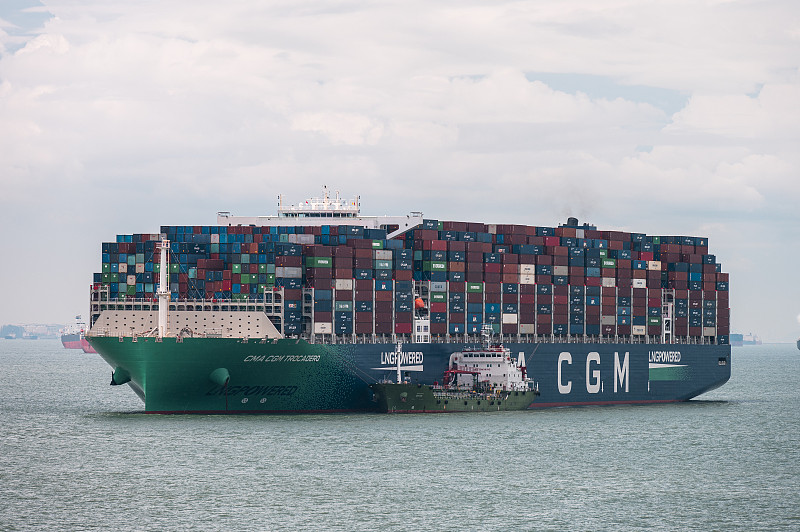
For B2B importers, calculating the Landed Cost of your products is impossible without an accurate understanding of ocean freight expenses. When your shipping volume grows to the point where Less than Container Load (LCL) is no longer economical, upgrading to Full Container Load (FCL) via a 20ft or 40ft container is the logical next step.
However, asking “how much does a container cost?” is a bit like asking “how much does a flight ticket cost?”—it depends entirely on where it is going, when you are booking, and what you are shipping.
In this 2026 market breakdown, we will dissect the current baseline costs for major global shipping routes, map out the hidden fees that catch importers off guard, and show you exactly what goes into a full container quote.
1. Baseline Container Rates for Major Global Routes (2026 Estimates)
Ocean freight rates fluctuate based on carrier capacity, fuel costs (IMO 2020/2026 environmental regulations), and geopolitical factors. Below is a realistic baseline breakdown of Port-to-Port ocean freight rates from major Chinese ports (like Shenzhen, Ningbo, or Shanghai) to key global destinations.
| Destination Region | Major Target Port | Estimated 20ft Container Cost | Estimated 40ft/40ft HC Container Cost |
|---|---|---|---|
| Middle East | Jebel Ali (Dubai, UAE) | $1,800 – $2,600 | $2,800 – $3,800 |
| Middle East | Jeddah (Saudi Arabia) | $2,100 – $2,900 | $3,200 – $4,500 |
| North America | Los Angeles (US West Coast) | $2,500 – $3,500 | $3,800 – $5,200 |
| North America | New York (US East Coast) | $3,800 – $4,800 | $5,200 – $6,800 |
| Europe | Rotterdam (Netherlands) | $2,800 – $3,900 | $4,200 – $5,900 |
| Southeast Asia | Singapore / Port Klang | $400 – $800 | $700 – $1,300 |
Note: These are port-to-port spot market estimates. During peak shipping seasons (such as the pre-Chinese New Year rush or the late Q3 peak), rates can spike by 30% to 50% or more.
2. 20ft vs. 40ft vs. 40ft HC: Which Container Do You Need?
Choosing the right container size is not just about weight—it is primarily about volume (CBM).
- 20ft Standard Container (20GP): Holds roughly 28 to 30 CBM of cargo. It has a maximum weight capacity of about 25 to 28 tons. It is best suited for heavy, dense goods like machinery, metals, tiles, minerals, or densely packed liquids.
- 40ft Standard Container (40GP): Holds roughly 56 to 58 CBM of cargo. It actually carries a similar weight capacity to a 20ft container (approx. 26 to 28 tons) due to vessel safety limitations. It is designed for voluminous but lighter goods like furniture, garments, plastics, and consumer electronics.
- 40ft High Cube Container (40HC): Holds roughly 65 to 68 CBM of cargo because it is one foot taller than a standard 40ft container. It usually costs only $100 to $300 more than a standard 40GP but offers up to 10 more CBM of space, making it the most popular and cost-effective choice for global B2B shipping.
3. The True Cost Anatomy: What Else is on Your Invoice?
If you are shipping on FOB terms, the ocean freight rate shown in Section 1 is only the international transit portion. A transparent China freight forwarder will break down a full container invoice into three distinct phases:
Phase 1: Local Charges in China (Origin Fees)
If you buy on EXW terms, you pay these. If you buy on FOB terms, your Chinese factory pays these:
- Terminal Handling Charges (OTHC): Fees charged by the port to move the container from the yard onto the ship.
- Export Customs Declaration: The paperwork to legally clear your goods for export out of China.
- Documentation Fee / Bill of Lading Fee: Charging for issuing the legal transport vouchers.
- Trucking Fee: The cost of moving the empty container from the port to your supplier’s factory for loading, and bringing it back full.
Phase 2: Freight Surcharges (During Transit)
- BAF (Bunker Adjustment Factor): A variable surcharge passed down by carriers to cover fluctuating marine fuel prices.
- LSS (Low Sulfur Surcharge): Environmental compliance fees for cleaner fuels used near coastal zones.
Phase 3: Destination Charges (At Your Local Port)
- Destination Terminal Handling Charges (DTHC): Fees charged by your local port to unload the container from the vessel.
- Customs Clearance & Duties: Fees to your local customs broker alongside the actual import tax of your country.
- Demurrage / Detention: Penalties if you take too long to pick up the container from the port or delay returning the empty container to the shipping line.
- Final Mile Haulage: Trucking the container from the port to your final warehouse door.
4. Frequently Asked Questions (FAQ)
Q1: Can I load a 40ft container with double the weight of a 20ft container?
Answer: No. This is one of the most common misconceptions. While a 40ft container has double the volume of a 20ft container, it has roughly the same max weight limit due to structural constraints of the chassis and legal road weight limits in destination countries (like the US or EU). If your goods are extremely heavy (e.g., steel coils or stone tiles), stick to 20ft containers.
Q2: Why did my shipping quote change within two weeks?
Answer: Ocean freight rates are highly volatile. Shipping lines issue rates via a GRI (General Rate Increase) or update their spot market rates every 15 days (usually on the 1st and 15th of every month). A quote provided on the 10th of a month is typically only valid until the 14th or 15th of that same month. Always check the “Validity Date” on your freight forwarder’s quote.
Q3: What is the cheapest time of year to ship a container from China?
Answer: The lowest rates generally occur during the post-Chinese New Year lull (March to April) and late spring (May to June). The most expensive periods are the weeks leading up to Golden Week (Late September) and the massive pre-CNY rush (November to January), where carriers implement peak season surcharges and container shortages drive up spot rates.
Q4: What happens if my factory doesn’t fill a 20ft container completely? Is it still worth shipping FCL?
Answer: If your total cargo volume is over 13 to 15 CBM, it is often cheaper and safer to book a Full 20ft Container (FCL) rather than shipping via Less than Container Load (LCL). With LCL, you pay per CBM, and destination handling fees are calculated on a per-CBM basis, which adds up fast. Furthermore, FCL ensures your goods are not handled or co-loaded with other companies’ potentially damaging cargo.
Need an Exact All-Inclusive Container Quote for Your Next Shipment?
Stop guessing your logistics costs. Provide us with your pickup city in China and your destination delivery address, and we will provide a comprehensive, transparent FCL breakdown with no hidden fees. [Request Your Free 2026 Freight Quote]