

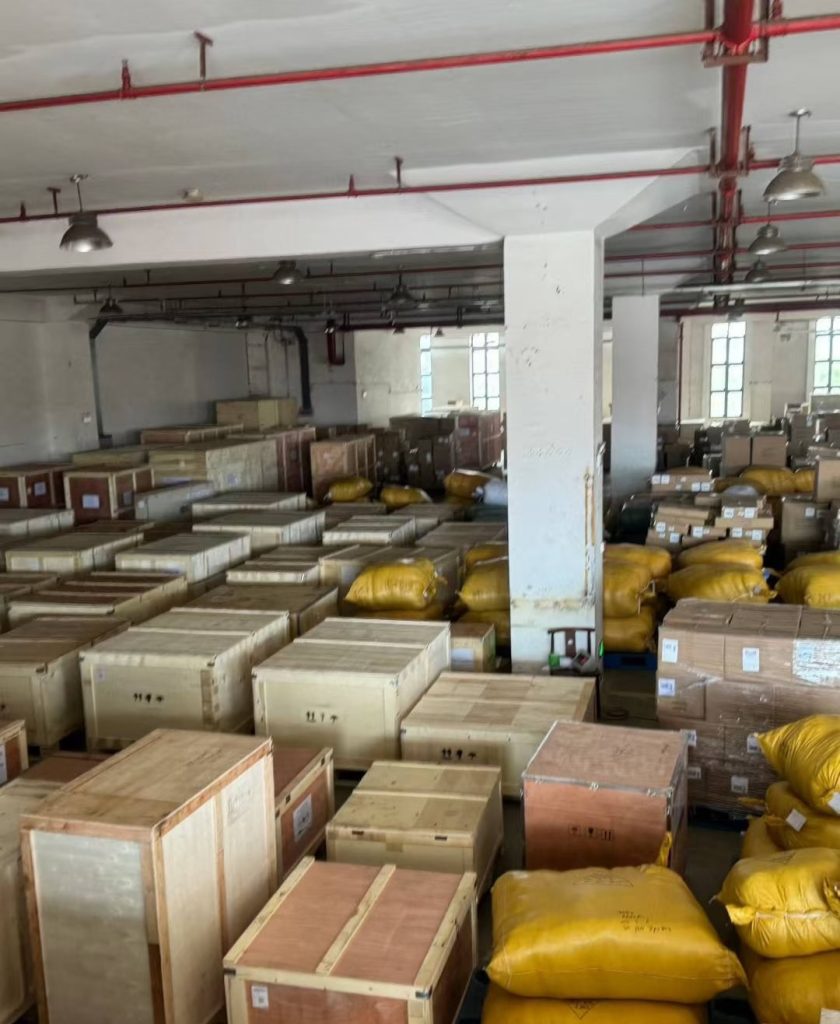
Shipping costs from China are one of the first questions asked by international buyers, importers, wholesalers, and e-commerce businesses.
However, there is no fixed price for shipping goods from China to another country. The final cost depends on several factors, including the origin city, destination, cargo weight, volume, product type, transportation method, customs requirements, and delivery address.
This practical guide explains how international shipping costs from China are calculated, what charges you should expect, how to compare freight quotations, and how to reduce unnecessary logistics expenses.
1. What Determines the Cost of Shipping from China?
The total cost of international shipping is usually affected by several major factors.
Shipping Origin
China has many major manufacturing and export hubs, including:
- Shenzhen
- Guangzhou
- Dongguan
- Foshan
- Yiwu
- Shanghai
- Ningbo
- Xiamen
- Qingdao
- Hangzhou
If your supplier is located far from the main port or airport, domestic trucking and pickup costs may increase the total logistics expense.
For example, cargo produced in Dongguan may first need to be transported to a warehouse, airport, or seaport before international transportation begins.
Destination
Shipping rates vary significantly between countries and cities.
Shipping to a major international port may have a different cost from delivering to an inland destination.
The quotation may also change depending on whether you need:
- Port-to-port shipping
- Airport-to-airport shipping
- Door-to-port shipping
- Door-to-door delivery
Therefore, simply asking “How much is shipping from China?” is usually not enough to obtain an accurate quotation.
2. Which Shipping Method Is Cheapest?
For most commercial shipments, the main options are sea freight, air freight, express shipping, and rail freight.
Each method has different advantages.
Sea Freight
Sea freight is generally suitable for large or heavy shipments where delivery speed is not the highest priority.
It can be used for:
- Machinery
- Furniture
- Building materials
- Packaging
- Consumer goods
- Industrial equipment
- Large commercial orders
Sea freight can be divided into FCL and LCL.
FCL Shipping
FCL means Full Container Load.
You book an entire container for your cargo.
Common container options include:
- 20GP
- 40GP
- 40HQ
FCL can become more economical when the cargo volume is large enough.
LCL Shipping
LCL means Less than Container Load.
Your cargo shares container space with shipments from other customers.
LCL can be useful when your shipment is too small to justify booking a complete container.
3. How Much Does Air Freight From China Cost?
Air freight is usually more expensive per kilogram than sea freight, but it provides much faster transportation.
The actual rate depends on:
- Origin airport
- Destination airport
- Airline
- Chargeable weight
- Cargo type
- Flight availability
- Fuel and security surcharges
- Service level
Air freight is often suitable for:
- Samples
- Electronics
- Spare parts
- Fashion products
- High-value goods
- Urgent replenishment
- Small commercial shipments
For an accurate air freight quotation, you should provide both the actual weight and carton dimensions.
4. Why Does Volumetric Weight Matter?
One of the most common mistakes made by new importers is looking only at the actual weight.
Air freight may be calculated using chargeable weight.
Chargeable weight can be based on the higher of actual weight and volumetric weight, depending on the applicable carrier rules.
A commonly used calculation is:
Volumetric Weight = Length × Width × Height ÷ 5,000
For example, suppose a carton measures:
60 × 40 × 50 cm
The volumetric weight would be:
60 × 40 × 50 ÷ 5,000 = 24 kg
If the actual gross weight is 18 kg, the shipment may be charged according to 24 kg under the applicable rate rules.
This is why carton dimensions are just as important as gross weight when requesting an air freight quotation.
5. What Are the Main Charges in International Shipping?
The transportation rate is only one part of the total logistics cost.
Depending on the shipping method and destination, charges may include:
Origin Charges
These may include:
- Factory pickup
- Domestic trucking
- Warehouse handling
- Export documentation
- Origin terminal handling
- Export customs clearance
International Freight
This is the main transportation cost for moving cargo from China to the destination country.
It can be charged according to:
- Kilogram
- Cubic meter
- Container
- Shipment
- Route-specific pricing
Destination Charges
Depending on the service, destination charges can include:
- Import customs clearance
- Destination handling
- Port charges
- Airport handling
- Local transportation
- Final-mile delivery
Duties and Taxes
Import duties and taxes depend on the destination country’s regulations, product classification, customs value, and applicable trade rules.
For DDP services, duties and taxes may be included within the agreed quotation.
Always confirm this before booking.
6. What Is the Difference Between Freight Cost and Total Shipping Cost?
This distinction is extremely important.
Suppose a freight forwarder gives you a very low ocean freight rate.
That does not necessarily mean the shipment will have the lowest total cost.
The final amount may also include:
Origin charges + international freight + customs clearance + destination charges + delivery + duties/taxes
Therefore, when comparing freight forwarders, ask for a quotation that clearly explains the complete service scope.
A low base freight rate with many additional charges can become more expensive than a slightly higher all-inclusive quotation.
7. How Much Does DDP Shipping From China Cost?
DDP stands for Delivered Duty Paid.
A DDP service may include a coordinated process from the Chinese supplier to the final delivery address.
A typical shipment may involve:
Factory Pickup
↓
Export Customs Clearance
↓
International Transportation
↓
Destination Customs Clearance
↓
Applicable Duties and Taxes
↓
Local Delivery
↓
Final Destination
DDP can be attractive for overseas buyers who want a simpler door-to-door solution.
However, DDP pricing depends heavily on:
- Product
- Weight
- Volume
- Destination
- Import regulations
- Tax requirements
- Delivery location
- Shipping method
A DDP quotation should clearly state what is included and excluded.
8. Is Sea Freight Cheaper Than Air Freight?
For many large and heavy shipments, sea freight is usually more economical than air freight.
However, the cheapest option depends on the shipment.
For example:
| Shipment Requirement | Potentially Suitable Method |
|---|---|
| Small urgent shipment | Air freight |
| Product samples | Express / Air |
| 1–3 CBM cargo | LCL |
| Large commercial order | FCL |
| Large non-urgent shipment | Sea freight |
| China-Europe cargo requiring a balance of speed and cost | Rail |
| Door-to-door shipment | DDP / DAP depending on requirements |
You should compare the total transportation cost and delivery time rather than choosing a method solely by the lowest rate.
9. How Does Shipping Cost Change With Cargo Volume?
For sea freight, the relationship between cargo volume and price can be very different from air freight.
For small shipments, LCL may be convenient.
As your cargo volume increases, you should compare the LCL cost with the cost of an entire container.
For example, if you regularly import large quantities of products, an FCL quotation may provide a better cost structure than continuing to ship the same cargo as multiple LCL shipments.
This is why importers should ask their freight forwarder to compare both options when the shipment volume is approaching container-level quantities.
10. Does the Product Affect Shipping Cost?
Yes.
Not every product can be shipped under the same conditions.
Cargo may be classified as:
- General cargo
- Battery-containing products
- Dangerous goods
- Chemicals
- Oversized cargo
- Fragile goods
- Temperature-sensitive products
- Food products
- Machinery
- Electronics
Some products may require:
- Special packaging
- Additional documentation
- Safety declarations
- Special handling
- Specific transportation methods
- Additional customs documentation
Therefore, always provide an accurate product description when requesting a quotation.
11. Does the Supplier’s Location Affect the Cost?
Yes.
China is a large manufacturing country, and the distance between your supplier and the export gateway can affect domestic logistics costs.
For example, your supplier might be located in:
Dongguan
while the international shipment is arranged through:
Shenzhen
The cargo may require domestic trucking from the factory to the logistics warehouse, airport, or port.
If you purchase from multiple suppliers, consolidation can sometimes help simplify transportation.
A freight forwarder may collect cargo from different factories and consolidate it before international shipping.
12. How Can You Reduce Shipping Costs From China?
There are several practical ways to reduce unnecessary logistics expenses.
Consolidate Multiple Suppliers
If you buy from several Chinese suppliers, consider consolidating cargo at one warehouse before export.
This can simplify transportation and may improve the overall logistics cost.
Optimize Carton Size
Large empty spaces inside cartons can increase volumetric weight.
Work with your supplier to optimize packaging without compromising product protection.
Compare LCL and FCL
When the cargo volume is relatively large, ask for both LCL and FCL quotations.
Do not assume that LCL is always cheaper.
Plan Ahead
Urgent transportation is often more expensive.
Planning your inventory earlier gives you more choices between sea, air, rail, and other transportation services.
Avoid Incomplete Quotations
A quotation that excludes major charges can create unexpected expenses later.
Always ask what the quoted price includes.
13. What Information Do You Need to Get a Shipping Quote?
To calculate a useful shipping quotation, prepare the following information:
1. Origin
City or factory location in China.
2. Destination
Country and city.
3. Product
Detailed product description.
4. Quantity
Number of cartons, pallets, or pieces.
5. Gross Weight
Total cargo weight.
6. Dimensions
Length × width × height for each carton or pallet.
7. Cargo Value
Commercial value of the shipment.
8. Shipping Method
Air, sea, LCL, FCL, rail, express, DDP, or another service.
9. Delivery Requirement
Port, airport, warehouse, or door-to-door.
Providing complete information helps the freight forwarder calculate a more accurate price.
14. What Should You Ask a Freight Forwarder Before Booking?
Before selecting a logistics provider, ask:
Is the quotation door-to-door?
If yes, ask for the exact delivery scope.
Are customs clearance charges included?
Confirm whether export and import customs procedures are included.
Are duties and taxes included?
This is particularly important for DDP shipments.
Are destination charges included?
Ask whether local handling and delivery charges are included.
How long is the estimated transit time?
Ask whether the quoted transit time is port-to-port or door-to-door.
What happens if the cargo is delayed?
Ask how shipment updates and exceptions are handled.
Is cargo tracking available?
Tracking can be important for commercial shipments.
15. Why Shipping Quotes From Different Forwarders Can Be Very Different
It is normal to receive different quotations from different freight forwarders.
The difference may come from:
- Different carriers
- Different shipping routes
- Different service levels
- Different transit times
- Different destination partners
- Different customs arrangements
- Different included charges
- Different delivery conditions
For this reason, compare quotations based on the same shipment information and the same service scope.
For example, compare:
China factory → destination warehouse
rather than comparing one provider’s:
China port → destination port
with another provider’s:
China factory → final address
These are different services.
16. What Is the Best Way to Calculate Your Real Shipping Cost?
For business planning, you should calculate the total logistics cost rather than only the international freight rate.
A simple approach is:
Total Shipping Cost = Origin Costs + International Freight + Customs Costs + Destination Costs + Final Delivery + Applicable Duties/Taxes
The exact components depend on the shipping method and service agreement.
For e-commerce sellers and wholesalers, you can also calculate:
Shipping Cost Per Unit = Total Logistics Cost ÷ Number of Products
This can help you determine your actual landed product cost and selling margin.
17. Get a China Freight Shipping Quote
If you are importing products from China, the best way to determine your actual shipping cost is to request a quotation based on your specific cargo.
Prepare:
- China pickup location
- Destination country and city
- Product name
- Number of cartons
- Gross weight
- Carton dimensions
- Cargo value
- Preferred transportation method
- Door-to-door or port-to-port requirement
A professional freight quotation should provide more than just a price.
It should explain:
Shipping method + route + estimated transit time + included services + excluded charges
This allows you to compare different logistics solutions accurately.
Frequently Asked Questions
What is the cheapest way to ship goods from China?
For many large and non-urgent shipments, sea freight can provide a lower transportation cost than air freight. For smaller shipments, LCL may be more appropriate.
How much does it cost to ship 100 kg from China?
There is no universal price for a 100 kg shipment. The cost depends on the destination, cargo dimensions, product type, shipping method, and delivery requirements.
Is DDP more expensive than port-to-port shipping?
DDP usually covers more services than port-to-port transportation, potentially including destination customs clearance, duties, taxes, and final delivery. Therefore, the total price can be higher, but it may provide greater convenience.
Can I ship from multiple Chinese suppliers?
Yes. Cargo from multiple suppliers can often be consolidated before international transportation, depending on the products and shipment requirements.
How can I get the lowest shipping cost from China?
Provide accurate cargo information, compare air and sea options, optimize packaging, consolidate shipments where practical, and compare complete quotations rather than only the advertised freight rate.
Should I choose air freight or sea freight?
Choose air freight when speed is important and the cargo is relatively small or high-value. Sea freight is often more suitable for larger shipments where transportation cost is the primary consideration.
Can a China freight forwarder arrange door-to-door delivery?
Yes. Depending on the destination and cargo, a freight forwarder can arrange factory pickup, export procedures, international transportation, customs clearance, and final delivery.
Final Takeaway
The cost of shipping goods from China is determined by much more than the basic freight rate.
Origin + Destination + Weight + Volume + Product + Shipping Method + Customs + Delivery Requirements
all influence the final cost.
If you want an accurate quotation, provide complete cargo information and specify whether you need air freight, sea freight, LCL, FCL, rail, DDP, or door-to-door delivery.
A detailed quotation allows you to compare the actual total logistics cost, transit time, and service scope before making a shipping decision.