

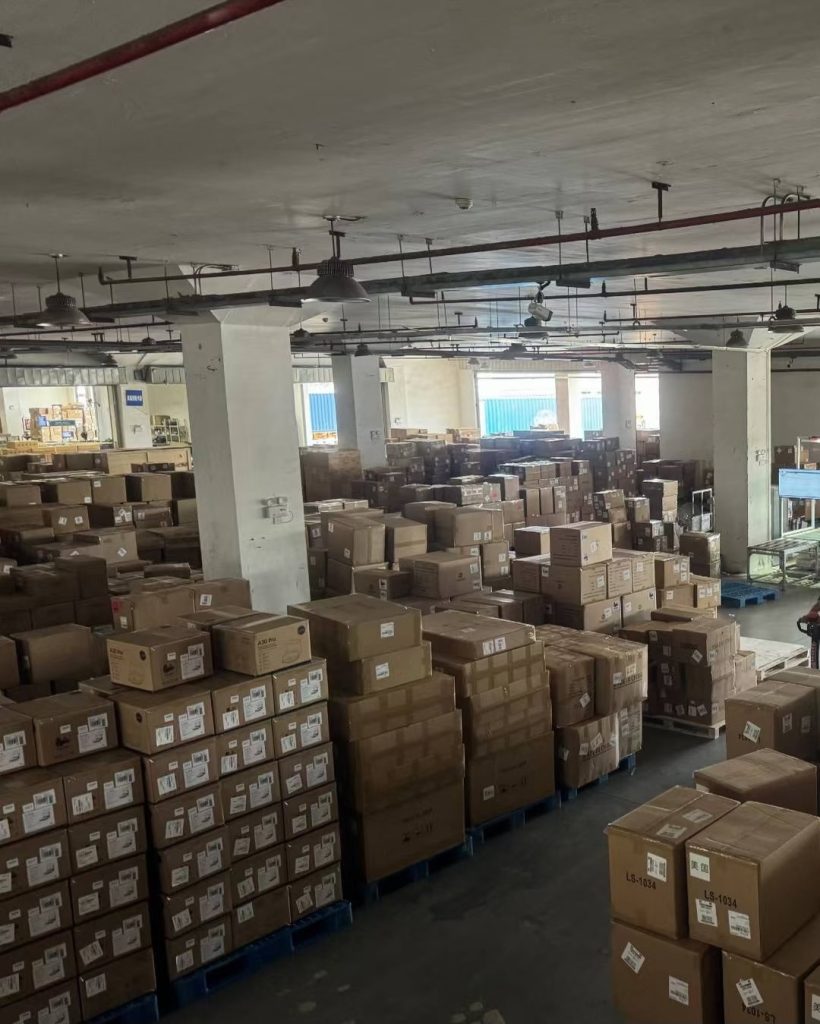
Shipping a small quantity of goods from China can be challenging for new importers.
You may have purchased only a few cartons, several hundred kilograms, or a small batch of products, and booking an entire container may not make economic sense.
Fortunately, you do not need a full container to import products from China.
Depending on your cargo, destination, delivery requirements, and budget, you can consider LCL sea freight, air freight, express shipping, or DDP door-to-door services.
This guide explains how to ship small quantities from China, how to choose between LCL and air freight, what affects the cost, how long delivery may take, and how to request an accurate shipping quotation.
1. Can You Ship Small Quantities From China?
Yes.
International freight forwarding is not limited to full-container shipments.
Small commercial shipments can be transported through:
- LCL sea freight
- Air freight
- Express
- DDP shipping
- Consolidated shipping
- Multimodal transportation
The best option depends on the shipment size and delivery requirements.
For example:
Small + Urgent → Air Freight / Express
Small + Not Urgent → LCL
Small + Door-to-Door → DDP
This is only a general guideline. The actual cost should be calculated based on your cargo and destination.
2. What Is LCL Shipping?
LCL means Less than Container Load.
Instead of booking an entire container, your cargo shares container space with shipments from other customers.
The basic process is:
Chinese Supplier
↓
China Consolidation Warehouse
↓
Cargo Consolidation
↓
Export Customs
↓
Ocean Freight
↓
Destination Port
↓
Deconsolidation
↓
Customs Clearance
↓
Final Delivery
LCL is one of the most common solutions for small and medium-sized ocean shipments.
3. When Should You Choose LCL?
LCL may be suitable when:
- Your shipment is too small for a full container
- You want lower transportation costs than air freight
- Delivery is not urgent
- Your cargo is suitable for ocean transportation
- You are importing several cubic meters of goods
For example, if you purchase furniture, packaging, hardware, or other general products from China and have several cubic meters of cargo, LCL may be worth comparing with air freight.
4. What Is Air Freight?
Air freight transports your cargo from China to the destination country by aircraft.
It is generally faster than sea freight.
Air freight can be suitable for:
- Small commercial shipments
- Samples
- Electronics
- Spare parts
- Fashion products
- High-value products
- Urgent inventory
- E-commerce replenishment
The main disadvantage is that air freight usually costs more per kilogram than sea freight.
For small but urgent shipments, however, the additional cost may be justified by the shorter transit time.
5. LCL vs. Air Freight for Small Shipments
When your cargo is small, one of the most common questions is:
Should I use LCL or air freight?
The answer depends on the balance between cost and speed.
| Factor | LCL Sea Freight | Air Freight |
|---|---|---|
| Speed | Slower | Faster |
| Cost for larger small shipments | Often lower | Usually higher |
| Best for | Non-urgent cargo | Urgent cargo |
| Handling | More stages | Fewer transportation stages |
| Suitable for | Several CBM | Smaller/time-sensitive cargo |
| Door-to-door | Available | Available |
| DDP | Available for suitable routes | Available for suitable routes |
If you have several cubic meters and can wait, LCL may be attractive.
If you have a small shipment and need it quickly, air freight may be more practical.
6. How Much Does It Cost to Ship a Small Quantity From China?
There is no fixed price.
The cost depends on:
- China origin
- Destination
- Product
- Weight
- Volume
- Shipping method
- Delivery address
- Customs requirements
- Service level
For air freight, chargeable weight is important.
For LCL, cargo volume and applicable minimum charges are important.
For DDP, the quotation may also include destination customs clearance, applicable duties and taxes, and final delivery according to the agreed service.
Therefore, you should provide complete cargo information before asking for a quote.
7. Why Carton Dimensions Matter
Many buyers provide only the total weight.
This is not enough for an accurate shipping quotation.
You should also provide:
Length × Width × Height
for each carton or pallet.
For air freight, volumetric weight can be particularly important.
A commonly used formula is:
Volumetric Weight = Length × Width × Height ÷ 5,000
For example:
60 × 40 × 50 cm
60 × 40 × 50 ÷ 5,000 = 24 kg
If the actual weight is 18 kg, the chargeable weight may be 24 kg under the applicable carrier rules.
This is why lightweight but bulky products can be expensive to ship by air.
8. What Is DDP Shipping for Small Orders?
DDP stands for Delivered Duty Paid.
A DDP service can provide a door-to-door logistics solution.
A typical shipment may follow:
Supplier in China
↓
Factory Pickup
↓
Export Customs
↓
International Transportation
↓
Destination Customs
↓
Applicable Duties and Taxes
↓
Local Delivery
↓
Final Address
DDP can be attractive to small importers who do not have extensive experience with international customs procedures.
However, always confirm what the DDP price includes.
Ask:
- Are duties included?
- Are taxes included?
- Is customs clearance included?
- Is final delivery included?
- Are remote-area charges included?
- Are there additional destination fees?
9. Can Small Businesses Use DDP Shipping?
Yes.
DDP can be particularly convenient for:
- Small businesses
- New importers
- E-commerce sellers
- Online retailers
- Product testers
- Wholesalers
- Startups
- Buyers placing trial orders
For example, a buyer may want to purchase a small quantity from a Chinese manufacturer before placing a larger order.
Instead of arranging separate customs and local delivery services, the buyer can request a suitable door-to-door DDP quotation.
10. Can You Consolidate Products From Multiple Suppliers?
Yes, depending on the shipment.
This is especially useful for buyers purchasing from several Chinese factories.
For example:
Supplier A — Guangzhou
Supplier B — Dongguan
Supplier C — Shenzhen
Supplier D — Yiwu
A freight forwarder may collect the cargo and send it to a consolidation warehouse.
The cargo can then be:
Received
↓
Checked
↓
Measured
↓
Consolidated
↓
Exported
↓
Shipped Internationally
This can simplify the logistics process for buyers who purchase multiple products from China.
11. How Does China Consolidation Work?
A consolidation warehouse can receive goods from different suppliers.
The buyer provides the warehouse address and instructions to the suppliers.
Each supplier sends cargo to the warehouse.
The logistics provider then records:
- Supplier
- Carton quantity
- Weight
- Dimensions
- Product description
The shipments can then be combined into a larger international shipment.
Depending on the destination and transportation method, consolidation can potentially reduce the overall logistics cost.
12. What Products Are Suitable for Small-Quantity Shipping?
Many general commercial products can be shipped in small quantities.
Examples include:
- Clothing
- Shoes
- Bags
- Packaging
- Toys
- Household goods
- Hardware
- Plastic products
- Furniture
- Accessories
- Consumer electronics
- Spare parts
However, certain products require additional evaluation.
Examples include:
- Lithium batteries
- Chemicals
- Food
- Cosmetics
- Medical products
- Dangerous goods
- Certain electronic products
Always provide accurate product information before requesting a shipping quote.
13. How Long Does Small-Quantity Shipping From China Take?
Transit time depends on the transportation method and destination.
As a general planning reference:
| Method | Typical Transit Range |
|---|---|
| Express | About 3–7 business days |
| Air Freight | About 3–10+ days |
| LCL Sea Freight | Often around 25–50+ days |
| DDP Air | Often around 5–15 days |
| DDP Sea | Often around 25–50+ days |
These are general planning ranges.
Actual delivery time can be affected by:
- Customs clearance
- Port congestion
- Flight schedules
- Vessel schedules
- Warehouse processing
- Weather
- Public holidays
- Final-mile delivery
Always confirm the estimated transit time for your specific route.
14. Is LCL Always the Cheapest Option?
No.
Many buyers assume:
Small shipment = LCL = cheapest
But this is not always true.
LCL may involve:
- Origin handling
- Consolidation
- Documentation
- Destination handling
- Deconsolidation
- Customs clearance
- Local delivery
For a very small shipment, these charges can make LCL less competitive.
Therefore, ask your freight forwarder to compare:
LCL + Air Freight + DDP
when appropriate.
The cheapest option depends on the complete shipment details.
15. When Does Air Freight Make More Sense?
Air freight may be a better option when:
- The shipment is relatively small
- The cargo is valuable
- Delivery is urgent
- The product has a short selling cycle
- Inventory needs immediate replenishment
- Customers are waiting for the products
For example, an online seller may have only 100 kg of fast-selling inventory left.
Waiting several weeks for sea freight could result in stockouts.
In this situation, air freight may have a higher transportation cost but a lower overall business cost because the inventory arrives faster.
16. When Does LCL Make More Sense?
LCL may be more suitable when:
- Cargo is several cubic meters
- The shipment is not urgent
- Products are relatively bulky
- Air freight would be too expensive
- You do not need a full container
For example, a buyer importing several CBM of furniture may find LCL more economical than air freight.
The final decision should be based on a comparison of total cost and delivery time.
17. Small Quantity Shipping for E-Commerce Sellers
E-commerce sellers often need flexible shipping options because inventory levels change quickly.
A practical approach is:
Planned Inventory
Use LCL or FCL sea freight.
Urgent Replenishment
Use air freight.
Samples
Use express.
Door-to-Door Simplification
Consider a suitable DDP service.
This allows the seller to balance:
Inventory + Speed + Shipping Cost
instead of using one transportation method for every shipment.
18. Small Quantity Shipping for Product Samples
Samples are usually much smaller than commercial orders.
Common transportation options include:
- Express
- Air freight
- DDP air
The main objective is usually speed.
A buyer may receive a sample, inspect the quality, approve the supplier, and then place a larger commercial order.
The larger order can subsequently be transported by LCL or FCL sea freight.
A common logistics strategy is:
Sample → Express/Air
Trial Order → Air or LCL
Large Order → FCL
19. Can You Ship Small Machinery From China?
Yes, but machinery requires more detailed evaluation.
You should provide:
- Product description
- Weight
- Dimensions
- Packaging
- Number of units
- Whether batteries are included
- Whether the machine contains liquids
- Destination
Small machinery may be suitable for air freight if the dimensions and weight are acceptable.
Larger machinery is often more suitable for sea freight.
Oversized equipment may require specialized transportation.
20. How to Reduce Small Shipment Costs
Consolidate Suppliers
Combine several supplier shipments where practical.
Optimize Packaging
Reduce unnecessary volume without compromising product protection.
Compare Air and LCL
Do not assume one method is always cheaper.
Avoid Emergency Shipping
Plan inventory early whenever possible.
Provide Accurate Dimensions
Incorrect dimensions can lead to revised freight charges.
Compare Door-to-Door Options
A slightly higher all-inclusive quotation may be better than a low freight rate with many additional charges.
21. What Information Is Needed for a Small Shipment Quote?
Prepare the following:
Origin:
Supplier city in China
Destination:
Country + city
Product:
Detailed description
Quantity:
Pieces / cartons / pallets
Weight:
Total gross weight
Dimensions:
Length × width × height
Cargo Value:
Commercial value
Shipping Method:
LCL / Air / Express / DDP
Delivery Requirement:
Port / airport / warehouse / door
The more accurate the information, the more useful the quotation will be.
22. Questions to Ask a Freight Forwarder
Before booking, ask:
- Is LCL available for my shipment?
- Would air freight be more economical for this shipment?
- What is the total door-to-door cost?
- Are customs charges included?
- Are duties and taxes included?
- Is final delivery included?
- What is the estimated transit time?
- Can you consolidate multiple suppliers?
- Can you provide shipment tracking?
- Are there additional destination charges?
These questions can help you avoid unexpected costs.
23. How to Choose the Best Shipping Method for a Small Shipment
Use this simple framework:
Small + Urgent
Air Freight / Express
Small + Flexible Delivery
LCL
Small + Door-to-Door
DDP
Multiple Suppliers
Consolidation + LCL/Air
Fast-Selling E-Commerce Inventory
Air for urgent replenishment + Sea for planned inventory
This approach allows you to choose based on business requirements instead of simply choosing the lowest advertised freight rate.
Request a Small Shipment Quote From China
If you have a small quantity of products to ship from China, you do not necessarily need a full container.
You can request a comparison of:
LCL + Air Freight + DDP
based on your actual cargo.
Provide:
China Origin
Destination Country and City
Product
Number of Cartons
Gross Weight
Carton Dimensions
Cargo Value
Required Delivery Time
Preferred Service
A freight forwarder can then evaluate the available options and recommend a suitable transportation solution.
Frequently Asked Questions
What is the cheapest way to ship a small quantity from China?
For non-urgent shipments, LCL can often be considered. However, the cheapest option depends on the cargo volume, destination, and additional charges. Air freight or DDP may be more suitable for some smaller shipments.
Can I ship only a few cartons from China?
Yes. You can use LCL, air freight, express, or suitable DDP services depending on the cargo and destination.
Is LCL cheaper than air freight?
LCL can be more economical for larger small shipments, but it is not always cheaper. Minimum charges and destination handling can affect the total cost.
How many CBM can I ship by LCL?
There is no single universal limit for LCL. It is designed for cargo that does not require a full container. Your freight forwarder can compare LCL with FCL when the volume becomes larger.
Can I combine products from several Chinese suppliers?
Yes, consolidation may be possible. Goods from multiple suppliers can be collected at a China warehouse and shipped together.
Is DDP suitable for small businesses?
DDP can be convenient for small businesses because it can simplify customs and door-to-door transportation. However, buyers should confirm the exact services and charges included.
How long does LCL shipping from China take?
LCL ocean shipping can take several weeks depending on the origin, destination, consolidation process, vessel schedule, customs clearance, and final delivery.
Can I ship samples from China?
Yes. Express and air freight are commonly used for samples because buyers generally want to receive them quickly.
Final Takeaway
You do not need a full container to import products from China.
For smaller shipments, the main options are:
LCL for economical ocean transportation,
Air Freight for faster delivery,
Express for very small or urgent shipments,
and DDP for suitable door-to-door logistics solutions.
The right choice depends on:
Weight + Volume + Product + Destination + Delivery Time + Budget
Before booking, compare the complete cost, estimated transit time, customs arrangements, and final delivery requirements.
Providing accurate cargo information is the best way to receive a useful shipping quotation and avoid unexpected charges.