

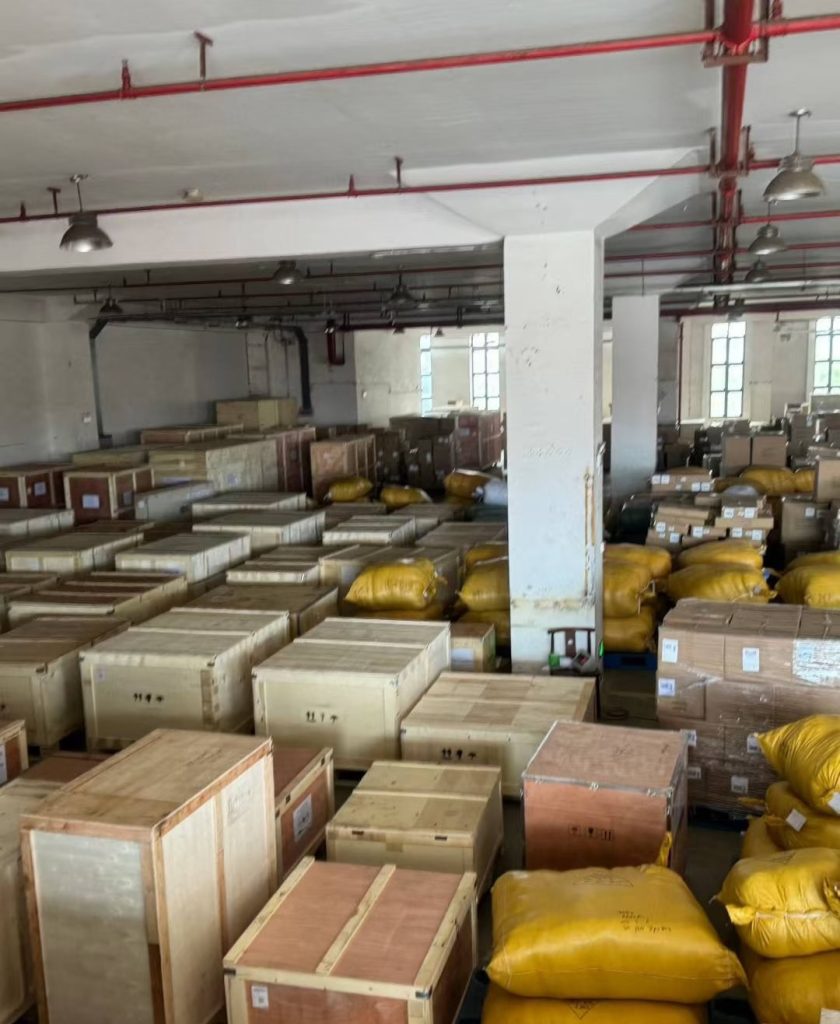
One of the first questions international buyers ask when purchasing products from China is:
How much will it cost to ship my goods?
The answer is not simply a price per kilogram or a price per container.
International shipping costs depend on the origin, destination, product, weight, volume, transportation method, customs requirements, delivery address, and service level.
A shipment from Shenzhen to Amsterdam can have a completely different cost from a shipment from Yiwu to New York, even when the cargo weighs the same.
This guide explains the main factors that determine China shipping costs and how buyers can request an accurate freight quotation.
1. What Determines the Cost of Shipping From China?
The total logistics cost can include several components:
- Factory pickup
- Domestic transportation
- Export customs clearance
- Origin handling
- International freight
- Destination handling
- Import customs clearance
- Duties and taxes
- Local delivery
- Special handling
- Storage or inspection charges where applicable
The exact charges depend on the shipping method and destination.
A basic freight rate therefore does not necessarily represent the final logistics cost.
2. What Are the Main Shipping Methods From China?
International buyers can choose from several transportation methods.
Sea Freight
Suitable for large and heavy shipments.
Air Freight
Suitable for urgent and relatively small shipments.
LCL
Suitable when the cargo does not fill a container.
FCL
Suitable for full-container shipments.
Rail Freight
Available on suitable China-Europe and other international routes.
Express
Suitable for samples, documents, and small urgent parcels.
DDP
Can provide a door-to-door logistics solution with agreed customs and import-related services.
The best method depends on your cargo and destination.
3. How Much Does Air Freight From China Cost?
Air freight is generally calculated according to chargeable weight.
The chargeable weight may be based on:
Actual Weight
or
Volumetric Weight
depending on the carrier’s rules.
A common volumetric-weight formula is:
Length × Width × Height ÷ 5,000
For example:
60 × 40 × 50 cm
60 × 40 × 50 ÷ 5,000 = 24 kg
If the actual weight is 18 kg, the shipment may be charged according to 24 kg, subject to the carrier’s applicable calculation.
This is why carton dimensions are extremely important when requesting an air freight quote.
4. How Much Does Sea Freight From China Cost?
Sea freight pricing depends on whether you use:
LCL
or
FCL.
For LCL, cost can depend on:
- Cargo volume
- Origin
- Destination
- Minimum charges
- Handling fees
- Consolidation
- Destination charges
For FCL, cost can depend on:
- Container type
- Origin port
- Destination port
- Carrier
- Route
- Sailing schedule
- Seasonal market conditions
The total price should be evaluated based on the complete transportation route.
5. LCL Shipping Cost From China
LCL means Less than Container Load.
Your cargo shares container space with other shipments.
The shipment may move through:
Supplier
↓
China Warehouse
↓
Consolidation
↓
Export Customs
↓
Ocean Freight
↓
Destination Port
↓
Deconsolidation
↓
Import Customs
↓
Local Delivery
LCL can be economical for smaller ocean shipments.
However, buyers should consider all applicable charges rather than looking only at the ocean freight rate.
6. FCL Shipping Cost From China
FCL means Full Container Load.
Common containers include:
- 20GP
- 40GP
- 40HQ
FCL is usually considered when the cargo volume is large enough to justify a dedicated container.
When requesting a quotation, provide:
Container Type
Origin Port
Destination Port
Cargo Type
Cargo Weight
Required Delivery
The freight forwarder can then calculate the applicable transportation cost.
7. Why Shipping Prices From China Change
International freight rates are not always fixed.
Prices can change because of:
- Seasonal demand
- Fuel costs
- Carrier capacity
- Port congestion
- Vessel schedules
- Airline capacity
- Exchange rates
- Route changes
- Peak seasons
- Market conditions
Therefore, an old quotation should not automatically be treated as today’s shipping price.
If you are ready to ship, request a current quotation based on your actual cargo.
8. Does the Product Affect Shipping Cost?
Yes.
The product itself can affect transportation requirements.
General cargo is usually easier to arrange.
Certain products may require special handling or documentation.
Examples include:
- Lithium batteries
- Chemicals
- Dangerous goods
- Food
- Cosmetics
- Medical products
- Certain electronics
- Oversized machinery
For these products, provide accurate product information before requesting a quotation.
Never describe regulated cargo simply as “general goods.”
9. Does Cargo Weight Affect Shipping Cost?
Yes.
Weight is particularly important for air freight.
For sea freight, both:
Weight
and
Volume
may be important.
A shipment can be extremely heavy but occupy little space, or relatively light but occupy a large amount of container space.
For example:
Heavy Machinery
may be weight-sensitive.
Foam Products
may be volume-sensitive.
Therefore, provide both total gross weight and total volume whenever possible.
10. Does Cargo Volume Affect Shipping Cost?
Yes.
Volume is especially important for sea freight and air freight.
For sea freight:
CBM = Cubic Meter
is commonly used to describe cargo volume.
For example:
If one carton measures:
50 × 40 × 40 cm
the volume is:
0.5 × 0.4 × 0.4
= 0.08 CBM
If you have 50 cartons:
0.08 × 50
= 4 CBM
This information helps the freight forwarder evaluate LCL, FCL, or other transportation options.
11. Does the Destination Affect Shipping Cost?
Yes.
Shipping costs can vary significantly between destinations.
For example, transportation to:
- Amsterdam
- Berlin
- Paris
- Madrid
- Milan
- Warsaw
can have different costs even when the shipment originates from the same Chinese city.
The final delivery address also matters.
Shipping to a major logistics hub may cost less than shipping to a remote location.
When requesting a quotation, provide the:
Country + City + Postcode
and, when necessary, the complete delivery address.
12. Does the Chinese Origin Affect Shipping Cost?
Yes.
China has many major manufacturing and logistics centers.
Common origins include:
- Shenzhen
- Guangzhou
- Dongguan
- Foshan
- Yiwu
- Ningbo
- Shanghai
- Qingdao
- Xiamen
If your supplier is located inland, additional domestic transportation may be required to move the cargo to the export port or airport.
Therefore, the factory location should be included in the freight quotation request.
13. Door-to-Door vs. Port-to-Port Shipping Cost
This is one of the most important differences when comparing quotations.
Port-to-Port
The buyer may be responsible for:
- Destination customs
- Destination handling
- Local transportation
Door-to-Door
The logistics provider coordinates transportation to the final address according to the agreed service.
A door-to-door quotation may include:
Factory Pickup
↓
Export Customs
↓
International Freight
↓
Import Customs
↓
Local Delivery
But the exact service scope must be confirmed.
Never compare a port-to-port price directly with an all-inclusive door-to-door quotation.
14. How Much Does China DDP Shipping Cost?
DDP pricing depends on:
- Product
- Weight
- Volume
- Origin
- Destination
- Shipping method
- Import duties
- Taxes
- Customs requirements
- Final delivery
For example, air DDP and sea DDP have completely different cost structures.
A proper DDP quotation should clearly identify what is included.
Ask:
Are duties included?
Are taxes included?
Is customs clearance included?
Is final delivery included?
Are remote-area charges included?
15. What Are Destination Charges?
Destination charges are costs that may occur after international transportation reaches the destination.
Depending on the shipping method, they can include:
- Terminal handling
- Documentation
- Customs clearance
- Warehouse handling
- Delivery
- Storage
- Inspection
- Other local charges
These costs can make a large difference to the final shipping bill.
This is why buyers should ask for the total landed logistics cost, rather than only the international freight rate.
16. How to Compare Freight Quotations
Suppose you receive three quotations:
Forwarder A: $1,500
Forwarder B: $1,650
Forwarder C: $1,800
Do not immediately choose Forwarder A.
Check:
| Item | A | B | C |
|---|---|---|---|
| Pickup | Included? | Included? | Included? |
| Export customs | Included? | Included? | Included? |
| International freight | Yes | Yes | Yes |
| Import customs | Included? | Included? | Included? |
| Duties/taxes | Included? | Included? | Included? |
| Final delivery | Included? | Included? | Included? |
| Additional charges | — | — | — |
| Transit time | — | — | — |
The cheapest quotation may not be the cheapest complete solution.
17. How to Reduce Shipping Costs From China
There are several practical ways to reduce logistics costs.
Consolidate Cargo
Combine shipments from multiple suppliers where appropriate.
Optimize Packaging
Reduce unnecessary carton volume.
Plan Orders in Advance
Avoid urgent air shipments whenever possible.
Compare LCL and FCL
When volume increases, compare both options.
Compare Air and Sea
Do not automatically choose one method.
Choose the Right Port
The nearest port is not always the cheapest option.
Request All-Inclusive Pricing
Ask for a clear breakdown of included and excluded charges.
18. How to Calculate a Basic Shipping Quote
A simplified logistics cost structure can be represented as:
Total Shipping Cost = Origin Charges + International Freight + Destination Charges + Customs/Taxes + Delivery
For example:
Origin Charges: $100
International Freight: $800
Destination Charges: $150
Customs/Taxes: $300
Final Delivery: $100
Estimated total:
$1,450
This is only an example of how to structure a quotation.
Actual costs must be calculated according to the real shipment.
19. Shipping Cost for Small Shipments
For small shipments, compare:
Express
Air Freight
LCL
DDP
A very small shipment may be more economical by express or air.
A shipment of several cubic meters may be better suited to LCL.
A larger shipment may justify FCL.
The correct method depends on:
Weight + Volume + Destination + Urgency
20. Shipping Cost for Large Shipments
For large shipments, FCL may become more economical.
For example, if your cargo can efficiently fill a:
20GP
or
40HQ
you should compare FCL against LCL.
Large shipments can also benefit from:
- Better container utilization
- Consolidated transportation
- Planned sailing schedules
- Lower average transportation cost per unit
However, container selection must consider both volume and weight limits.
21. What Information Do Freight Forwarders Need?
To provide an accurate quotation, send:
Origin
Supplier city and address.
Destination
Country, city, postcode, and address where required.
Product
Detailed description.
Quantity
Pieces, cartons, pallets, or containers.
Gross Weight
Total shipment weight.
Dimensions
Carton or pallet dimensions.
Cargo Value
Commercial value.
Shipping Method
Air, sea, rail, LCL, FCL, DDP, etc.
Delivery Requirement
Port-to-port, airport-to-airport, or door-to-door.
This information allows the freight forwarder to calculate the shipment more accurately.
22. Questions to Ask Before Accepting a Freight Quote
Before booking, ask:
- Is the quotation door-to-door?
- What charges are included?
- What charges are excluded?
- Is export customs included?
- Is import customs included?
- Are duties and taxes included?
- Is final delivery included?
- What is the estimated transit time?
- Are there minimum charges?
- Are remote-area charges possible?
- Can the cargo be tracked?
- Can the price change after pickup?
Getting clear answers before shipment can reduce unexpected costs.
23. How to Get an Accurate China Shipping Quote
The best way to obtain an accurate quotation is to provide complete cargo information.
For example:
Origin: Guangzhou, China
Destination: Amsterdam, Netherlands
Product: Shoes
Quantity: 40 cartons
Gross Weight: 520 kg
Carton Size: 60 × 40 × 50 cm
Total Volume: Approximately 4.8 CBM
Cargo Value: USD 12,000
Service: Sea DDP Door-to-Door
Required Delivery: Warehouse delivery
A freight forwarder can then evaluate the appropriate shipping method and calculate the relevant costs.
24. Should You Choose the Cheapest Freight Quote?
Not necessarily.
The best freight quotation should provide a reasonable balance between:
Price
Transit Time
Service
Reliability
Customs Support
Communication
A slightly higher quotation may be better if it provides a clearer service scope and fewer unexpected charges.
For commercial importers, predictable logistics costs can be more valuable than the lowest initial freight rate.
Request a China Shipping Cost Quote
If you want to know how much it costs to ship your goods from China, provide:
China Origin
Destination Country + City
Product
Number of Cartons
Gross Weight
Carton Dimensions
Total CBM
Cargo Value
Preferred Shipping Method
Door-to-Door or Port-to-Port
With complete information, a freight forwarder can compare suitable transportation options and provide a more accurate quotation.
Frequently Asked Questions
How much does it cost to ship from China?
There is no fixed price. Shipping costs depend on the origin, destination, product, weight, volume, shipping method, customs requirements, and delivery address.
Is air freight from China expensive?
Air freight usually costs more per kilogram than sea freight, but it provides faster transportation and can be practical for urgent or relatively small shipments.
Is sea freight cheaper than air freight?
For many large and non-urgent shipments, sea freight is generally more economical. However, the complete cost should be compared based on the actual cargo.
How is air freight charged?
Air freight may be calculated using chargeable weight, which can depend on either actual weight or volumetric weight according to the applicable carrier rules.
How is LCL charged?
LCL pricing can depend on cargo volume, origin, destination, minimum charges, handling, and destination costs.
How can I reduce China shipping costs?
Consolidate cargo, optimize packaging, plan shipments in advance, compare LCL and FCL, compare air and sea, and request a clear quotation showing included and excluded charges.
Does DDP include customs and taxes?
A DDP arrangement generally places import clearance and applicable duties/taxes with the seller under the agreed Incoterm, but the exact logistics service should always be confirmed in writing.
Why are two freight forwarder quotations so different?
They may use different routes, carriers, service levels, weight calculations, delivery terms, or included charges. Compare the complete service scope rather than only the headline price.
Final Takeaway
The cost of shipping goods from China depends on much more than weight.
The most important factors are:
Origin + Destination + Product + Weight + Volume + Shipping Method + Customs + Delivery
Before choosing a freight forwarder, compare the complete logistics cost and make sure you understand what is included.
If you provide accurate cargo information, a professional freight forwarder can help you compare air freight, sea freight, LCL, FCL, rail freight, and DDP and select a solution that matches your budget and delivery requirements.