

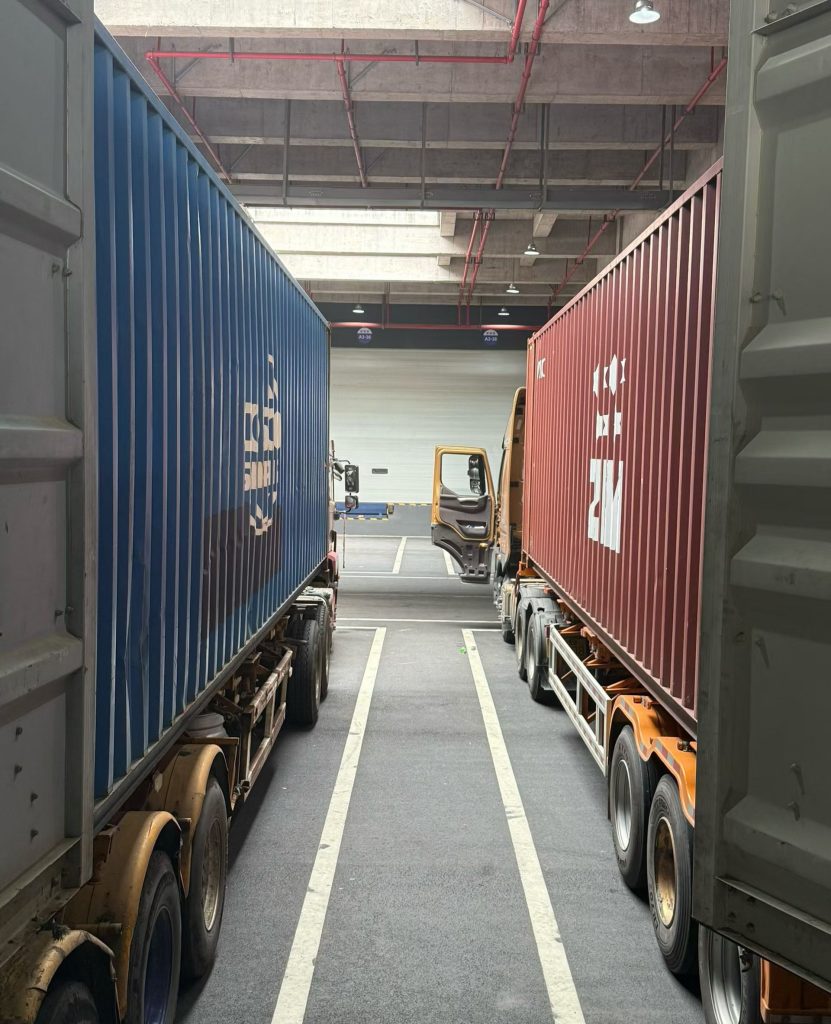
International shipping from China involves much more than moving cargo from a Chinese factory to an overseas destination. A typical shipment may involve supplier pickup, warehouse handling, export customs clearance, port or airport procedures, international transportation, destination customs clearance, local delivery, and final receipt by the buyer.
For importers, understanding this process can help reduce unexpected costs, avoid documentation problems, select the right transportation method, and communicate more effectively with a China freight forwarder.
This guide explains how international shipping from China works, compares sea, air and rail freight, and provides practical information for importers.
1. What Is International Shipping from China?
International shipping from China refers to the transportation of commercial goods from China to another country or region.
Depending on the cargo and destination, shipments can be transported by:
- Ocean freight
- Air freight
- Rail freight
- Express delivery
- Trucking
- Multimodal transportation
A freight forwarder may coordinate several of these services as part of one logistics solution.
For example, a shipment from a factory in Guangdong to a buyer’s warehouse in Germany could involve:
Factory pickup → China warehouse → Export customs → Port → Ocean freight → European port → Import customs → Truck delivery → Buyer’s warehouse
The exact process depends on the trade route, Incoterm, cargo type and service selected.
2. The Basic International Shipping Process
Although individual shipments vary, the international shipping process can generally be divided into several stages.
Step 1: Confirm the Cargo
The importer or exporter provides information such as:
- Product name
- Quantity
- Number of cartons
- Gross weight
- Dimensions
- Product value
- Origin
- Destination
- Required delivery date
For special products, additional information may be required.
Step 2: Request a Freight Quotation
The freight forwarder calculates the estimated transportation cost based on the cargo and route.
The quotation may include:
- Pickup
- Export customs
- International freight
- Documentation
- Destination handling
- Customs clearance
- Final delivery
Not every quotation includes all of these services, so the scope should be confirmed before booking.
Step 3: Arrange Cargo Pickup
The forwarder arranges transportation from the supplier’s factory or warehouse to the designated warehouse, port or airport.
The supplier needs to prepare the cargo according to the agreed shipping schedule.
Step 4: Warehouse Receiving and Inspection
If the cargo is sent to a freight forwarder’s warehouse, the warehouse may record:
- Number of cartons
- Weight
- Dimensions
- Packaging condition
- Shipping marks
If several suppliers are involved, the forwarder may also consolidate cargo.
Step 5: Export Customs Clearance
Before leaving China, commercial cargo generally needs to comply with export customs requirements.
Depending on the shipment, the required information may include:
- Commercial invoice
- Packing list
- Product information
- HS code
- Export declaration information
- Other applicable documents
The actual requirements depend on the cargo and export circumstances.
Step 6: International Transportation
Once the shipment has completed the necessary export procedures, it moves to the international transportation stage.
The method may be:
- Sea
- Air
- Rail
- Express
- Multimodal transportation
Step 7: Destination Customs Clearance
After arrival in the destination country, the cargo may need to go through import customs clearance.
The importer may be responsible for:
- Import declaration
- Customs duties
- Import VAT or other applicable taxes
- Import permits
- Product compliance
The exact responsibilities depend on the agreed Incoterm and local regulations.
Step 8: Final Delivery
After customs clearance and release, the cargo can be transported to:
- Warehouse
- Distribution center
- Factory
- Office
- Retail location
- Residential address
The shipment is then completed when the buyer receives the goods.
3. Sea Freight from China
Sea freight is one of the most widely used transportation methods for international commercial shipments from China.
It is particularly suitable for larger shipments where the buyer does not require the fastest possible delivery.
Full Container Load — FCL
FCL means the buyer uses an entire container.
Common container types include:
- 20-foot containers
- 40-foot containers
- 40-foot high-cube containers
FCL can be suitable for large-volume shipments.
Advantages include:
- Large cargo capacity
- Relatively predictable container handling
- Lower transportation cost per unit for suitable volumes
- Reduced need to combine cargo with unrelated shipments
Less Than Container Load — LCL
LCL is used when the shipment does not require a full container.
Multiple customers’ cargo may be consolidated into one container.
LCL can be useful for:
- Smaller shipments
- Trial orders
- Small-volume inventory
- Buyers who do not have enough cargo for an entire container
However, LCL involves additional consolidation and deconsolidation procedures.
4. Air Freight from China
Air freight is generally selected when speed is more important than the lowest possible transportation cost.
It is often suitable for:
- Samples
- Urgent orders
- High-value products
- Small shipments
- Time-sensitive inventory
- Certain electronics and industrial products
Air freight normally has a higher transportation cost per kilogram than ocean freight.
However, the shorter transit time can sometimes justify the additional expense.
Chargeable Weight
Air freight pricing may be based on chargeable weight rather than simply actual weight.
For example, a large but lightweight carton occupies significant aircraft space. The carrier may therefore calculate a volumetric weight.
For this reason, importers should provide accurate carton dimensions when requesting an air freight quotation.
5. Rail Freight from China
Rail freight can provide an alternative transportation solution for certain China-Europe routes and other suitable markets.
It can be useful when:
- Sea freight is too slow
- Air freight is too expensive
- The route has suitable rail services
- The cargo volume justifies rail transportation
Rail freight is not necessarily available or economical for every destination.
A freight forwarder should evaluate the actual origin, destination, cargo characteristics and current service schedule before recommending rail transportation.
6. Sea vs. Air vs. Rail Freight
| Factor | Sea Freight | Air Freight | Rail Freight |
|---|---|---|---|
| Cost | Usually lower for large volumes | Usually higher | Often between sea and air |
| Speed | Slower | Faster | Medium |
| Cargo capacity | Very high | Limited compared with ships | Medium/high |
| Best for | Large shipments | Urgent/small/high-value cargo | Selected international routes |
| Containerized cargo | Excellent | Limited | Excellent |
| Transit variability | Can be affected by ports and schedules | Can be affected by flight capacity and weather | Depends on route and rail schedule |
There is no universal “best” shipping method.
The correct choice depends on the buyer’s priorities.
7. How to Choose the Right Shipping Method
Ask yourself four questions:
How large is the shipment?
Large-volume shipments often make sea freight more attractive.
How urgent is the cargo?
If the inventory is urgently needed, air freight may be worth the additional cost.
What is the destination?
Not every transportation method is equally practical for every destination.
What is the total logistics cost?
Do not compare only the international freight rate.
Consider:
- Pickup
- Export handling
- International freight
- Destination handling
- Customs clearance
- Duties and taxes
- Final delivery
The cheapest international transportation rate may not result in the lowest total landed logistics cost.
8. Documents Commonly Used in International Shipping
The exact documents depend on the shipment, but common documents may include:
Commercial Invoice
The commercial invoice contains important information about the transaction and cargo value.
Packing List
The packing list generally provides information about:
- Cartons
- Quantity
- Weight
- Dimensions
- Packaging
Bill of Lading
Ocean shipments commonly use a bill of lading.
Air Waybill
Air cargo generally uses an air waybill.
Certificate of Origin
Some shipments may require or benefit from a certificate of origin depending on destination-country requirements.
Additional Certificates
Certain products may require additional compliance documents, permits or testing records.
Importers should confirm the exact requirements for their products before shipping.
9. Understanding Incoterms
Incoterms define important responsibilities between buyers and sellers.
Common terms used in international trade include:
- EXW
- FOB
- CIF
- CFR
- DAP
- DDP
For example, under FOB, the seller generally handles certain costs and responsibilities up to the agreed loading point, while the buyer arranges the main international transportation.
Under DAP, the seller generally arranges delivery to the named destination, while the buyer generally handles import clearance and applicable duties and taxes.
Under DDP, the seller generally takes responsibility for import clearance and applicable duties and taxes, subject to the agreed contract and local regulations.
Importers should understand exactly what their chosen Incoterm means before arranging transportation.
10. Customs Clearance: What Importers Need to Know
Customs clearance is a critical part of international shipping.
Customs authorities may evaluate:
- Product description
- HS classification
- Customs value
- Country of origin
- Import permits
- Product compliance
- Applicable duties and taxes
Incorrect or incomplete information can cause delays.
Therefore, buyers should avoid vague product descriptions.
For example, simply describing cargo as “parts” may not provide enough information for proper classification.
A more accurate product description can help the customs broker and authorities determine the appropriate requirements.
11. How Shipping Costs Are Calculated
International freight costs depend on multiple factors.
Common factors include:
- Origin
- Destination
- Cargo weight
- Cargo volume
- Shipping method
- Container type
- Carrier
- Fuel costs
- Seasonal demand
- Port charges
- Customs services
- Delivery requirements
For LCL shipments, both volume and weight can influence pricing.
For air freight, chargeable weight is particularly important.
For FCL, the container type and route are major cost factors.
Therefore, a freight forwarder should receive accurate cargo information before providing a final quotation.
12. What Is Door-to-Door Shipping?
Door-to-door shipping means the logistics provider coordinates transportation from the origin location to the agreed destination.
A typical process could be:
Supplier → China warehouse → Export customs → International transportation → Import customs → Local delivery → Buyer
Door-to-door shipping can simplify logistics because the buyer does not need to coordinate every transportation stage independently.
However, buyers should confirm whether the quotation includes:
- Pickup
- Customs clearance
- Duties and taxes
- Destination handling
- Final delivery
- Remote-area fees
The phrase “door-to-door” alone does not necessarily mean that every possible charge is included.
13. What Is DDP Shipping?
DDP is often requested by overseas buyers sourcing products from China because it can simplify the logistics process.
A typical DDP arrangement may include:
China pickup → Export customs → International transportation → Import customs → Duties/taxes → Local delivery
However, the exact arrangement depends on the route, products, destination regulations and contract.
Before accepting a DDP quotation, ask:
- Is import customs clearance included?
- Are duties included?
- Are taxes included?
- Is final-mile delivery included?
- Are there remote-area surcharges?
- Are customs inspection charges included?
- Are there product-specific compliance requirements?
This prevents misunderstandings after shipment departure.
14. Common Problems in International Shipping
International shipments can encounter various problems.
Customs Delays
Incomplete documentation or inspections may delay cargo release.
Incorrect Weight or Dimensions
The final charge may increase if the actual cargo information differs from the original quotation.
Port Congestion
Busy ports can affect vessel schedules and cargo release.
Damaged Packaging
Weak packaging can cause damage during handling.
Incorrect Product Information
Incorrect descriptions or classifications can create customs problems.
Unexpected Destination Charges
Some quotations exclude destination-side costs.
A good freight forwarder should identify foreseeable risks before shipment whenever possible.
15. How to Prepare Cargo Before Shipping
Proper preparation can reduce logistics problems.
Use Appropriate Packaging
The packaging should match the product and transportation method.
Fragile products may require additional protection.
Label Cartons Clearly
Shipping marks can help identify the shipment during warehouse and transportation handling.
Check Quantity
Confirm the number of cartons and units before pickup.
Confirm Weight and Dimensions
Measure the final packed cargo instead of relying only on estimated information.
Prepare Documents Early
Do not wait until the cargo reaches the port or airport to begin preparing required documentation.
16. How to Work Efficiently With a China Freight Forwarder
Good communication between the buyer, supplier and freight forwarder is essential.
A buyer should provide:
- Supplier contact information
- Pickup address
- Cargo details
- Product description
- Destination address
- Required delivery date
- Preferred shipping method
- Import requirements
The supplier should also be informed about:
- Warehouse address
- Pickup date
- Carton labeling
- Packing requirements
- Required documents
Clear information helps the freight forwarder coordinate the shipment more efficiently.
17. How to Track an International Shipment
Depending on the shipping method, tracking may include:
- Booking confirmation
- Warehouse receipt
- Export customs status
- Vessel or flight departure
- Transshipment
- Arrival at destination
- Import customs clearance
- Final delivery
For containerized shipments, the container number and bill of lading information can be important tracking references.
For air freight, the air waybill number is normally used for tracking.
For smaller parcels, the courier tracking number can provide shipment updates.
18. How to Reduce International Shipping Costs
Importers can take several practical steps to control logistics costs.
Consolidate Shipments
Combining cargo from several suppliers may reduce the average logistics cost.
Improve Packaging
Reducing unnecessary packaging volume can be particularly useful for air freight.
Compare Multiple Transportation Methods
Do not automatically choose air freight or sea freight without comparing the total cost and delivery requirements.
Plan Inventory in Advance
Urgent shipments are often more expensive than planned transportation.
Compare Total Costs
Consider the complete logistics cost rather than only the China-side freight rate.
Negotiate Based on Consistent Volume
Buyers with regular shipments may be able to negotiate more competitive rates and service conditions.
19. When Should You Use a China Freight Forwarder?
A freight forwarder can be particularly useful when:
- You purchase from multiple Chinese suppliers
- You need cargo consolidation
- You are unfamiliar with export procedures
- You need international transportation
- You require door-to-door delivery
- You need customs coordination
- You regularly import commercial cargo
- You need assistance with documentation
For very small shipments, courier services may sometimes be simpler.
For larger commercial shipments, a freight forwarder can provide more flexible transportation solutions.
20. A Practical Example of Shipping From China
Suppose a European buyer purchases products from three suppliers in China.
The three suppliers are located in different cities.
Instead of shipping three separate consignments internationally, the buyer may ask a freight forwarder to:
- Collect cargo from Supplier A.
- Collect cargo from Supplier B.
- Collect cargo from Supplier C.
- Deliver all cargo to one warehouse.
- Check and consolidate the shipments.
- Prepare export documentation.
- Arrange customs procedures.
- Book ocean or rail transportation.
- Transport the cargo internationally.
- Coordinate destination customs clearance.
- Arrange final delivery.
This type of consolidation can simplify supply-chain management and potentially reduce transportation costs.
Frequently Asked Questions
1. What is the cheapest way to ship goods from China?
For many large commercial shipments, sea freight is often more economical than air freight. However, the cheapest option depends on cargo volume, destination, urgency and the complete logistics cost.
2. What is the fastest way to ship from China?
Air freight and express services are generally faster than sea freight. The appropriate choice depends on the cargo and destination.
3. How long does sea freight from China take?
Transit time varies according to the origin, destination, carrier, service route, transshipment requirements and current operating conditions. Buyers should request a route-specific estimate rather than relying on a universal number.
4. Is air freight from China expensive?
Air freight generally costs more per kilogram than sea freight, but it can provide much faster transportation. For urgent or high-value cargo, the additional cost may be justified.
5. What is LCL shipping?
LCL means Less than Container Load. Your cargo shares container space with cargo from other shippers.
6. What is FCL shipping?
FCL means Full Container Load. The shipment uses an entire container under the agreed transportation arrangement.
7. Can I ship directly from a Chinese factory?
Yes. A freight forwarder can often arrange pickup directly from the supplier’s factory or warehouse.
8. Can one freight forwarder collect goods from multiple Chinese suppliers?
Yes. Many freight forwarders offer consolidation services that allow cargo from multiple suppliers to be collected and combined at a warehouse.
9. Do I need customs clearance when importing from China?
Generally, international commercial shipments need to comply with export and import customs requirements. The exact procedures depend on the countries involved, cargo and applicable regulations.
10. What is the difference between DDP and DAP shipping?
DDP generally places import clearance and applicable duties/taxes with the seller, while DAP generally places import clearance and duties/taxes with the buyer. The exact responsibilities should be confirmed in the sales contract and shipping quotation.
11. Can I ship machinery from China?
Yes, machinery can be shipped by sea, air or other suitable methods depending on its size, weight, value and destination.
Oversized or heavy machinery may require special transportation arrangements.
12. Can batteries be shipped internationally from China?
Some batteries can be transported internationally, but additional requirements may apply. The shipper should provide accurate battery information before booking the shipment.
13. Why does the final shipping price sometimes change?
The final cost may change because of differences in actual weight or dimensions, carrier surcharges, destination charges, customs issues, storage, inspection or other costs not included in the original quotation.
14. Should I choose sea, air or rail freight?
Choose based on the balance between cost, speed, cargo characteristics and destination. Sea freight is often suitable for large shipments, air freight for urgent cargo, and rail freight for suitable routes where its cost and transit characteristics are attractive.
15. How can I get an accurate shipping quotation from China?
Provide the freight forwarder with the exact product, quantity, carton dimensions, gross weight, origin, destination and required service. For special cargo, provide relevant product information and compliance documents.
Conclusion
International shipping from China involves multiple stages, and choosing the right transportation method can have a major effect on total cost and delivery performance.
Sea freight is generally suitable for larger shipments and cost-sensitive transportation. Air freight is useful when speed is important. Rail freight can provide an alternative for selected routes and cargo types.
Regardless of the transportation method, successful international shipping depends on accurate cargo information, proper documentation, appropriate customs procedures, realistic transit-time expectations and clear communication between the buyer, supplier and freight forwarder.
For importers purchasing from China, the most effective approach is to compare complete logistics solutions rather than simply choosing the lowest freight rate. A well-planned shipping process can reduce unexpected charges, minimize delays and make international sourcing from China more predictable.