

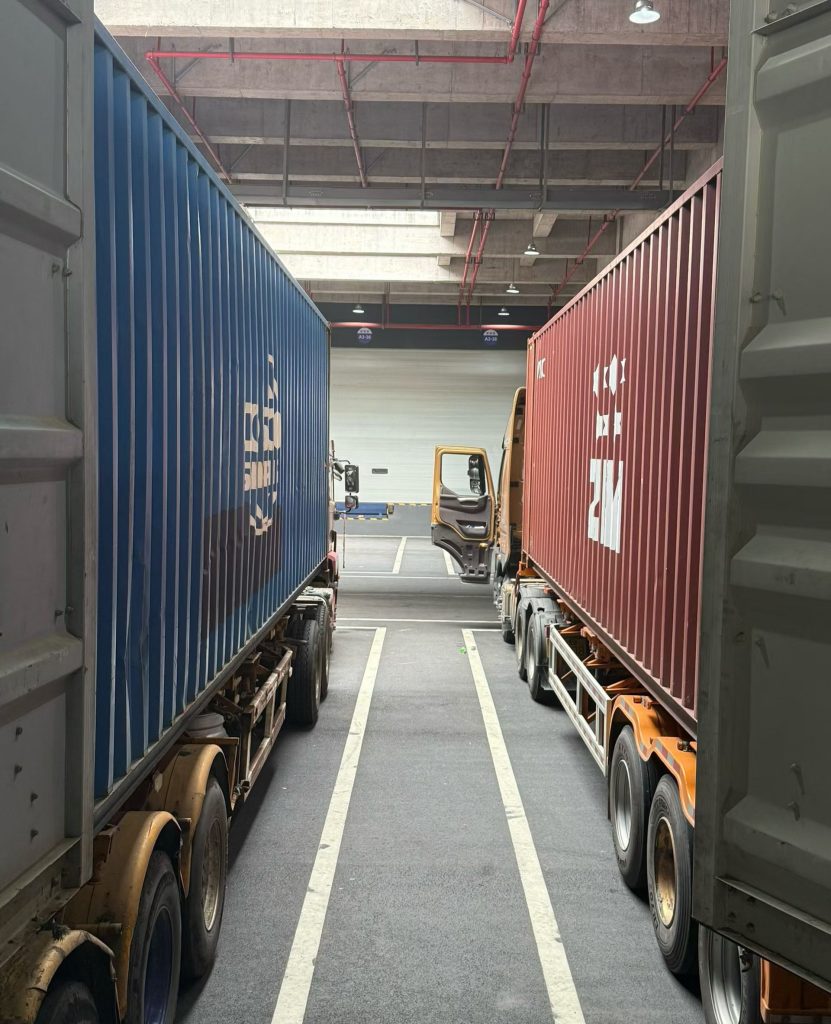
Choosing the right freight forwarder in China can have a major impact on your shipping cost, delivery time, customs clearance, and overall import experience.
China has thousands of freight forwarding companies offering air freight, sea freight, LCL, FCL, rail freight, DDP, and door-to-door shipping services. However, freight quotations can vary significantly, and a low price does not always mean better service.
For international buyers, importers, wholesalers, manufacturers, and e-commerce businesses, the most important question is not simply:
“Who offers the cheapest freight rate?”
It is:
“Which freight forwarder can provide the right service, clear pricing, reliable communication, and a suitable shipping solution for my cargo?”
This guide explains how to evaluate a China freight forwarder before booking your shipment.
1. What Does a China Freight Forwarder Do?
A freight forwarder coordinates the transportation of goods between the supplier and the destination.
Depending on the service, a freight forwarder may arrange:
- Factory pickup
- Warehouse receiving
- Cargo consolidation
- Export customs clearance
- Air freight
- Sea freight
- LCL
- FCL
- Rail freight
- Import customs clearance
- Duties and taxes under agreed DDP services
- Local transportation
- Door-to-door delivery
- Shipment tracking
The exact services depend on the shipping method, destination, cargo, and agreement.
A good freight forwarder should explain the complete shipping process instead of only providing a freight rate.
2. Why Is Choosing the Right Freight Forwarder Important?
International shipping involves multiple stages.
For example:
Chinese Factory
↓
Pickup
↓
China Warehouse / Port / Airport
↓
Export Customs
↓
International Transportation
↓
Destination Port / Airport
↓
Import Customs
↓
Local Delivery
↓
Final Address
A problem at any stage can cause delays or additional costs.
A reliable freight forwarder can help coordinate these steps and communicate important shipment updates.
For businesses that import regularly, choosing the right logistics partner can also make transportation more predictable.
3. Check the Freight Forwarder’s Experience
Experience is one of the first things to evaluate.
However, general experience is not enough.
You should ask whether the company has experience with:
- Your destination country
- Your type of product
- Your preferred transportation method
- Your required delivery service
For example, a company experienced in China-Europe sea freight may not necessarily be the best choice for a specialized shipment to another region.
Ask specific questions such as:
Have you handled shipments to my country before?
Can you arrange door-to-door delivery?
Can you handle LCL shipments?
Can you pick up cargo from my supplier?
Have you handled this type of product before?
The answers can help you determine whether the forwarder understands your logistics requirements.
4. Compare the Shipping Services
A reliable freight forwarder should be able to recommend more than one transportation solution when appropriate.
Common options include:
Sea Freight
Suitable for larger and heavier shipments.
Air Freight
Suitable for urgent or relatively small commercial shipments.
LCL
Suitable for cargo that does not fill an entire container.
FCL
Suitable for full-container shipments.
Rail Freight
Useful for certain China-Europe routes and other applicable corridors.
DDP
A door-to-door logistics structure that can include import customs procedures, applicable duties and taxes, and final delivery according to the agreed terms.
The best freight forwarder should help you select a method based on:
Cost + Speed + Cargo + Destination
rather than automatically selling the most expensive service.
5. Do Not Choose a Freight Forwarder Based Only on Price
This is one of the most important rules when selecting a logistics provider.
Suppose you receive three quotations:
Provider A: $1,500
Provider B: $1,650
Provider C: $1,800
At first glance, Provider A appears to be the cheapest.
But what if Provider A excludes:
- Destination handling
- Customs clearance
- Delivery
- Documentation
- Duties and taxes
while Provider C includes most of these services?
The lowest initial freight rate may not be the lowest total cost.
Always compare quotations based on the same:
Origin + Destination + Cargo + Shipping Method + Service Scope
6. Ask for a Detailed Freight Quotation
A professional quotation should clearly explain the service.
Depending on the shipment, it may include:
- Pickup
- Export customs
- Origin handling
- International freight
- Destination handling
- Import customs
- Local delivery
- Duties
- Taxes
- Other applicable charges
Ask the freight forwarder:
What is included in this price?
and:
What charges are not included?
This simple question can prevent many unexpected costs.
7. Check Whether the Quotation Is Door-to-Door
The phrase “shipping cost” can mean different things.
For example:
Port-to-Port
China Port → Destination Port
Airport-to-Airport
China Airport → Destination Airport
Door-to-Port
Chinese Factory → Destination Port
Door-to-Door
Chinese Factory → Final Delivery Address
These services have different costs and responsibilities.
If you need your goods delivered directly to your warehouse, office, or factory, make sure the quotation specifically states that the service is door-to-door.
8. Ask About Customs Clearance
Customs clearance is an important part of international shipping.
Before booking, ask:
- Is export customs clearance included?
- Is destination customs clearance included?
- Who handles the customs documents?
- Are duties and taxes included?
- What information is required from the importer?
- Are additional product certificates required?
The answers can vary depending on the destination country and cargo.
Products such as batteries, chemicals, food, cosmetics, medical products, and certain electronics may have additional requirements.
Accurate product information should be provided before shipping.
9. Understand DDP Shipping
DDP is popular among international buyers who want a simplified door-to-door solution.
A typical DDP process can include:
Supplier Pickup
↓
Export Customs
↓
International Freight
↓
Destination Customs
↓
Applicable Duties and Taxes
↓
Local Delivery
However, DDP quotations can vary significantly.
Before booking, confirm:
- What taxes are included?
- What duties are included?
- Is customs clearance included?
- Is final delivery included?
- Are there remote-area charges?
- Are there additional destination fees?
Do not assume that every quotation labeled “DDP” includes exactly the same services.
10. Evaluate Communication Speed
Communication is particularly important in international logistics.
A shipment can involve:
- Supplier
- Warehouse
- Trucking company
- Airline or shipping line
- Customs broker
- Destination agent
- Local delivery company
If communication is slow, it can be difficult to resolve problems quickly.
Before placing a large order, evaluate how the freight forwarder communicates.
Ask:
How quickly do you normally respond to shipment questions?
Will I receive tracking information?
Who will be my main contact?
How will you notify me about delays?
Good communication can be as important as the freight rate.
11. Check Shipment Tracking
For commercial shipments, tracking is useful.
Depending on the transportation method, you may receive:
- Tracking number
- Air waybill
- Bill of lading
- Container number
- Vessel information
- Flight information
- Warehouse status
- Delivery status
Ask how shipment updates will be provided.
For large or regular shipments, clear tracking procedures can make inventory planning easier.
12. Ask About Transit Time
A freight quotation should ideally include an estimated transit time.
However, make sure you understand what the transit time actually means.
For example:
Port-to-Port: 30 days
does not necessarily mean:
Factory-to-Warehouse: 30 days
Additional time may be required for:
- Factory pickup
- Export customs
- Warehouse handling
- Port processing
- Destination customs
- Local delivery
When comparing freight forwarders, compare the same type of transit time.
13. Check the Freight Forwarder’s Knowledge of Your Destination
International logistics is highly destination-specific.
A good China freight forwarder should understand the basic logistics characteristics of your target market.
For example, you may need information about:
- Major ports
- Airports
- Inland delivery
- Customs procedures
- Local taxes
- Remote-area delivery
- Import documentation
Ask the forwarder about your exact destination city rather than only the country.
Shipping to a major city may have a different cost and transit time from shipping to a remote location.
14. Check Whether They Can Consolidate Multiple Suppliers
Many international buyers purchase from several Chinese factories.
For example:
Supplier A — Guangzhou
Supplier B — Dongguan
Supplier C — Yiwu
Supplier D — Shenzhen
A freight forwarder may be able to collect the goods and consolidate them at a warehouse before international transportation.
The process can be:
Multiple Suppliers
↓
China Consolidation Warehouse
↓
Export
↓
International Shipping
↓
Destination Customs
↓
Final Delivery
Consolidation can simplify your logistics and may reduce the total transportation cost depending on the shipment.
15. Ask About Cargo Inspection and Warehouse Handling
If your supplier delivers goods to a freight forwarder’s warehouse, ask what warehouse services are available.
Depending on the provider, services may include:
- Cargo receiving
- Carton counting
- Weight measurement
- Dimension measurement
- Photo inspection
- Repacking
- Labeling
- Consolidation
- Palletizing
These services can be particularly useful when buying from multiple Chinese suppliers.
16. Check Whether the Freight Forwarder Handles Your Product Type
Different products can have different transportation requirements.
Before booking, provide the exact product description.
For example:
- Shoes
- Clothing
- Furniture
- Machinery
- Electronics
- Batteries
- Cosmetics
- Food
- Chemicals
- Industrial equipment
Ask:
Have you shipped this type of product before?
If the cargo requires special documentation or handling, this should be confirmed before the shipment is collected.
17. Be Careful With Extremely Low Freight Quotes
An unusually low quotation should be investigated.
It does not automatically mean the company is unreliable, but you should ask why the price is significantly lower.
Possible reasons include:
- Different shipping route
- Different service level
- Excluded charges
- Different delivery terms
- Temporary promotional rates
- Different carrier
- Additional charges later
Ask for a written breakdown.
A professional quotation should make the service scope clear.
18. Ask About Additional Charges
Before booking, ask whether any of the following may apply:
- Remote-area surcharge
- Oversized cargo surcharge
- Residential delivery fee
- Destination handling
- Customs inspection fee
- Storage fee
- Demurrage
- Detention
- Re-delivery fee
- Special handling
- Additional documentation
Not every shipment will incur these charges, but knowing the potential costs beforehand helps you plan your logistics budget.
19. Compare at Least Several Freight Forwarders
For your first shipment, it can be useful to request quotations from several providers.
For example:
Forwarder A
Forwarder B
Forwarder C
Compare:
| Factor | Forwarder A | Forwarder B | Forwarder C |
|---|---|---|---|
| Freight cost | — | — | — |
| Shipping method | — | — | — |
| Transit time | — | — | — |
| Customs | — | — | — |
| Duties/taxes | — | — | — |
| Door delivery | — | — | — |
| Tracking | — | — | — |
| Additional charges | — | — | — |
| Communication | — | — | — |
Do not automatically select the cheapest quotation.
Instead, select the provider offering the best combination of:
Price + Service + Reliability + Communication
20. Start With a Small Shipment
If you have never worked with a freight forwarder before, consider testing the service with a smaller shipment before moving all your cargo to the same provider.
This allows you to evaluate:
- Communication
- Pickup speed
- Documentation
- Customs handling
- Transit time
- Delivery performance
- Final charges
After a successful test shipment, you can consider using the forwarder for larger orders.
21. Questions to Ask Before Hiring a China Freight Forwarder
Before booking your shipment, ask these questions:
- What shipping methods do you offer?
- Can you arrange factory pickup in China?
- Can you consolidate multiple suppliers?
- Is the quotation door-to-door?
- Is export customs clearance included?
- Is destination customs clearance included?
- Are duties and taxes included?
- What is the estimated transit time?
- What charges are excluded?
- Can I track my shipment?
- Have you handled my type of product?
- Have you shipped to my destination before?
- Are there minimum charges?
- What happens if customs inspects the shipment?
- What happens if the cargo is delayed?
A freight forwarder that provides clear answers to these questions is easier to evaluate.
22. What Information Should You Give the Freight Forwarder?
To receive an accurate quotation, prepare:
Pickup Location
Chinese supplier city or factory location.
Destination
Country, city, postcode, and delivery address when required.
Product
Detailed product description.
Quantity
Number of cartons, pallets, or pieces.
Weight
Total gross weight.
Dimensions
Length × width × height.
Cargo Value
Commercial value.
Shipping Method
Air, sea, LCL, FCL, rail, DDP, or another service.
Delivery Requirement
Port, airport, warehouse, factory, or door-to-door.
Accurate information helps prevent quotation changes later.
23. What Makes a Good China Freight Forwarder?
A reliable freight forwarder should provide more than a cheap price.
Look for a provider that offers:
Clear quotations
Practical shipping options
Destination experience
Transparent communication
Accurate documentation
Reasonable transit times
Shipment tracking
Clear customs procedures
Professional problem solving
Consistent service
The goal is not simply to find the cheapest transportation.
The goal is to move your goods from China to the destination with a reasonable total cost and predictable logistics process.
Request a China Freight Forwarding Quote
If you are looking for a freight forwarder in China, you can request a quotation based on your actual cargo.
Provide:
Origin: China supplier city
Destination: Country + city
Product: Product description
Quantity: Cartons / pallets / pieces
Weight: Total gross weight
Dimensions: Length × width × height
Shipping Method: Air / Sea / LCL / FCL / Rail / DDP
Delivery: Port-to-port or door-to-door
A detailed cargo description allows the freight forwarder to recommend a suitable transportation method and provide a more meaningful quotation.
Frequently Asked Questions
How do I find a reliable freight forwarder in China?
Compare several providers based on destination experience, service scope, quotation transparency, communication, transit time, customs support, and customer service rather than choosing only by price.
What should I look for in a China freight forwarder?
Look for experience with your destination and product, clear quotations, reliable communication, shipment tracking, customs support, and transparent information about additional charges.
Is the cheapest freight forwarder the best?
Not necessarily. A low quotation may exclude important services or charges. Always compare complete quotations with the same service scope.
Can a China freight forwarder pick up goods from my supplier?
Many freight forwarders can arrange factory pickup. Provide the supplier’s city and address when requesting a quotation.
Can a freight forwarder consolidate goods from several Chinese suppliers?
Many logistics providers can offer consolidation services. Cargo can be collected from different suppliers and brought to a warehouse before export, subject to the shipment requirements.
Can a China freight forwarder provide DDP shipping?
Some freight forwarders offer DDP services to suitable destinations and for eligible cargo. Confirm exactly what customs clearance, duties, taxes, and final delivery charges are included.
How many freight forwarders should I compare?
For a first shipment, comparing several providers can help you understand the market rate and differences in service scope.
What information is needed for a freight quotation?
Normally you should provide the origin, destination, product description, quantity, weight, dimensions, cargo value, preferred shipping method, and delivery requirement.
Final Takeaway
Choosing a reliable China freight forwarder is about much more than finding the lowest shipping price.
Before booking, compare:
Experience + Price + Transit Time + Customs Support + Service Scope + Communication + Additional Charges
A professional freight forwarder should be able to explain how your cargo will move from the Chinese supplier to the final destination and clearly identify the costs involved.
If you provide complete cargo information, you can obtain more accurate quotations and make a better decision about your international shipping.