

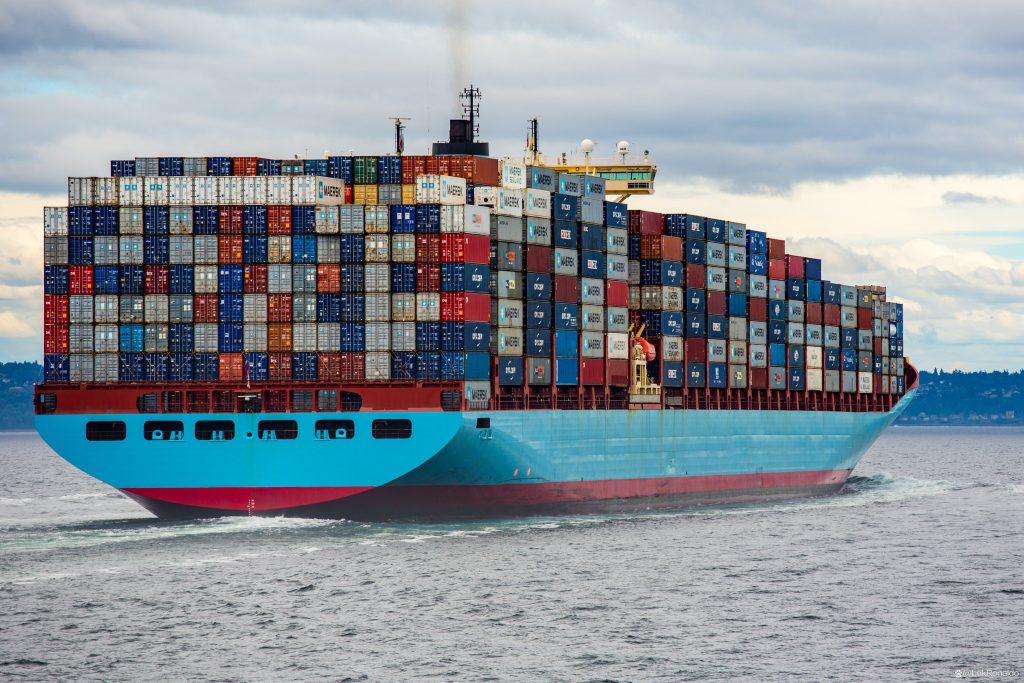
When importing goods from China, one of the most important logistics decisions is choosing between FCL and LCL shipping.
FCL means Full Container Load, while LCL means Less than Container Load.
The difference sounds simple: FCL uses a dedicated container, while LCL allows your cargo to share container space with other shipments.
In practice, however, choosing the right option involves much more than container size.
Importers need to consider cargo volume, weight, shipping cost, transit time, handling requirements, destination charges, customs procedures, delivery location, and how frequently they purchase from China.
This guide explains the differences between FCL and LCL shipping and helps importers determine which option may be more suitable for their cargo.
What Is FCL Shipping?
FCL stands for Full Container Load.
With FCL, the importer books an entire container for their cargo.
Common container types include:
- 20GP
- 40GP
- 40HQ
Depending on the cargo and route, other specialized container types may also be available.
FCL does not necessarily mean that the container must be physically filled to 100% capacity.
If your shipment is large enough that using a dedicated container makes financial or operational sense, FCL may be the better option.
A typical FCL shipment looks like:
Supplier → Factory Pickup → Container Loading → Export Customs → Port → Ocean Freight → Destination Port → Import Customs → Final Delivery
What Is LCL Shipping?
LCL stands for Less than Container Load.
With LCL, your cargo shares container space with goods belonging to other importers.
A typical LCL shipment looks like:
Supplier → China Warehouse → Consolidation → Export Customs → Ocean Freight → Destination Warehouse → Deconsolidation → Import Customs → Final Delivery
LCL is commonly used when an importer does not have enough cargo to justify a full container.
For example, if you have several cartons or a few pallets of goods, LCL may be more practical than booking an entire container.
FCL vs. LCL: The Basic Difference
| Factor | FCL | LCL |
|---|---|---|
| Container | Dedicated to one shipment | Shared with other cargo |
| Best for | Larger shipments | Smaller shipments |
| Consolidation | Generally not required | Required |
| Handling | Fewer consolidation stages | More handling stages |
| Pricing | Container-based | Shipment/volume-based |
| Flexibility | Best for larger volumes | Best for smaller volumes |
| Cargo separation | Dedicated container | Shared container |
| Typical users | Manufacturers, wholesalers, large importers | Small businesses, startups, e-commerce sellers |
Neither option is automatically better.
The right choice depends on the shipment.
When Should You Choose FCL?
FCL is often worth considering when your cargo volume is relatively large.
It may be suitable when:
- You have a large order.
- You regularly import from China.
- Your cargo can efficiently use a container.
- You want dedicated container space.
- You want to reduce consolidation and deconsolidation.
- Your cargo is sensitive to repeated handling.
- You need better control over loading.
For businesses with regular high-volume shipments, FCL can provide more predictable container planning.
When Should You Choose LCL?
LCL can be a good option when your shipment is relatively small.
It may be suitable when:
- You have only a few pallets.
- Your cargo volume is too small for an efficient FCL shipment.
- You are testing a new product.
- You are a small or medium-sized importer.
- You do not want to wait until you have enough goods to fill a container.
- You purchase products from multiple suppliers.
LCL gives businesses more flexibility because they can ship smaller quantities.
Is FCL Always More Expensive Than LCL?
No.
This is one of the most common misunderstandings.
Because FCL involves paying for an entire container, some buyers assume it is always more expensive.
But when the shipment volume becomes large enough, the total cost per CBM may be more competitive with FCL.
LCL also has its own charges, such as:
- Origin handling
- Warehouse handling
- Consolidation
- Documentation
- Destination handling
- Deconsolidation
- Customs clearance
- Delivery
For larger shipments, these costs can make LCL less attractive.
Therefore, when your cargo volume increases, ask the freight forwarder to provide both:
LCL quotation
and
FCL quotation
Then compare the complete logistics cost.
Is LCL Always Cheaper for Small Shipments?
Not necessarily.
Very small shipments can be affected by minimum charges.
For example, a shipment of only a fraction of a cubic meter may still incur minimum handling or freight charges.
This means that the cost per CBM can appear high.
In some cases, air freight or another transportation method may even be worth comparing.
The correct choice depends on:
- Cargo size
- Cargo weight
- Destination
- Required delivery time
- Shipping rates
- Handling charges
How Is FCL Pricing Calculated?
FCL freight is generally quoted based on the container type and shipping route.
For example:
- 20GP
- 40GP
- 40HQ
The total logistics cost can include more than ocean freight.
Potential charges include:
- Factory pickup
- Trucking
- Export customs clearance
- Documentation
- Origin terminal charges
- Ocean freight
- Destination charges
- Import customs clearance
- Local delivery
- Taxes and duties where applicable
The exact charges depend on the shipping arrangement.
Therefore, always ask whether the quote is:
Port-to-port
or
Door-to-door
How Is LCL Pricing Calculated?
LCL charges are generally based on the shipment’s chargeable volume or weight under the applicable tariff structure.
The freight forwarder may need:
- Number of cartons
- Dimensions
- Gross weight
- Total CBM
- Cargo type
- Origin
- Destination
Additional charges may apply at both origin and destination.
This is why a simple “price per CBM” comparison is not always enough.
What Is the Break-Even Point Between FCL and LCL?
There is no universal CBM number at which every shipment should switch from LCL to FCL.
The break-even point depends on:
- Origin port
- Destination port
- Container rates
- LCL rates
- Origin charges
- Destination charges
- Cargo weight
- Season
- Shipping route
- Delivery requirements
For example, a shipment of 8 CBM may be more economical as LCL on one route, while another route could make FCL attractive at a different volume.
The best approach is to ask a freight forwarder to quote both options for your exact shipment.
FCL vs. LCL Transit Time
FCL and LCL use the same basic ocean transportation network, but their overall logistics processes can be different.
FCL generally involves:
Factory → Container loading → Port → Vessel → Destination port
LCL generally involves:
Supplier → Warehouse → Consolidation → Port → Vessel → Destination warehouse → Deconsolidation
Because LCL requires consolidation and deconsolidation, the total door-to-door process can sometimes involve additional handling time.
However, the actual transit time depends on the route and service.
When delivery time is important, ask the forwarder for the estimated door-to-door transit time, not simply the vessel sailing time.
Which Is Faster: FCL or LCL?
Neither is automatically faster on every route.
FCL can sometimes have a simpler cargo-handling process because the container is dedicated to one shipment.
LCL requires consolidation before export and deconsolidation after arrival.
However, schedules vary by route.
A specific LCL service may have a better sailing schedule than a particular FCL option.
Therefore, compare the actual service schedules rather than relying on a general assumption.
Which Is Safer: FCL or LCL?
Both can be safe when handled correctly.
However, FCL may reduce the number of times your cargo is handled because your goods remain in a dedicated container.
LCL cargo is consolidated with shipments from other customers and may be handled at consolidation and deconsolidation facilities.
Cargo characteristics therefore matter.
Fragile products, high-value products, oversized items, and products with special packaging requirements should be discussed with the freight forwarder before choosing a shipping method.
Proper packaging remains important for both FCL and LCL.
FCL for Fragile or Sensitive Cargo
FCL can sometimes be attractive for cargo that benefits from reduced handling.
Examples may include:
- Furniture
- Machinery
- Large equipment
- Fragile products
- High-value commercial cargo
A dedicated container can provide greater control over loading arrangements.
However, FCL does not automatically eliminate the risk of damage.
Proper packaging, container loading, securing, moisture protection, and handling procedures are still important.
LCL for Small Business Importers
Small businesses often choose LCL because they do not purchase enough inventory to justify an entire container.
For example, an online retailer may purchase:
- 1 CBM of shoes
- 1.5 CBM of packaging
- 2 CBM of accessories
Instead of booking separate international shipments, these goods may be consolidated into one shipment.
This can make LCL useful for businesses that are growing gradually.
FCL for Large Importers
FCL is often suitable for:
- Large wholesalers
- Manufacturers
- Distributors
- Furniture importers
- Industrial companies
- High-volume e-commerce businesses
If you regularly import large quantities, FCL may simplify container planning and inventory management.
It can also allow you to negotiate transportation arrangements based on regular container volume.
Can Multiple Suppliers Be Combined into FCL?
Yes, depending on the logistics arrangement.
A buyer may purchase from several Chinese suppliers and arrange for the cargo to be delivered to a consolidation warehouse.
The forwarder can then coordinate loading into a container.
For example:
Supplier A → Warehouse
Supplier B → Warehouse
Supplier C → Warehouse
Then:
Warehouse → Container Loading → Export → FCL
This can be useful when purchasing from multiple factories.
However, warehouse receiving, consolidation, loading, and storage charges should be clarified before booking.
FCL vs. LCL for E-Commerce Sellers
E-commerce businesses often start with smaller inventory quantities.
At an early stage, LCL may be suitable because it allows smaller shipments.
As sales increase, the business may gradually move toward FCL.
For example:
Small inventory → LCL
Growing inventory → Compare LCL and FCL
Large regular inventory → FCL
This is not a fixed rule, but it is a practical way to evaluate shipping options as the business grows.
FCL vs. LCL for Amazon Sellers
Amazon sellers may use either FCL or LCL depending on inventory volume and destination requirements.
LCL can be useful for smaller replenishment shipments.
FCL can become attractive when inventory volume is large enough to efficiently use a container.
Before shipping, sellers should confirm:
- Warehouse receiving requirements
- Carton labeling
- Pallet requirements
- Delivery appointments
- Import requirements
- Product compliance
The logistics method should be selected according to the actual destination and inventory plan.
Can FCL or LCL Be Used for DDP Shipping?
Depending on the route and service provider, both FCL and LCL may be available as part of an integrated door-to-door or DDP logistics solution.
For example:
FCL DDP:
Supplier → Container → Ocean freight → Import clearance → Final delivery
LCL DDP:
Supplier → Consolidation warehouse → LCL → Import clearance → Final delivery
The exact service scope must be confirmed.
Do not assume that a DDP quotation automatically includes every destination cost or regulatory requirement.
FCL vs. LCL Customs Clearance
Both FCL and LCL shipments require appropriate customs procedures.
The main difference is how the cargo is handled within the container.
For FCL, the container is generally associated with one shipment or importer.
For LCL, multiple shipments share the container and are separated at the destination.
The customs process can therefore involve additional consolidation and deconsolidation procedures for LCL.
The exact requirements depend on the destination country and cargo.
How to Choose Between FCL and LCL
Use the following questions.
Question 1: How Much Cargo Do You Have?
Small shipment?
Start by comparing LCL.
Large shipment?
Request both LCL and FCL quotations.
Question 2: How Urgent Is the Cargo?
If you need inventory quickly, compare the actual transit schedules.
Question 3: Is the Cargo Fragile?
If reduced handling is important, discuss FCL with the freight forwarder.
Question 4: Do You Purchase from Multiple Suppliers?
If yes, ask about consolidation services.
Question 5: What Is Your Final Destination?
Destination charges can significantly affect the total cost.
Question 6: Do You Need Door-to-Door Delivery?
If yes, request a complete door-to-door quotation rather than only a port freight rate.
Example: Choosing LCL for a Small Shipment
Imagine an importer has:
- 12 cartons
- 350 kg
- 2.0 CBM
- General consumer products
- No urgent delivery requirement
An FCL container would likely provide far more capacity than needed.
The importer should first request an LCL quotation.
The freight forwarder can then compare:
LCL port-to-port
LCL door-to-door
and potentially other transportation options.
Example: Choosing FCL for a Large Shipment
Now imagine another importer has:
- 25 CBM
- 8,000 kg
- Regular commercial products
- One destination warehouse
Instead of assuming LCL is cheaper, the importer should request:
LCL quotation + 20GP quotation + 40GP/40HQ quotation where appropriate
The final cost comparison may show that FCL offers better value.
How to Reduce FCL and LCL Shipping Costs
Consolidate Supplier Orders
Combining products from several suppliers can reduce duplicated logistics arrangements.
Optimize Packaging
Efficient packaging can reduce wasted container space.
Compare Container Types
The correct container depends on cargo dimensions and volume.
Compare LCL and FCL Regularly
Freight rates change.
The option that was cheapest last month may not be the cheapest today.
Avoid Last-Minute Shipments
Advance planning provides more flexibility when comparing shipping methods.
Request Door-to-Door Cost
Do not compare only international freight.
Calculate the complete logistics cost to your warehouse.
What Information Does a Freight Forwarder Need?
To compare FCL and LCL accurately, provide:
- China pickup city
- Supplier location
- Destination country
- Destination city
- Product name
- Number of cartons
- Pallet quantity
- Gross weight
- Carton dimensions
- Total CBM
- Cargo value
- Required delivery date
- Port-to-port or door-to-door requirement
For example:
Origin: Shenzhen, China
Destination: Rotterdam, Netherlands
Product: Furniture accessories
Quantity: 50 cartons
Gross weight: 4,500 kg
Total volume: 12 CBM
Delivery: Commercial warehouse
Required service: Door-to-door
Preferred method: Sea freight
A freight forwarder can then compare LCL and FCL based on the actual cargo.
FCL vs. LCL FAQ
What is the main difference between FCL and LCL?
FCL uses a dedicated container for one shipment, while LCL combines multiple shipments in the same container.
Is FCL cheaper than LCL?
Not always. FCL may become more economical as cargo volume increases. The best choice depends on the complete cost.
Is LCL better for small businesses?
LCL can be useful for small businesses because it allows them to ship smaller quantities without booking an entire container.
What is the minimum volume for FCL?
FCL does not have a simple minimum CBM requirement. You can technically book a container even if it is not full, but the economic decision depends on the cargo volume and current rates.
What is the minimum volume for LCL?
Minimum chargeable volumes vary by forwarder and route. Request a quote using your actual shipment details.
Can I combine several suppliers into one LCL shipment?
Yes. Many freight forwarders provide supplier consolidation services.
Can I combine several suppliers into one FCL?
Yes, if the cargo can be delivered to a suitable warehouse or loading location and the shipment is planned accordingly.
Is FCL faster than LCL?
Not necessarily. FCL may have fewer consolidation stages, but actual transit depends on the shipping route and schedule.
Which is better for fragile cargo?
FCL may provide greater control and potentially reduce handling, but proper packaging and loading are essential regardless of the shipping method.
Can FCL and LCL both be used for door-to-door shipping?
Yes, depending on the route and logistics provider.
Final Decision: FCL or LCL?
The choice between FCL and LCL should be based on your actual shipment rather than a general rule.
LCL may be better when:
- Your cargo volume is relatively small.
- You do not need a full container.
- You want to ship smaller quantities.
- You are testing products.
- You are a small or growing importer.
FCL may be better when:
- Your cargo volume is large.
- You regularly import large quantities.
- Dedicated container space is useful.
- You want fewer consolidation stages.
- The total FCL cost is competitive with LCL.
For shipments in the middle range, the best solution is often to request both LCL and FCL quotations and compare the complete delivered cost.
Get an FCL vs. LCL Shipping Comparison
If you are not sure whether your China shipment should move by FCL or LCL, provide your cargo details to a freight forwarder.
Send:
- China pickup location
- Destination
- Product name
- Number of cartons or pallets
- Gross weight
- Dimensions
- Total CBM
- Cargo value
- Required delivery date
- Port-to-port or door-to-door requirement
The freight forwarder can compare the available LCL and FCL options and explain the estimated cost, transit time, and service scope.
Not sure whether FCL or LCL is right for your cargo? Send your shipment details and destination to request a customized comparison and freight quotation.