

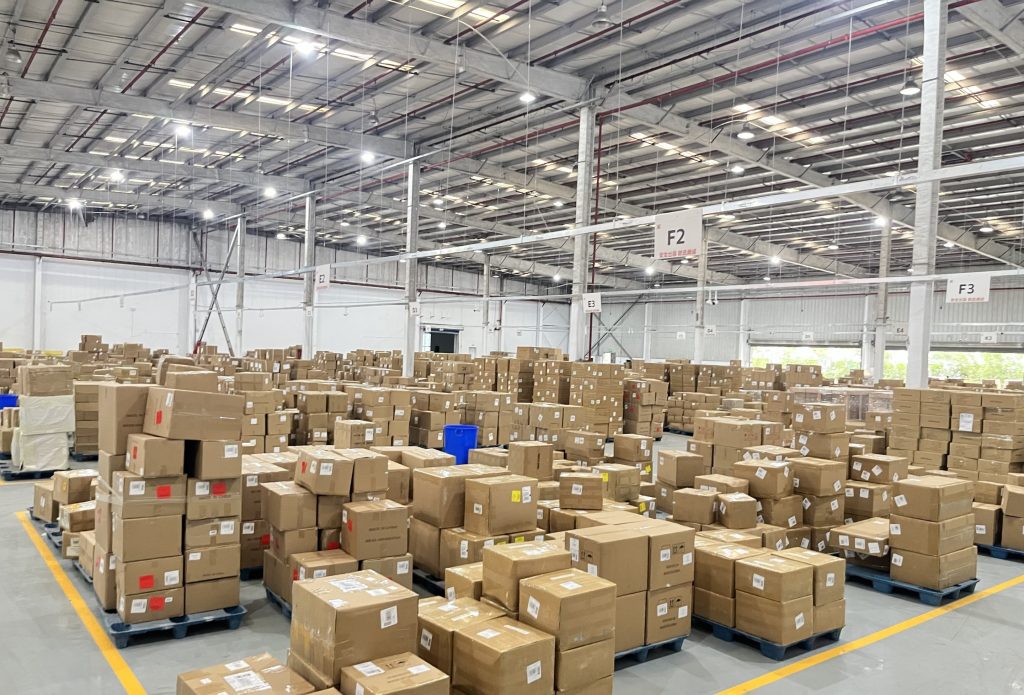
Sea freight is one of the most widely used transportation methods for businesses importing goods from China. It is particularly suitable for large-volume, heavy or non-urgent shipments where transportation cost is an important consideration.
However, international sea freight involves many stages. A shipment may start at a Chinese factory, move to a warehouse or container yard, pass through export customs, depart from a Chinese port, arrive at the destination port, complete import procedures and finally be delivered to the buyer.
Understanding each step can help importers estimate costs, prepare documents, avoid delays and communicate more effectively with their China freight forwarder.
1. What Is Sea Freight from China?
Sea freight is the transportation of cargo by ocean vessel from a Chinese port to a destination port or inland location in another country.
China has several major commercial ports serving international trade, including ports in areas such as:
- Shanghai
- Ningbo
- Shenzhen
- Guangzhou
- Qingdao
- Xiamen
- Tianjin
The appropriate port depends on the supplier’s location, cargo type, shipping route, vessel schedule and available services.
A typical shipment may follow this route:
Factory → China warehouse → Export customs → Origin port → Ocean vessel → Destination port → Import customs → Local delivery
The exact process depends on whether the shipment is FCL, LCL, port-to-port, door-to-door, DAP or DDP.
2. FCL vs. LCL Sea Freight
Before arranging ocean transportation, importers normally need to decide whether the shipment should use FCL or LCL.
FCL — Full Container Load
FCL means the cargo is transported using an entire container under the agreed shipping arrangement.
Common container types include:
- 20-foot container
- 40-foot container
- 40-foot high-cube container
FCL is generally suitable for larger shipments.
Advantages may include:
- Large cargo capacity
- Simplified cargo handling
- Better suitability for high-volume orders
- Lower average transportation cost when the container is efficiently utilized
LCL — Less Than Container Load
LCL is used when the shipment does not require a full container.
Cargo from multiple customers is consolidated into one container.
LCL can be useful for:
- Small commercial shipments
- Trial orders
- Inventory replenishment
- Buyers who do not have enough cargo for a full container
However, LCL involves consolidation at origin and deconsolidation at destination.
3. Step 1: Confirm the Supplier and Cargo Information
The sea freight process begins with accurate cargo information.
The importer should provide the freight forwarder with:
- Supplier name
- Factory address
- Product description
- Quantity
- Number of cartons
- Gross weight
- Carton dimensions
- Total volume
- Cargo value
- Destination
- Preferred delivery location
For example:
Product: Footwear
Quantity: 1,000 pairs
Cartons: 50
Gross weight: 850 kg
Volume: 6 CBM
Origin: Guangdong, China
Destination: Hamburg, Germany
The forwarder can use this information to determine whether FCL or LCL is more appropriate and prepare a preliminary quotation.
4. Step 2: Request and Compare Freight Quotations
After collecting the cargo information, the importer can request quotations from several freight forwarders.
A sea freight quotation may include:
- Factory pickup
- China domestic trucking
- Warehouse handling
- Export customs clearance
- Origin terminal charges
- Ocean freight
- Documentation
- Destination handling
- Customs clearance
- Final delivery
Not every quotation includes all of these services.
Therefore, buyers should ask:
“Which charges are included and which are excluded?”
This is more important than simply asking for the lowest ocean freight rate.
5. Step 3: Arrange Factory Pickup
Once the shipment is booked, the freight forwarder coordinates with the supplier.
The forwarder may arrange a truck to collect the cargo from the factory.
The supplier needs to ensure that:
- Goods are ready
- Packaging is complete
- Carton quantity is accurate
- Shipping marks are correct
- Documents are prepared
- Cargo can be loaded on schedule
For FCL shipments, an empty container may be delivered to the factory for loading, depending on the agreed logistics arrangement.
For LCL shipments, the supplier may send the cargo to a designated consolidation warehouse.
6. Step 4: Warehouse Receiving and Cargo Checking
For LCL shipments or consolidated cargo, the goods may first arrive at a freight forwarder’s warehouse.
Warehouse staff may check:
- Number of cartons
- Gross weight
- Dimensions
- Packaging condition
- Shipping marks
- Cargo identification
If the actual weight or volume differs significantly from the information originally provided, the freight cost may be adjusted.
For this reason, importers should provide final cargo measurements whenever possible.
7. Step 5: Container Loading
For FCL shipments, cargo is loaded into a container.
Proper container loading is important because poor loading can cause:
- Product damage
- Shifting cargo
- Broken packaging
- Uneven weight distribution
- Difficult unloading
Heavy cargo should be positioned appropriately, while fragile products may require additional protection.
For some products, pallets, straps, corner protection or other securing methods may be appropriate.
The exact loading method depends on the cargo.
8. Step 6: Export Customs Clearance in China
Before the cargo can leave China, export customs procedures must be completed according to applicable requirements.
The shipment may require information such as:
- Commercial invoice
- Packing list
- Product description
- HS classification
- Export declaration information
- Other applicable documents
The exporter is responsible for ensuring that the cargo information is accurate.
Incorrect product descriptions or incomplete documentation can cause delays or additional customs requirements.
A professional freight forwarder can coordinate the customs process, but the exporter and importer should still provide accurate information.
9. Step 7: Cargo Moves to the Port
After the required export procedures are completed, the cargo is transported to the port.
Depending on the arrangement, this may involve:
- Truck transportation
- Container yard
- Terminal handling
- Port security procedures
- Loading arrangements
The cargo must arrive according to the required cutoff time.
Missing a vessel cutoff can result in the shipment being moved to a later sailing.
10. Step 8: Ocean Vessel Departure
Once the container has been accepted by the carrier and loaded onto the vessel, the ship departs from the Chinese port.
At this stage, the importer may receive shipping information such as:
- Vessel name
- Voyage number
- Container number
- Bill of lading information
- Estimated departure
- Estimated arrival
The freight forwarder may provide tracking updates during the international transportation stage.
11. Step 9: Ocean Transportation
The container is transported by sea to the destination port.
Transit time varies depending on:
- Origin port
- Destination port
- Shipping route
- Carrier
- Direct or transshipment service
- Weather
- Port congestion
- Operational conditions
Importers should avoid treating a quoted transit time as an absolute guarantee.
Ocean schedules can change because of circumstances outside the control of the freight forwarder.
12. Step 10: Arrival at the Destination Port
After the vessel reaches the destination port, the container is discharged.
At this point, several procedures may occur before the cargo can be released.
These can include:
- Terminal processing
- Import documentation
- Customs declaration
- Customs inspection if required
- Payment of applicable duties and taxes
- Cargo release
The exact process depends on the destination country.
13. Step 11: Import Customs Clearance
Import customs clearance is one of the most important stages.
Customs authorities may review:
- Product description
- HS code
- Customs value
- Country of origin
- Import documents
- Product compliance
- Applicable duties and taxes
The importer may need to provide additional documentation depending on the cargo.
If customs requires an inspection, the shipment may take longer and additional costs may apply.
A freight forwarder or customs broker can assist with the process depending on the agreed service.
14. Step 12: Payment of Duties and Taxes
Depending on the Incoterm and shipping arrangement, the buyer or seller may be responsible for import duties and taxes.
Possible charges include:
- Customs duty
- Import VAT
- GST
- Other applicable taxes
The amount depends on the destination country’s regulations and the classification and value of the goods.
Importers should not assume that ocean freight automatically includes customs duties and taxes.
15. Step 13: Container Release
After the necessary customs and terminal procedures have been completed, the container can be released according to the applicable process.
The forwarder may coordinate:
- Container release
- Delivery appointment
- Trucking
- Warehouse delivery
Importers should monitor the free time available for the container and arrange delivery promptly.
Delays can potentially lead to additional storage, demurrage or detention costs.
16. Step 14: Final Delivery
If the shipment is arranged as door-to-door service, the cargo will be transported from the destination port to the agreed delivery address.
The destination may be:
- Warehouse
- Factory
- Distribution center
- Office
- Retail store
- Other commercial location
The final delivery cost can depend on:
- Distance
- Cargo weight
- Container type
- Delivery address
- Appointment requirements
- Local regulations
- Remote-area conditions
The buyer should confirm whether these costs are included in the original quotation.
17. What Documents Are Used for Sea Freight?
The exact documentation depends on the shipment, but common documents include:
Commercial Invoice
Shows transaction and cargo value information.
Packing List
Provides information about cartons, quantities, weight and packaging.
Bill of Lading
The bill of lading is a key document for ocean transportation.
Certificate of Origin
May be required depending on the destination and trade requirements.
Customs Documents
Export and import customs may require additional information or declarations.
Product Certificates
Certain products may require additional certificates or compliance documents.
Importers should confirm documentation requirements before the shipment leaves China.
18. Understanding Ocean Freight Costs
A sea freight quotation can contain multiple cost components.
These may include:
- Factory pickup
- China domestic trucking
- Warehouse handling
- Export customs
- Terminal handling
- Ocean freight
- Documentation
- Destination handling
- Customs clearance
- Final delivery
- Duties and taxes
- Insurance
The quotation should clearly state which costs are included.
For example, a quotation of “USD 800 ocean freight” does not necessarily mean that the entire shipment will cost only USD 800.
19. What Is CBM in Sea Freight?
CBM means cubic meter.
It is commonly used when calculating the volume of LCL cargo.
For example, if one carton measures:
50 cm × 40 cm × 30 cm
The volume is:
0.5 × 0.4 × 0.3 = 0.06 CBM
If there are 20 identical cartons:
0.06 × 20 = 1.2 CBM
The freight forwarder can use the total volume to determine the applicable LCL transportation cost according to the route and pricing rules.
20. How to Choose Between FCL and LCL
The right option depends on:
- Cargo volume
- Cargo weight
- Product characteristics
- Destination
- Budget
- Required delivery time
FCL may be appropriate when the shipment efficiently uses a container.
LCL may be more suitable when the cargo volume is relatively small.
However, there is no universal CBM threshold that applies to every route. Container rates, LCL rates, local charges and destination fees can vary.
The best approach is to ask the freight forwarder to compare both options based on your actual shipment.
21. What Is Port-to-Port Shipping?
Port-to-port shipping generally means the main ocean transportation is arranged between the agreed origin port and destination port.
The buyer may still need to arrange:
- Factory pickup
- Export customs
- Import customs
- Destination transportation
- Final delivery
Therefore, port-to-port service requires more coordination from the importer than door-to-door service.
22. What Is Door-to-Door Sea Freight?
Door-to-door sea freight means the logistics provider coordinates transportation from the origin location to the final agreed destination.
A typical route may be:
Factory → China warehouse/port → Export customs → Ocean freight → Destination port → Import customs → Local trucking → Buyer
This can be convenient for importers who do not have their own logistics team.
However, always confirm exactly what is included in the door-to-door quotation.
23. DDP Sea Freight from China
DDP sea freight is sometimes used by overseas buyers who want a simplified import process.
A typical arrangement may involve:
- Pickup from the Chinese supplier
- Export customs
- Ocean transportation
- Destination customs
- Applicable duties and taxes
- Local delivery
However, DDP does not remove the need to comply with destination-country import regulations.
Before booking DDP sea freight, confirm:
- Product eligibility
- Import requirements
- Duties and taxes
- Customs clearance
- Final delivery
- Additional charges
- Importer-of-record responsibilities where applicable
24. Common Problems in China Sea Freight
Incorrect Cargo Information
If the actual cargo volume differs from the quoted volume, the final price may change.
Missing Documents
Incomplete documentation can delay customs clearance.
Missed Cutoff
If cargo misses the carrier’s cutoff, it may need to wait for a later sailing.
Port Congestion
Congestion can affect vessel schedules and cargo release.
Customs Inspection
A customs inspection may increase processing time and potentially create additional charges.
Poor Packaging
Inadequate packaging can result in damage during handling and transportation.
Unexpected Destination Charges
Some quotations exclude destination-side costs.
25. How to Reduce Sea Freight Costs
Importers can take several practical steps.
Consolidate Multiple Orders
Cargo from several suppliers can sometimes be consolidated into one shipment.
Optimize Carton Size
Reducing unnecessary packaging can improve container utilization.
Plan Orders Earlier
Advance planning provides more flexibility when selecting shipping schedules.
Compare FCL and LCL
Do not automatically choose one without comparing the complete costs.
Compare Multiple Forwarders
Obtain several quotations with the same service requirements.
Avoid Last-Minute Changes
Changes after booking can create additional handling or documentation costs.
Reduce Storage Time
Prompt customs clearance and delivery can help minimize storage-related charges.
26. How to Select a Reliable China Sea Freight Forwarder
When evaluating a freight forwarder, consider:
- Experience with your destination
- Port coverage
- Carrier options
- LCL consolidation capability
- FCL experience
- Customs support
- Documentation quality
- Communication
- Shipment tracking
- Pricing transparency
- Destination delivery capability
A good freight forwarder should be able to explain the entire shipping process rather than simply providing an ocean freight rate.
27. What Information Should You Send for a Sea Freight Quote?
A useful inquiry should include:
Product:
What are you shipping?
Quantity:
How many units?
Cartons:
How many cartons or pallets?
Dimensions:
Length × width × height.
Weight:
Gross weight.
Volume:
Total CBM if available.
Origin:
Supplier city and pickup address.
Destination:
Port or complete delivery address.
Shipping method:
FCL or LCL.
Service:
Port-to-port, DAP or DDP.
Cargo type:
General cargo or special cargo.
Providing this information helps the freight forwarder produce a more accurate quotation.
Frequently Asked Questions
1. How does sea freight from China work?
The basic process is factory pickup, warehouse handling if required, export customs, port handling, vessel departure, ocean transportation, destination customs clearance and final delivery.
2. How long does sea freight from China take?
Transit time varies by origin, destination, carrier, route, transshipment and operating conditions. A route-specific estimate should be requested from the freight forwarder.
3. Is sea freight from China cheap?
For many large shipments, sea freight can be more economical than air freight. However, the total cost depends on the complete logistics process.
4. What is the difference between FCL and LCL?
FCL uses an entire container for the shipment, while LCL combines cargo from multiple shippers in one container.
5. What does CBM mean?
CBM means cubic meter and is commonly used to describe cargo volume in sea freight, especially for LCL shipments.
6. What information does a freight forwarder need?
The forwarder normally needs the product, quantity, carton count, dimensions, gross weight, origin, destination and preferred shipping service.
7. Can I ship goods directly from a Chinese factory?
Yes. A freight forwarder can usually arrange pickup from the supplier’s factory or warehouse.
8. Can one freight forwarder collect goods from multiple factories?
Yes. Many forwarders provide consolidation services for buyers purchasing from multiple Chinese suppliers.
9. Is customs clearance included in sea freight?
Not automatically. Customs clearance should be specifically listed in the quotation or service agreement.
10. Are duties and taxes included?
They are not automatically included. Whether duties and taxes are included depends on the shipping arrangement and Incoterm.
11. What is DDP sea freight?
DDP is an Incoterm where the seller generally takes responsibility for import clearance and applicable duties and taxes, subject to the agreed contract and local regulations.
12. What happens if my container is delayed?
The freight forwarder should identify the reason for the delay and provide an updated schedule. Possible causes include port congestion, vessel schedule changes, customs procedures or operational disruptions.
13. What are demurrage and detention?
They are charges related to keeping carrier containers beyond the applicable free period. The exact rules depend on the carrier and shipping arrangement.
14. Should I choose FCL or LCL?
It depends on the cargo volume, destination, total cost and service requirements. Ask your freight forwarder to compare both options using your actual shipment details.
15. How can I reduce China sea freight costs?
Consolidate shipments, improve container utilization, plan orders in advance, compare FCL and LCL, compare several forwarders and confirm all included and excluded charges before booking.
Conclusion
Sea freight from China involves a series of coordinated steps, from factory pickup and export customs to ocean transportation, destination customs clearance and final delivery.
For importers, the most important factors are accurate cargo information, proper documentation, realistic transit expectations and a transparent freight quotation.
Before booking a shipment, confirm whether you need FCL or LCL, compare complete logistics costs, understand the selected Incoterm and ask the freight forwarder to identify any potential additional charges.
A well-planned sea freight process can help importers control transportation costs, reduce avoidable delays and build a more reliable supply chain from China to international markets.