

When importing goods from China, choosing between air freight and sea freight can have a major impact on shipping cost, delivery time, inventory planning, and overall profitability.
Air freight is generally faster, while sea freight is usually more economical for larger shipments. However, the best option depends on more than speed and price.
Factors such as cargo weight, volume, product value, delivery deadline, destination, customs requirements, and inventory needs should all be considered before booking.
This guide compares China air freight and sea freight and explains how importers can choose the right transportation method.
China Air Freight vs. Sea Freight at a Glance
| Factor | Air Freight | Sea Freight |
|---|---|---|
| Transportation speed | Faster | Slower |
| Cost per kg | Generally higher | Generally lower for larger shipments |
| Large-volume cargo | Can be expensive | Usually more suitable |
| Small shipments | Often suitable | LCL may be suitable |
| Urgent cargo | Excellent option | Less suitable |
| Heavy cargo | Possible | Often more economical |
| Inventory replenishment | Faster | Requires more planning |
| Packaging requirements | Important | Important |
| Tracking | Available depending on service | Available depending on service |
| Best advantage | Speed | Cost efficiency |
These are general comparisons. Actual prices and transit times vary according to the route, carrier, season, cargo, and service arrangement.
What Is China Air Freight?
Air freight transports commercial cargo by aircraft from China to the destination country.
Major Chinese air-cargo gateways include airports serving cities such as:
- Shenzhen
- Guangzhou
- Shanghai
- Beijing
- Zhengzhou
- Hong Kong
The best airport depends on the supplier’s location, cargo characteristics, airline availability, and destination.
A typical air-freight process is:
Factory
↓
Pickup
↓
China warehouse/airport
↓
Export clearance
↓
Air transportation
↓
Destination airport
↓
Import customs clearance
↓
Final delivery
The actual process varies according to the service.
What Is China Sea Freight?
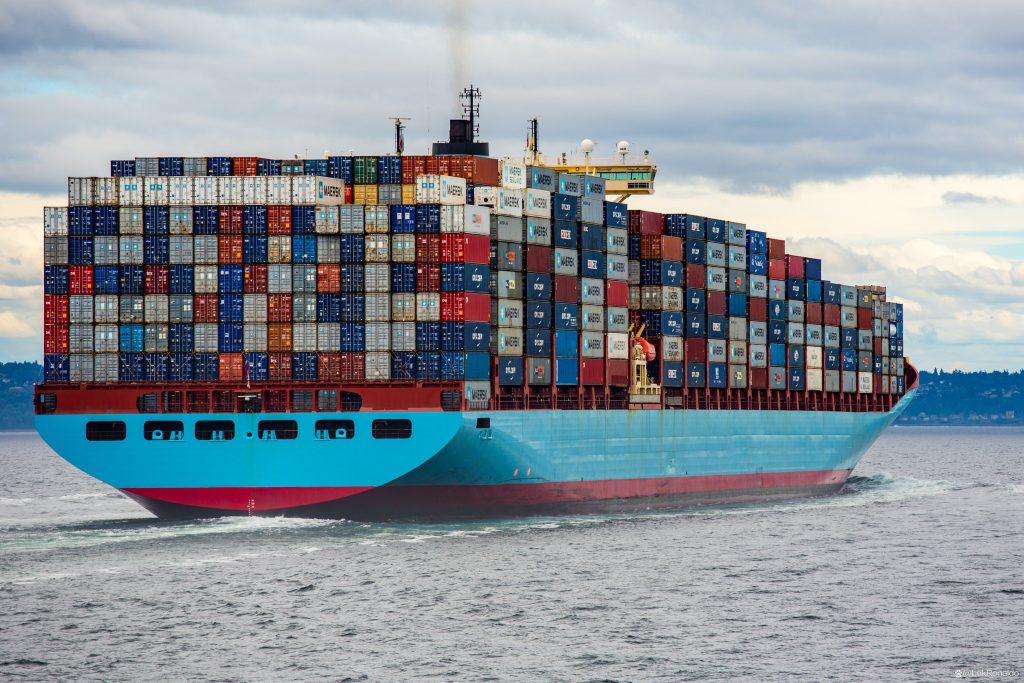
Sea freight transports cargo by container vessel.
Major Chinese shipping gateways include:
- Shanghai
- Ningbo
- Shenzhen
- Guangzhou
- Qingdao
- Xiamen
Sea freight is commonly divided into:
LCL
Less than Container Load.
Multiple customers share container space.
FCL
Full Container Load.
One customer uses an entire container.
Common container types include:
- 20GP
- 40GP
- 40HQ
Sea freight is particularly useful when cargo volume is too large for economical air transportation.
When Should You Choose Air Freight?
Air freight may be the better choice when speed is the main priority.
It can be suitable for:
- Fashion inventory
- Electronics
- Spare parts
- Samples
- Small commercial shipments
- High-value products
- Urgent replenishment
- Time-sensitive products
For example, if an importer has a product launch next week and needs additional inventory quickly, sea freight may not meet the required schedule.
Air freight can reduce transportation time, although the higher cost needs to be considered.
When Should You Choose Sea Freight?
Sea freight is often more appropriate when:
- Cargo volume is large
- Cargo is heavy
- Delivery is not urgent
- Transportation cost is important
- The goods are suitable for container transportation
Typical products include:
- Furniture
- Machinery
- Building materials
- Large quantities of clothing
- Packaging materials
- Industrial products
- Wholesale merchandise
For large commercial shipments, the lower transportation cost can make sea freight much more attractive.
How Shipping Weight Affects the Decision
Weight alone is not enough to determine the best shipping method.
You also need to consider volume.
Imagine two shipments:
Shipment A
100 kg
0.5 CBM
Shipment B
100 kg
5 CBM
Both weigh 100 kg, but Shipment B occupies ten times the volume.
For air freight, volumetric weight can significantly affect the chargeable weight.
For sea freight, cargo volume is particularly important when evaluating LCL and FCL.
Therefore, always provide:
Gross weight + package dimensions + total CBM
when requesting freight quotations.
Air Freight and Volumetric Weight
Air freight rates can be based on chargeable weight.
Depending on the carrier and service, chargeable weight may be determined by comparing actual weight with volumetric weight.
A commonly used formula is:
Length × Width × Height ÷ 6000
when dimensions are measured in centimeters.
For example:
60 × 40 × 40 ÷ 6000 = 16 kg
If the actual weight is 10 kg, the applicable chargeable weight may be 16 kg under the relevant pricing rule.
However, different airlines, forwarders, and services can use different divisors or rules.
Always confirm the calculation with your freight forwarder.
Air Freight Cost vs. Sea Freight Cost
One of the biggest differences is the transportation cost structure.
Air freight generally has a higher cost per kilogram.
Sea freight generally becomes more cost-efficient as shipment volume increases.
However, comparing:
Air freight $/kg
with:
Sea freight $/CBM
is not always meaningful.
You need to calculate the complete shipment cost.
For example:
Air freight
Air freight
- pickup
- export handling
- customs
- destination delivery
Sea freight
Ocean freight
- origin charges
- LCL/FCL handling
- destination charges
- customs
- delivery
The final cost should be compared on the same delivery basis.
Transit Time: Air vs. Sea
Air freight is generally faster than sea freight.
But remember that total shipping time includes more than the international transportation segment.
A shipment may involve:
Factory preparation
→
Pickup
→
Export handling
→
International transportation
→
Import customs
→
Final delivery
Therefore, when comparing quotations, ask the freight forwarder for the estimated door-to-door transit time.
Do not compare only:
Flight time
with:
Vessel sailing time.
Those figures may not represent the complete delivery process.
China Air Freight May Be Better for High-Value Cargo
For some high-value products, faster transportation can reduce inventory-related costs.
For example, consider products with:
- High selling prices
- Short product cycles
- Rapid demand changes
- Limited inventory
- High opportunity cost of stockouts
Paying more for air freight may make commercial sense if a delayed shipment would result in lost sales.
Therefore, the decision should consider:
Transportation cost + inventory cost + opportunity cost
rather than transportation cost alone.
Sea Freight May Be Better for Large Inventory
For products with predictable demand and large volumes, sea freight can offer a more economical logistics solution.
For example:
A furniture importer may have several CBM of goods that do not need to arrive immediately.
In this situation, sea freight may be more appropriate than air freight.
The importer can reduce transportation costs by planning inventory well in advance.
LCL vs. FCL
If you choose sea freight, you may need to decide between LCL and FCL.
LCL
LCL may be suitable when:
- Shipment volume is relatively small
- You do not need a full container
- You want to consolidate cargo
However, LCL may involve additional consolidation and handling stages.
FCL
FCL may be suitable when:
- Shipment volume is large
- Container utilization is efficient
- You want greater control over the container
If your shipment is close to the economic boundary between LCL and FCL, ask the freight forwarder for both quotations.
Air Freight vs. Sea Freight for Different Products
| Product | Often Consider |
|---|---|
| Clothing | Air or sea |
| Shoes | Air or sea |
| Electronics | Air or sea |
| Machinery | Usually sea for larger shipments |
| Furniture | Usually sea |
| Spare parts | Air for urgent orders |
| Samples | Air/express |
| Packaging materials | Usually sea |
| Large industrial equipment | Sea |
| High-value compact goods | Air |
This table is only a general starting point. Cargo characteristics and route-specific requirements must be considered.
What About DDP Air Freight and DDP Sea Freight?
DDP is a delivery term, not a transportation mode.
You can encounter:
China DDP Air Freight
or
China DDP Sea Freight
A DDP air service may provide faster delivery but generally at a higher transportation cost.
A DDP sea service may provide a lower transportation cost for larger shipments but usually takes longer.
When comparing DDP quotations, verify:
- Pickup
- Export clearance
- International transportation
- Import customs clearance
- Duties and taxes
- Final delivery
- Remote-area charges
- Additional fees
Do not assume that every service marketed as “DDP” has identical coverage.
How Customs Affects Air and Sea Freight
Both air and sea shipments can require import customs clearance.
Customs may review:
- Product description
- HS classification
- Declared value
- Country of origin
- Commercial invoice
- Packing list
- Product-specific documents
Sea freight is not automatically easier than air freight from a customs perspective.
The key factor is whether the shipment complies with the destination country’s import requirements.
Common Mistakes When Choosing Air or Sea Freight
Mistake 1: Choosing Only Based on Price
The cheapest transportation rate may not be the cheapest overall logistics solution.
Mistake 2: Ignoring Volume
Large lightweight products can become expensive by air because of volumetric weight.
Mistake 3: Ignoring Inventory Cost
A cheaper shipment that arrives too late can cause stockouts.
Mistake 4: Comparing Different Service Scopes
Do not compare:
Air airport-to-airport
with:
Sea door-to-door
without adjusting the costs.
Mistake 5: Ignoring Destination Charges
The main freight rate may exclude destination handling, customs, or delivery.
How to Decide Between Air Freight and Sea Freight
Use the following questions.
Is the shipment urgent?
Yes → Consider air freight.
No → Continue comparing.
Is the shipment large or heavy?
Yes → Consider sea freight.
Is the cargo lightweight but bulky?
Yes → Compare volumetric air weight with sea-freight volume charges.
Is the cargo high value?
Yes → Air freight may be attractive if faster inventory turnover is important.
Is transportation cost the main priority?
Yes → Sea freight is often worth considering for larger shipments.
Do you need door-to-door service?
Compare both air and sea door-to-door quotations rather than comparing transportation rates alone.
Information Needed for an Accurate Comparison
Give your freight forwarder:
Origin:
City and supplier location in China
Destination:
Country, city, ZIP/postcode
Product:
Detailed description
Quantity:
Pieces/cartons/pallets
Gross weight:
Total kg
Dimensions:
L × W × H
Total volume:
CBM
Cargo value:
Commercial value
Required delivery date:
If applicable
Service:
Airport/port-to-port or door-to-door
Then ask for:
Air freight quotation
and
Sea freight quotation
using the same shipment information.
Air Freight vs. Sea Freight Decision Checklist
- [ ] Cargo weight confirmed
- [ ] Package dimensions confirmed
- [ ] Total CBM calculated
- [ ] Destination confirmed
- [ ] Delivery deadline identified
- [ ] Air freight quotation received
- [ ] Sea freight quotation received
- [ ] Customs costs checked
- [ ] Destination charges checked
- [ ] Final delivery cost checked
- [ ] Transit time compared
- [ ] Inventory requirements considered
- [ ] Special cargo requirements confirmed
Frequently Asked Questions
Is air freight from China better than sea freight?
Not necessarily. Air freight is generally faster, while sea freight is often more economical for larger shipments. The best option depends on your cargo and business requirements.
Which is cheaper, air freight or sea freight?
Sea freight is generally more cost-effective for larger shipments, but the actual comparison should include all origin, transportation, customs, destination, and delivery charges.
When should I use air freight from China?
Air freight is worth considering when speed is important, the shipment is relatively compact, or the cost of delayed inventory is significant.
When should I use sea freight from China?
Sea freight is often suitable for large, heavy, or non-urgent shipments where transportation cost is an important consideration.
Is DDP air freight faster than DDP sea freight?
Generally, DDP air freight is faster, but the exact transit time depends on the route, carrier, customs clearance, and final delivery arrangements.
Can I ship small cargo by sea?
Yes. LCL shipping allows smaller shipments to share container space with other cargo, although additional consolidation and handling charges may apply.
Final Takeaway
There is no universal answer to whether air freight or sea freight is better.
Choose air freight when speed, inventory availability, and time-sensitive delivery are important.
Choose sea freight when shipment volume is larger, delivery is less urgent, and transportation cost is a major consideration.
For a reliable decision, compare the complete door-to-door cost and estimated transit time, not just the advertised freight rate.
Provide accurate weight, dimensions, volume, product information, origin, destination, and delivery requirements to your freight forwarder. Then request comparable air and sea quotations.
The right shipping method is the one that provides the best balance between cost, delivery time, cargo requirements, and overall business value.