

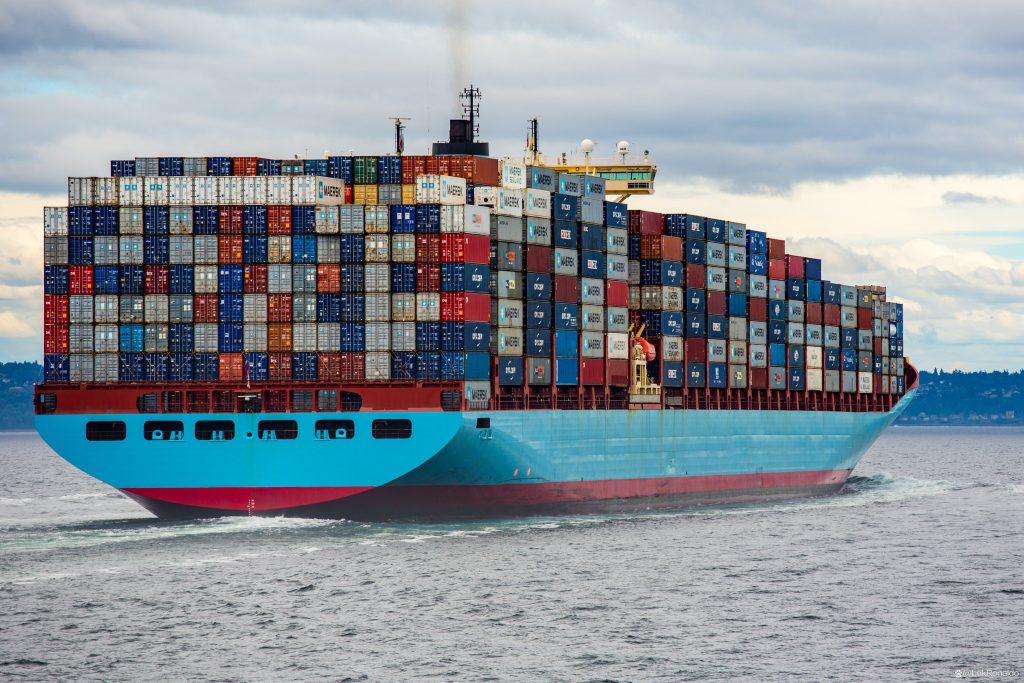
For importers and exporters moving full containers from China to Jordan, the Port of Aqaba on the Red Sea is the only commercial deep-water gateway — and the China–Aqaba corridor is one of the most strategically important trade lanes in the Eastern Mediterranean–Red Sea region. Yet for many shippers, the biggest pain points are not the ocean transit itself, but unstable space allocation, opaque pricing through multiple middlemen, export–import documentation gaps, and unpredictable clearance timelines at Aqaba.
This is where a true Red Sea trade lane master-loader (庄家) direct service — combining contracted carrier space, weekly sailings, integrated export customs declaration in China, and seamless Aqaba import clearance — delivers decisive value. This article explains in detail how the “master-loader direct FCL booking + customs clearance one-stop” model works on the China → Aqaba lane in 2026.
1. What “Master-Loader Direct” Actually Means on the China–Aqaba Lane
In the freight forwarding industry, a “庄家” (master loader / master co-loader) is a forwarder that holds direct, contracted block space with ocean carriers — not a broker who re-sells space purchased from another forwarder. On the China–Aqaba lane, this distinction is economically significant.
🔹 The Carrier Contract Layer
A genuine master-loader on this corridor maintains annual contracts with two or more of the following carriers: COSCO, MSC, Maersk, CMA CGM, ONE, HMM, EMC, OOCL . These contracts provide:
- Guaranteed weekly slot allocation — your container does not get “rolled” to the next sailing during peak season
- Contracted rates — bypassing the 2–3 layer markup chain that generalist brokers add
- Priority customer service from the carrier — including S/O (Shipping Order) turnaround, B/L amendments, and schedule change notifications
- Multi-carrier flexibility — if one carrier skips a port or reroutes, your cargo moves on the next available contracted vessel
🔹 2026 Red Sea Service Network — Real Routing
The China–Aqaba corridor is served by several established services:
| Service | Operator(s) | Rotation | Frequency | Aqaba Transit from China |
|---|---|---|---|---|
| RCS (Red Sea–China Shuttle) | ONE | Shanghai → Qingdao → Nansha → Shekou → Jeddah → Sokhna → Aqaba → Jeddah → Shanghai | Weekly | Shekou → Aqaba ~23 days |
| RCR (RCL China Red Sea Service) | RCL | Shanghai → Qingdao → Nansha → Shekou → Jeddah → Sokhna → Aqaba → Jeddah → Shanghai | Weekly | Shekou → Aqaba ~23 days; Nansha → Aqaba ~25 days; Qingdao → Aqaba ~30 days |
| RES (Red Sea Service) | CU Lines + Zhonggu | Shanghai → Ningbo → Nansha → Jeddah → Aqaba → Sokhna → Shanghai | Weekly | Full rotation ~56 days |
| Far East–Red Sea (bi-weekly) | RCL + TS Lines (+Evergreen OGRD) | Shanghai → Qingdao → Nansha → Shekou → Jeddah → Sokhna → Aqaba → Jeddah → Shanghai | Bi-weekly | Comparable to RCR |
| Traditional transshipment | COSCO / MSC / CMA CGM | China → Singapore / Port Klang → Jebel Ali → Aqaba | Weekly | 20–25 days |
💡 Key insight: The phrase “master-loader direct” refers to contracted space on these services — not a mythical non-stop vessel. A professional forwarder will transparently tell you which service your cargo is booked on, the exact routing, and the realistic transit window.
According to latest available schedule data, transit from major Chinese ports to Aqaba ranges from ~23 days (Shekou via RCR/RCS direct Red Sea services) to 28–32 days (northern ports or transshipment via Singapore/Jebel Ali) .
2. The FCL Booking Process: Step-by-Step
A master-loader direct service manages the entire FCL workflow from booking to Bill of Lading issuance.
🔹 Phase 1: Booking Submission (T–14 to T–10 Days)
Booking should be submitted 10–14 days before the estimated sailing date; during peak season (June–November), earlier submission is strongly recommended .
Required booking information:
| Field | Detail |
|---|---|
| Commodity name | Full Chinese & English description |
| HS Code | 6-digit minimum |
| Gross weight | KG |
| Volume | CBM |
| Package count & type | Cartons, pallets, crates, etc. |
| Shipping marks | 唛头 |
| Shipper & Consignee | Full name, address, contact |
| Cargo nature | General / Reefer / DG / OOG |
| Preferred sailing week | Based on supplier readiness |
⚠️ For dangerous goods (DG), reefer (RF), or over-gauge (OOG) cargo: Must be declared at booking stage with supporting certificates — MSDS, DG packaging certificate, reefer power spec, or OOG technical drawings .
🔹 Phase 2: Shipping Order (S/O) & Confirmation (T–7 Days)
Upon booking acceptance, the forwarder issues the S/O (Shipping Order) containing:
- Vessel name & voyage number
- ETD (Estimated Time of Departure)
- Container type (20GP / 40GP / 40HQ)
- CY cutoff time
- Depot location for container pick-up
Critical: Upon receiving the S/O, immediately verify vessel name, voyage, ETD, and container type. Any discrepancy must be flagged within 24 hours.
🔹 Phase 3: Container Loading & Export Customs Declaration (T–3 to T–1 Days)
- Container pick-up from the designated depot (or forwarder arranges factory stuffing)
- Loading supervision — photographic evidence, weight distribution, lashing
- Container return to port / CY before cutoff
- Export declaration filed with Chinese Customs:
- Customs Entrustment Letter (报关委托书)
- Commercial Invoice
- Packing List
- Sales Contract
- Document consistency check — the export declaration must exactly match the booking information; the pre-manifest must match actual cargo
📌 Zero-to-2% weight tolerance: Aqaba Customs requires the actual container weight to deviate from the Bill of Lading weight by no more than 0–2%. Exceeding this tolerance triggers fines .
🔹 Phase 4: Bill of Lading Issuance (T+0 to T+3 Days)
After sailing, the forwarder issues the B/L based on verified loading data. For Jordan, the B/L must display:
- 4-digit HS code per product line (Jordan Customs mandatory requirement)
- Accurate cargo description
- Consignee details exactly matching the commercial invoice
- “On Board” notation with vessel and date
3. Integrated Export Clearance: The “One-Stop” Advantage
The defining feature of a master-loader direct service is that export customs declaration is bundled into the same contract as ocean freight — one accountable party, one quote, one point of contact.
🔹 What “Customs Clearance One-Stop” Includes
| Stage | Service |
|---|---|
| Pre-shipment | HS code verification, valuation review, origin declaration preparation |
| Factory pickup | From any location in China (Pearl River Delta, Yangtze River Delta, Bohai Rim) |
| Warehouse handling | Container stuffing, lashing, weighing, photographic record |
| Export declaration | Filed with Chinese Customs — electronic declaration + document submission |
| Declaration reconciliation | Ensuring 100% consistency between booking → pre-manifest → export declaration → B/L |
| Carrier coordination | Vessel booking, S/O management, B/L issuance |
| Document preparation | Commercial Invoice (Chinese–English–Arabic), Packing List, Certificate of Origin (CCPIT) |
| Pre-arrival filing | Documents transmitted to Aqaba-based agent before vessel arrival |
🔹 Why “Document Consistency” Is Non-Negotiable
Jordan Customs enforces a strict “Four Consistencies” (四个统一) rule :
- Consignee information identical across all documents
- Cargo description identical across Invoice, Packing List, B/L
- HS Code identical and accurate
- Quantity & weight identical
Any discrepancy — even a spelling error — triggers system rejection, requiring document amendment. Per-amendment cost: USD 100–300 .
⚠️ The most common causes of Aqaba clearance delays:
- Invoice value vs. B/L value mismatch
- HS code on B/L differs from Invoice HS code
- Missing Arabic translation on commercial invoice
- Weight deviation exceeds 2% tolerance
- Missing JSMO Conformity Certificate (COC) for electronics, appliances, toys
4. The Aqaba Clearance Interface: Where Master-Loader Direct Pays Off
A master-loader with genuine Jordanian capability does not simply drop the container at Aqaba — they own the clearance interface.
🔹 Pre-Arrival Filing (T–14 to T–7 Days)
Before the vessel arrives at Aqaba, the forwarder’s local Jordanian agent:
- Receives all documents from China (digital transmission)
- Translates commercial invoice into Arabic
- Prepares ASYCUDA declaration (Jordan’s customs system)
- Submits pre-arrival notification
- Coordinates JSMO inspection appointment (if applicable)
- Calculates duty & GST exposure based on HS classification
🔹 Duty & Tax Assessment
| Tax Component | Rate | Basis |
|---|---|---|
| Customs Duty | 0–30% (by HS code) | CIF value |
| GST | 16% | (CIF + Duty) — Jordan has no VAT |
| Qualitative Tax | 7–45% | Electrical appliances & certain consumer electronics |
| JSMO Inspection Fee | USD 80–250 | Per inspection event |
Reference: A professional forwarder will provide a duty estimation sheet alongside the freight quote, breaking down expected duty by HS code.
🔹 Free Days & Demurrage Management
Aqaba Container Terminal (operated by APM Terminals) provides 7 free days at destination before demurrage kicks in at USD 30–80 per day . A master-loader direct service will:
- Proactively apply for 14 days free demurrage at booking stage
- Monitor arrival vs. clearance timeline
- Coordinate with consignee to ensure trucking is arranged within free time
- During Ramadan, anticipate 3–7 day delays in port operations and adjust planning
🔹 Port Dwell Performance
Industry average port dwell at Aqaba: 5–7 days. A master-loader with pre-clearance capability and a local Jordanian agent: 2–3 days .
5. 2026 FCL Rate Reference & Cost Structure
🔹 Ocean Freight (Port-to-Port, Excluding Duty — Reference Only)
From DTFU’s active June 2026 shipment data :
| Container | Cost (USD) | Transit (Shenzhen → Aqaba) |
|---|---|---|
| 20′ GP | $1,450 – $2,000 | 25–35 days |
| 40′ GP | $2,500 – $3,200 | 25–35 days |
| 40′ HQ | (premium over 40′ GP) | 25–35 days |
The above includes standard surcharges (BAF, documentation, port security) but excludes customs duties, GST, and inland delivery.
🔹 Origin Charges (China Side — Typical Structure)
Based on Tianjin → Aqaba published rate :
| Charge Item | 20GP | 40GP | 40HQ |
|---|---|---|---|
| Handling charge | RMB 187 | RMB 314 | RMB 314 |
| THC | RMB 700 | RMB 1,000 | RMB 1,000 |
| Seal fee | RMB 50 | RMB 50 | RMB 50 |
| ISPS (security) | RMB 20 | RMB 30 | RMB 30 |
| Documentation | RMB 500 | RMB 500 | RMB 500 |
| Stuffing (if at depot) | RMB 500 | RMB 600 | RMB 600 |
| Customs declaration | RMB 135 | RMB 135 | RMB 135 |
| Inland trucking | Actual cost | Actual cost | Actual cost |
🔹 Destination Charges (Aqaba Side)
- Terminal handling charge (THC) at Aqaba
- De-consolidation / D/O fee
- Customs clearance fee (agent)
- JSMO inspection (if triggered)
- Inland trucking: USD 600–900 per 40HQ to Amman (4 hrs) or Zarqa (5 hrs)
🔹 Total Landed Cost Under DDP
For a full DDP door-to-door service, expect:
- DDP Sea (30–35 days door-to-door): Ocean freight + duty + 16% GST + clearance + inland trucking + clearance agent fees, all bundled
- A master-loader direct service typically offers 20–30% savings vs. a generalist broker chain
6. Red Sea Routing Realities in 2026
The Red Sea corridor remains strategically sensitive. Key facts for 2026:
- ONE’s RCS service transits Bab al-Mandeb and does NOT use Suez Canal
- RCR (RCL) also uses the Bab al-Mandeb route with published port-to-port transit times
- CU Lines RES service operates weekly Shanghai–Aqaba with ~56-day full rotation
- Approximately 80% of Jordan’s Asian imports still transit via Bab al-Mandeb
- Some carriers continue to divert via Cape of Good Hope, adding 7–15 days to transit and USD 600–1,200 in war risk surcharges per container
💡 A transparent master-loader will disclose: “Your cargo is booked on [carrier] [service], routing via [Bab al-Mandeb / Cape of Good Hope / transshipment at Jebel Ali], estimated transit [X] days.” If your forwarder cannot answer this question specifically, they are not a true master-loader.
7. Cargo Suitability for FCL Aqaba Master-Loader Service
| Cargo Type | FCL Suitability | Notes |
|---|---|---|
| Industrial machinery | ✅ Excellent | 0–5% duty; project cargo expertise required |
| Construction materials & ceramics | ✅ Excellent | 10–15% duty; heavy/bulky; 40’HQ optimal |
| Furniture & home furnishings | ✅ Excellent | 15–20% duty; volumetric; 40’HQ maximizes cost efficiency |
| Steel products & coils | ✅ Excellent | Requires specialized lashing; master-loader with steel expertise critical |
| Automotive parts | ✅ Excellent | 5–15% duty |
| Electrical equipment | ✅ Good | 0–10% duty; JSMO COC mandatory |
| Solar panels & inverters | ✅ Good | Growing Jordanian demand; JSMO applies |
| Textiles & apparel | ✅ Good | 20–25% duty; accurate HS classification essential |
| Consumer goods / e-commerce | ✅ Good | DDP option aligns with fulfillment needs |
| Dangerous goods | ⚠️ Conditional | IMDG classification, MSDS, DG packaging cert required |
| Reefer cargo | ✅ Available | RF containers; cold chain integrity |
| Over-gauge (OOG) | ✅ Available | Requires engineering drawings, specialized lashing |
8. Advantages of Master-Loader Direct: Quantified
| Dimension | Master-Loader Direct | Generalist Broker |
|---|---|---|
| Rate level | Contracted carrier rates; 20–30% below market | 2–3 layer markup |
| Space guarantee | Block space agreement; no rollover | Subject to spot availability |
| Peak season performance | Guaranteed weekly sailing | High rollover risk |
| Document consistency | Single accountable party | Finger-pointing between origin/ destination agents |
| Aqaba clearance | Pre-clearance; 2–3 day dwell | 5–7 day industry average dwell |
| Exception handling | Direct carrier escalation | Slow, multi-party coordination |
| Cost transparency | Itemized quote; 14-day validity | Hidden charges at destination |
| Ramadan planning | Proactive buffer; pre-booked trucking | Reactive; surcharges passed through |
9. How to Request an Accurate FCL Quote
Provide the following information for a binding, itemized quotation:
- Commodity description (full product name, material, intended use)
- HS Code (if known — critical for duty estimation)
- Volume & weight (CBM and KG)
- Container type preference (20GP / 40GP / 40HQ)
- Supplier location in China (city / port of nearest convenience)
- Target sailing week (based on supplier readiness)
- Consignee details in Jordan (company name, address, contact, VAT number)
- Incoterms (FOB, CFR, CIF, DDP, etc.)
- Special requirements (DG, OOG, reefer, project cargo lashing)
- JSMO / regulatory certifications (if applicable)
📌 Always request a written quote valid for 14 days, itemizing: ocean freight, BAF/security surcharges, origin THC & handling, export customs declaration fee, documentation fee, and (if DDP) estimated duty, GST, clearance, and inland trucking.
10. Red Flags: How to Identify a Pseudo-Master-Loader
⚠️ Warning signs that your forwarder is NOT a true master-loader:
- Cannot name the specific carrier service your cargo will sail on (RCS, RCR, RES, etc.)
- Cannot provide the exact rotation and transit time for your origin port
- Quotes only “USD X/40HQ all-in” without itemizing origin/destination charges
- Cannot provide proof of block space agreement with COSCO / MSC / ONE / CMA CGM / RCL
- Has no physical presence or licensed clearing partner at Aqaba
- Cannot explain the “Four Consistencies” rule or JSMO requirements
- Unwilling to apply for 14-day free demurrage on your behalf
- Cannot disclose current Red Sea routing (Bab al-Mandeb vs. Cape of Good Hope)
✅ What a genuine master-loader provides:
- Named carrier contracts (COSCO, MSC, Maersk, CMA CGM, ONE, HMM, EMC)
- Published weekly sailing schedule for Shenzhen, Guangzhou, Shanghai, Ningbo, Qingdao, Tianjin
- Licensed Jordanian clearing agent at Aqaba (not just a correspondent)
- Pre-clearance capability — ASYCUDA filing before vessel arrival
- Transparent, 14-day-valid, itemized quote
- Bilingual team (Mandarin / Arabic / English)
- Real-time tracking from warehouse to final delivery
- Cargo insurance options (all-risk marine coverage)
- Proactive Red Sea routing communication
11. The Bottom Line
For FCL shipments from China to Aqaba, a true Red Sea master-loader direct service transforms a complex, multi-party logistics challenge into a single, accountable supply chain event. The value proposition is concrete:
- 20–30% lower freight costs through contracted carrier rates
- Guaranteed weekly space — no rollovers during peak season
- 2–3 day Aqaba port dwell vs. 5–7 day industry average
- Document consistency enforced at origin — preventing USD 100–300 per amendment penalties
- Pre-clearance filed before vessel arrival — no destination surprises
- 14-day free demurrage proactively secured
- One accountable partner from factory floor to Aqaba quay
The China → Aqaba FCL lane is commercially mature, served by multiple weekly Red Sea services , and operationally manageable for those who understand its nuances. The difference between a smooth shipment and a logistical ordeal is not the ocean freight rate — it is the forwarder’s mastery of:
- Carrier contracts (block space, not spot purchases)
- Document discipline (the “Four Consistencies” rule)
- Aqaba interface (licensed local agent, pre-clearance, JSMO coordination)
- Routing transparency (Bab al-Mandeb vs. Cape of Good Hope — disclosed upfront)
- Exception management (Ramadan buffers, demurrage avoidance, rollover contingencies)
💡 Pro tip: When evaluating a master-loader, ask for three things: (1) their block space agreement summary with carriers, (2) a sample ASYCUDA pre-clearance timeline from a recent Aqaba shipment, (3) their port dwell performance statistics for the last quarter. A genuine master-loader will provide all three without hesitation.
Ready to book your FCL to Aqaba? Provide your cargo details — commodity, HS code, volume/weight, supplier location, target sailing week, and Jordan consignee information. A Red Sea master-loader direct desk will respond within 24 hours with a transparent, itemized, 14-day-valid quote covering ocean freight, export clearance, and complete cost visibility from Chinese factory to Aqaba quay.