

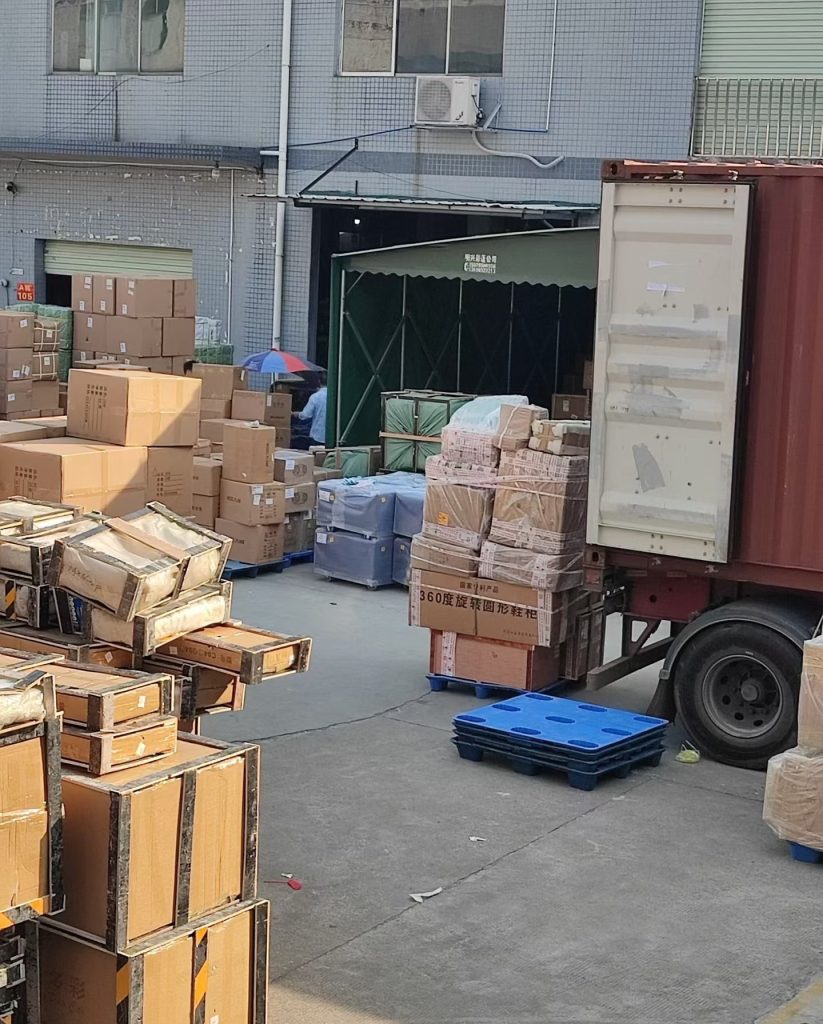
China lithium battery sea freight is an important logistics solution for exporters shipping batteries, battery packs, energy storage products, and related equipment to international markets. Compared with air transportation, ocean freight can be more suitable for larger or less time-sensitive shipments, but lithium batteries require careful compliance assessment before booking.
Professional Lithium Battery Sea Freight from China
A reliable freight forwarding service can help coordinate the shipment from the Chinese supplier or factory through export customs, ocean transportation, destination handling, and final delivery where available.
Common shipping origins include major Chinese manufacturing and logistics hubs such as:
- Shenzhen
- Guangzhou
- Dongguan
- Shanghai
- Ningbo
- Xiamen
- Qingdao
The actual origin depends on the supplier’s warehouse and the available shipping route.
What Lithium Battery Products Can Be Shipped?
Depending on classification and carrier acceptance, sea freight may be available for products such as:
- Lithium-ion battery cells
- Lithium-ion battery packs
- Rechargeable batteries
- Energy storage batteries
- Power batteries
- Portable power stations
- Batteries packed with equipment
- Batteries contained in equipment
The exact shipping requirements depend on the battery chemistry, configuration, capacity, packaging, UN classification, and transportation condition.
Why Choose Sea Freight?
For suitable battery shipments, ocean freight can offer several advantages:
Large shipment capacity
Sea containers can accommodate significantly larger cargo volumes than most air freight solutions.
Potentially lower transportation cost
For larger or heavier shipments, ocean freight can be more economical than air transportation.
LCL and FCL options
Smaller shipments can potentially use LCL, while larger shipments may use FCL.
International coverage
Sea freight connects major Chinese ports with ports around the world.
Lithium Battery Shipping Process
1. Submit Product Information
Provide the battery specifications, quantity, packaging, weight, volume, origin, destination, and available shipping documents.
2. Compliance Assessment
The forwarder reviews the cargo information and determines the applicable transportation requirements.
3. Documentation Review
Depending on the shipment, documents such as an SDS, dangerous goods declaration, commercial invoice, packing list, and relevant battery transportation documentation may be required.
4. Carrier Booking
The freight forwarder checks carrier acceptance and books an appropriate service.
5. Warehouse Handling
The cargo is delivered to the designated warehouse for inspection, handling, and consolidation if using LCL.
6. Export Customs Clearance
The shipment completes the required Chinese export customs procedures.
7. Ocean Transportation
The cargo is loaded for sea transportation to the destination port.
8. Destination Delivery
Depending on the service selected, destination customs clearance, unloading, and final delivery can be arranged.
LCL or FCL?
Choosing between LCL and FCL depends largely on shipment volume and logistics requirements.
LCL sea freight is generally considered when the shipment does not require a full container.
FCL sea freight may be more appropriate for larger shipments or when a dedicated container is preferred.
For lithium batteries, the decision also depends on dangerous goods classification, consolidation compatibility, carrier restrictions, and the destination.
Information Needed for a Shipping Quote
For an accurate quotation, provide:
- Battery product name
- Battery chemistry
- UN number/classification
- Voltage
- Capacity
- Watt-hours, where applicable
- Number of batteries
- Number of cartons
- Carton dimensions
- Gross weight
- Total CBM
- Pickup location in China
- Destination port or address
- LCL or FCL requirement
- Port-to-port or door-to-door service
For example:
Lithium-ion battery | Applicable UN classification | 48V 100Ah | 50 cartons | 600 kg | 3 CBM | Shenzhen, China → Rotterdam, Netherlands | LCL sea freight
This information gives the freight forwarder a basis for evaluating the shipment and preparing a quotation.
Why Work With a Specialized Freight Forwarder?
Lithium battery logistics involves more compliance requirements than ordinary general cargo. A specialized forwarder can coordinate:
- Dangerous goods assessment
- Carrier acceptance
- LCL consolidation
- FCL container shipping
- Export customs
- Warehouse handling
- Shipping documentation
- Ocean freight
- Destination logistics
- Door-to-door transportation where available
The exporter should always provide accurate cargo information. Incorrect descriptions, missing documents, or unsuitable packaging can lead to booking delays or cargo rejection.
FAQ
Can lithium batteries be shipped by sea from China?
Some lithium battery shipments can be transported by sea when they meet applicable regulations and carrier requirements.
Is sea freight cheaper than air freight for lithium batteries?
For many larger or heavier shipments, sea freight can be more cost-effective, although the final cost depends on the cargo and route.
Can I ship lithium batteries by LCL?
Certain lithium battery shipments can be shipped by LCL, subject to classification, packaging, consolidation compatibility, and carrier acceptance.
Can you ship batteries from China to Europe?
Potentially, yes. The available service depends on the battery classification, carrier, route, and destination requirements.
How long does lithium battery sea freight take?
Transit time varies significantly by origin, destination, shipping route, port congestion, customs procedures, and carrier schedule. A specific transit time should be confirmed for each shipment.
Conclusion
China lithium battery sea freight freight forwarding service can provide a practical solution for businesses exporting batteries internationally. The key to successful transportation is accurate cargo classification, compliant packaging, complete documentation, carrier confirmation, and professional coordination from the Chinese warehouse to the destination.
For a quotation, provide the battery specifications, UN classification, quantity, weight, volume, origin, destination, and preferred LCL or FCL service.