

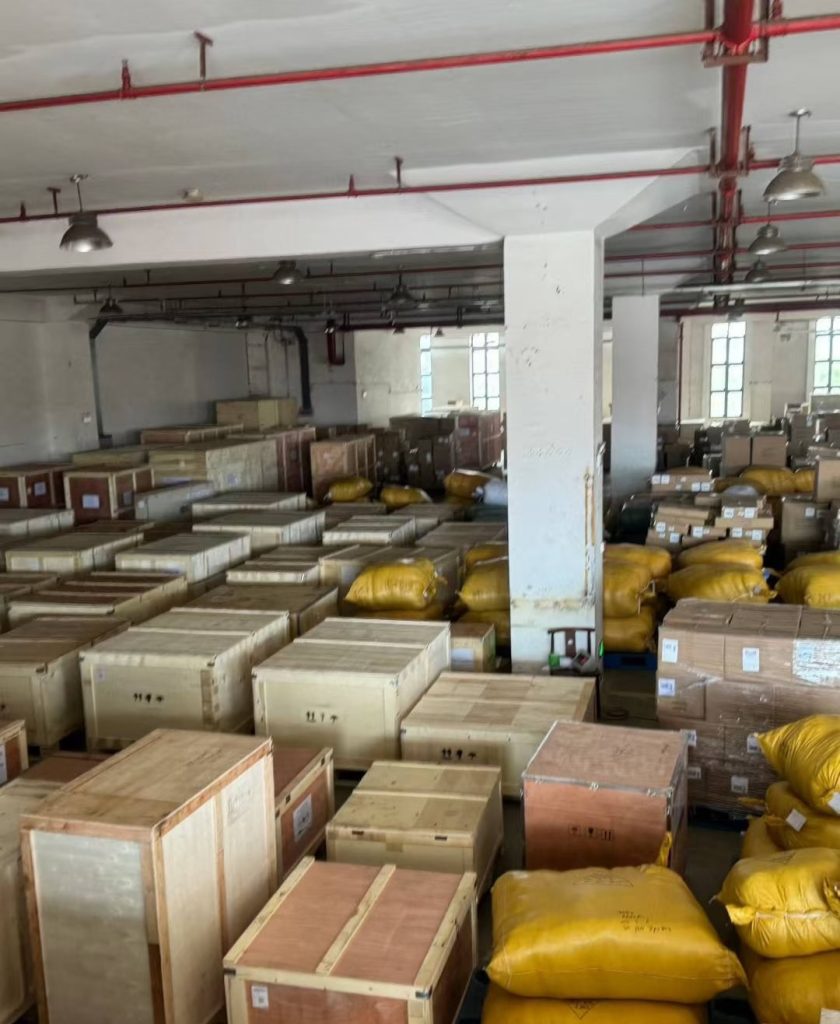
When importing products from China, one of the most important logistics decisions is whether to use LCL (Less than Container Load) or FCL (Full Container Load) shipping.
LCL allows your cargo to share container space with other importers. FCL means you book an entire container for your shipment.
For a small order, LCL can avoid the cost of paying for an unused container. For a larger shipment, FCL may provide better cost efficiency, fewer handling stages, and more control over the cargo.
There is no universal rule that says LCL is always cheaper or FCL is always better. The right choice depends on cargo volume, weight, destination, shipping schedule, cargo characteristics, and total logistics cost.
This guide compares LCL and FCL in detail, including estimated prices, transit times, advantages, disadvantages, and practical examples.
What Is LCL Shipping?
LCL means Less than Container Load.
Your cargo does not occupy an entire container. Instead, a freight forwarder consolidates your shipment with cargo belonging to other importers.
A typical LCL process is:
Supplier → China warehouse → Consolidation → Export customs → Ocean freight → Destination CFS → Customs clearance → Final delivery
LCL is commonly used for:
- Small wholesale orders
- Product samples
- Spare parts
- Furniture samples
- Clothing
- Shoes
- Packaging materials
- Small machinery orders
- E-commerce inventory
- OEM trial orders
The main advantage is flexibility. You do not need enough goods to fill an entire container.
What Is FCL Shipping?
FCL means Full Container Load.
You book an entire container for your shipment.
Common container types include:
- 20GP
- 40GP
- 40HQ
- Specialized containers for certain cargo
The container may be loaded at the supplier’s factory or at another designated location, then transported to the port and shipped to the destination.
A typical FCL process is:
Supplier → Container loading → Export customs → Port → Ocean transportation → Destination port → Customs → Delivery
Because the container is dedicated to your shipment, there is no need to consolidate your cargo with other importers.
LCL vs FCL: Basic Comparison
| Factor | LCL | FCL |
|---|---|---|
| Container space | Shared | Dedicated |
| Best for | Small/medium shipments | Medium/large shipments |
| Minimum cargo | Very small quantities possible | Usually requires enough cargo to justify container |
| Consolidation | Required | Usually not required |
| Cargo handling | More | Less |
| Cost for small shipments | Usually more practical | Often uneconomical |
| Cost for large shipments | Can become expensive | Often more competitive |
| Flexibility | High | High |
| Cargo separation | More handling | Less handling |
| Risk of handling damage | Potentially higher | Generally lower |
| Control over loading | Limited | Greater |
When Should You Choose LCL?
LCL is usually a good choice when your shipment is relatively small.
For example, suppose you have:
3 CBM of clothing
Booking an entire 20-foot container would leave significant unused space.
LCL allows you to pay according to the applicable chargeable quantity rather than booking the whole container.
LCL is particularly useful when:
- You are testing a new product
- You have a small wholesale order
- You need to replenish limited inventory
- You are purchasing samples
- You have multiple small suppliers
- Your shipment is only a few CBM
- You do not want to wait for enough goods to fill a container
When Should You Choose FCL?
FCL becomes more attractive when your shipment volume is large enough.
It can also make sense even when the container is not completely full if the cargo is:
- Fragile
- High-value
- Easily damaged
- Difficult to consolidate
- Time-sensitive
- Large or irregularly shaped
For example, if you have 20–25 CBM of machinery, comparing the cost of LCL against a 20GP container may show that FCL provides better overall value.
The exact break-even point depends on the route and current freight rates.
LCL Shipping Price Range
LCL pricing is commonly influenced by chargeable volume or weight, plus origin and destination charges.
For general cargo, a broad planning range may be:
| Cost | Approximate Range |
|---|---|
| China origin handling | US$50–US$200+ |
| LCL ocean freight | US$30–US$120+ per CBM |
| Export customs/documentation | US$50–US$150+ |
| Destination handling | US$100–US$350+ |
| Customs clearance | US$80–US$250+ |
| Local delivery | US$80–US$500+ |
| Small LCL shipment total | Approximately US$300–US$1,500+ |
These are general budgeting ranges, not fixed quotations.
The actual cost depends on the route, destination, cargo type, volume, weight, season, and service scope.
FCL Shipping Price Range
FCL rates are usually quoted per container rather than per CBM.
For general planning, ocean freight alone can vary substantially by route and season.
A rough example of international ocean freight planning ranges might be:
| Container Type | Indicative Ocean Freight Range |
|---|---|
| 20GP | US$800–US$3,000+ |
| 40GP | US$1,200–US$4,000+ |
| 40HQ | US$1,300–US$4,500+ |
These figures are broad planning ranges.
They should not be treated as current spot-market quotations because international container rates can change significantly based on route, carrier capacity, season, fuel costs, port conditions, and market demand.
Origin charges, destination charges, customs clearance, duties, taxes, and inland delivery are normally additional unless included in the quotation.
Example: 5 CBM Shipment
Suppose your cargo is:
- 5 CBM
- 1,500 kg
- General commercial products
- Shenzhen, China
- European destination
LCL could potentially look like:
Ocean + origin + destination + clearance + delivery: US$700–US$2,000+
An FCL container may cost considerably more overall because you are paying for a complete container.
For this shipment size, LCL would normally be the first option to evaluate.
Example: 15 CBM Shipment
Now suppose your shipment is:
- 15 CBM
- 7,000 kg
- General commercial goods
LCL may still work, but the cost difference compared with a 20GP container becomes much more important.
At this point, a freight forwarder should provide:
LCL quotation + 20GP FCL quotation
The importer can then compare the total cost.
Example: 25 CBM Shipment
Suppose you have:
- 25 CBM
- 10,000 kg
- Standard commercial cargo
FCL is likely to become much more attractive.
Depending on the cargo dimensions and container capacity, a 20GP or 40HQ may need to be considered.
The exact choice should be based on:
- Total CBM
- Total weight
- Carton dimensions
- Container weight restrictions
- Loading efficiency
- Destination requirements
Why LCL Can Become Expensive for Larger Shipments
A common mistake is assuming:
LCL price = CBM × ocean freight rate
In reality, LCL can involve multiple additional charges.
For example:
- Origin warehouse receiving
- Consolidation
- Documentation
- CFS handling
- Destination CFS charges
- Customs clearance
- Delivery
As the shipment becomes larger, these additional costs can make FCL increasingly attractive.
This is why an importer with 10–20 CBM should not automatically assume LCL is cheaper.
Why FCL Can Be More Cost-Effective
With FCL, the container is dedicated to your shipment.
You generally avoid the LCL consolidation and deconsolidation process.
This can provide:
- Lower handling complexity
- Better cargo control
- Fewer handling stages
- More predictable container loading
- Better cost efficiency for larger volumes
FCL can also reduce the risk of your cargo being handled together with many other shipments.
LCL Transit Time
Typical planning ranges for LCL are:
| Destination | Approximate LCL Time |
|---|---|
| Southeast Asia | 7–20 days |
| Japan/Korea | 7–18 days |
| Middle East | 20–40 days |
| Europe | 30–50 days |
| North America | 30–55 days |
| South America | 35–65 days |
| Africa | 30–60 days |
These figures are broad estimates for planning.
The complete door-to-door timeline may be longer because LCL includes consolidation and deconsolidation.
FCL Transit Time
FCL ocean transit can have similar port-to-port sailing times because both LCL and FCL use ocean vessels.
However, FCL may save time before and after the ocean voyage because the container does not need the same consolidation and deconsolidation process.
A typical complete FCL shipment might take approximately:
15–50+ days
depending on the route, customs clearance, and inland delivery.
The exact time depends heavily on the destination.
Is FCL Always Faster Than LCL?
No.
The vessel itself may travel the same route regardless of whether your cargo is LCL or FCL.
The difference often comes from the additional logistics stages.
LCL may require:
Supplier → consolidation warehouse → container loading → vessel → destination CFS → cargo separation → delivery
FCL may be:
Supplier → container loading → port → vessel → destination → delivery
Therefore, FCL can have a simpler overall process.
Which Method Has Less Risk of Cargo Damage?
Both LCL and FCL can be transported safely when properly packed and handled.
However, LCL cargo normally goes through more handling stages.
Your goods may be:
- Unloaded
- Sorted
- Consolidated
- Deconsolidated
- Transferred between facilities
FCL generally involves fewer cargo handling events.
For fragile products, expensive machinery, glass products, furniture, or sensitive equipment, FCL may therefore be worth considering even if the container is not completely full.
LCL vs FCL for Furniture
Furniture is an interesting case because it can occupy a lot of space.
For:
- One sofa
- Several chairs
- A small furniture sample order
LCL may be appropriate.
For:
- Hotel furniture
- Restaurant furniture
- Large apartment projects
- Multiple bedroom sets
- Large kitchen orders
FCL can often provide better cost efficiency and cargo protection.
The most important factors are CBM and loading efficiency.
LCL vs FCL for Machinery
Machinery can be heavy and irregularly shaped.
If you have only one machine, LCL may be possible depending on its dimensions and weight.
However, special handling may apply.
For multiple machines, FCL is often easier to organize.
Before booking, provide:
- Machine dimensions
- Weight
- Packaging
- Center of gravity
- Loading requirements
- Whether the machine contains batteries or liquids
The forwarder can then determine the appropriate shipping method.
LCL vs FCL for E-Commerce Inventory
For new e-commerce sellers, LCL can be useful because it allows smaller inventory shipments.
Instead of ordering a full container, you can test the market with a few CBM.
Once sales become stable, you can move toward larger FCL shipments.
This approach can reduce inventory risk.
How to Choose Based on Cargo Volume
There is no universal CBM threshold because freight rates differ by route.
However, a practical decision framework is:
1–5 CBM
LCL is usually the first option to consider.
5–10 CBM
Compare LCL and FCL if rates are favorable.
10–15 CBM
Always request both LCL and FCL quotations.
15–25+ CBM
FCL may become increasingly attractive.
Near container capacity
FCL is usually the logical choice.
These are guidelines rather than fixed rules.
How Container Capacity Affects the Decision
Approximate internal capacities vary by container design and loading method.
As a rough planning reference:
| Container | Approximate Practical Volume |
|---|---|
| 20GP | Around 28 CBM |
| 40GP | Around 58 CBM |
| 40HQ | Around 68 CBM |
Actual usable capacity depends on:
- Carton dimensions
- Cargo shape
- Pallets
- Loading method
- Weight restrictions
- Container structure
You should not plan to use every theoretical cubic meter.
How to Compare LCL and FCL Quotes Correctly
Do not compare only:
LCL: US$80/CBM
against
FCL: US$2,000/container
Instead, compare the complete cost.
For LCL, request:
- Pickup
- Origin handling
- Export customs
- Ocean freight
- Destination CFS
- Customs clearance
- Delivery
For FCL, request:
- Pickup
- Container loading
- Export customs
- Ocean freight
- Destination charges
- Customs clearance
- Delivery
Then compare the total amount.
Questions to Ask Your Freight Forwarder
Before booking, ask:
- Is the price based on actual CBM or chargeable W/M?
- What is the minimum charge?
- Are China origin charges included?
- Are destination charges included?
- Is customs clearance included?
- Are duties and taxes included?
- Is local delivery included?
- What is the estimated transit time?
- How often does the LCL consolidation depart?
- Are there remote-area or residential delivery surcharges?
These questions can prevent unexpected costs.
How to Reduce Shipping Costs
Consolidate Multiple Suppliers
If you purchase from several Chinese factories, use one consolidation warehouse where possible.
This can simplify international transportation.
Optimize Packaging
Reducing unnecessary carton volume can directly reduce LCL costs.
Compare Container Sizes
Do not assume that 40HQ is always better than 40GP.
Choose the container based on both volume and weight.
Plan Orders in Advance
If you can combine several orders into one shipment, FCL may become more attractive.
Compare Total Cost
Always compare the final logistics cost rather than the headline freight rate.
FAQ
Is LCL cheaper than FCL?
For small shipments, LCL is generally more economical because you only pay for the cargo you ship.
For larger shipments, FCL can become cheaper on a total-cost or per-CBM basis.
At what volume should I switch from LCL to FCL?
There is no universal threshold.
As a practical guideline, once your shipment reaches approximately 10–15 CBM, request both LCL and FCL quotations.
At 15–25+ CBM, FCL often becomes increasingly competitive.
How much does LCL shipping from China cost?
A small LCL shipment may cost approximately US$300–US$1,500+ in total logistics costs.
The actual amount depends on the route, volume, weight, destination, and service.
How much does an FCL container from China cost?
A broad planning range for ocean freight alone may be approximately:
- 20GP: US$800–US$3,000+
- 40GP: US$1,200–US$4,000+
- 40HQ: US$1,300–US$4,500+
These are broad budgeting ranges rather than live quotations.
Is LCL slower than FCL?
It can be.
LCL requires consolidation at origin and deconsolidation at destination, adding handling stages.
How long does LCL shipping take?
Complete LCL transportation commonly takes approximately 20–60 days, depending on destination and service.
How long does FCL shipping take?
A complete FCL shipment can commonly take approximately 15–50+ days, depending on the route, customs, and inland delivery.
Which is safer, LCL or FCL?
FCL generally involves fewer cargo handling stages, which can be beneficial for fragile or high-value cargo.
However, proper packaging remains important for both methods.
Can I ship 5 CBM by FCL?
Yes, but it may not be economical.
For 5 CBM, LCL is normally the first option to compare.
Can I ship 15 CBM by LCL?
Yes.
However, at around 15 CBM, you should compare LCL with a 20GP FCL quotation.
Is FCL suitable for small businesses?
Yes.
Small businesses can use FCL when their order volume is large enough or when cargo protection and control are more important than minimizing the initial freight cost.
Can I combine several suppliers in LCL?
Yes. A freight forwarder can often collect cargo from multiple suppliers and consolidate it into one LCL shipment.
Which is better for furniture?
Small furniture orders may be suitable for LCL.
Large furniture orders, hotel projects, and bulk furniture shipments are often better candidates for FCL.
Which is better for machinery?
For one small machine, LCL may work.
For multiple machines or large/heavy equipment, FCL is often worth considering.
Final Recommendation
The choice between LCL and FCL should not be based on cargo volume alone.
Consider:
Volume + weight + cargo type + destination + total cost + transit time + handling risk.
For shipments around 1–5 CBM, LCL is usually the first option to evaluate.
For shipments around 5–10 CBM, compare both methods.
For shipments around 10–15 CBM, obtaining both LCL and FCL quotations becomes increasingly important.
For shipments around 15–25+ CBM, FCL may provide better overall economics depending on the route.
For budgeting, small LCL shipments may cost approximately US$300–US$1,500+, while FCL ocean freight can range broadly from approximately US$800 to US$4,500+ per container, depending heavily on container size and trade lane.
The best approach is simple: give your freight forwarder the exact cargo dimensions, weight, origin, destination, product type, and delivery address, then compare a complete LCL quotation against a complete FCL quotation.
This provides a much more accurate basis for deciding how to ship goods from China.