

A Technical Due Diligence Framework for Procurement Managers
Selecting a dangerous goods (DG) freight forwarder in China is not a procurement task; it is a risk management decision. The consequences of choosing poorly range from customs detention and fines to catastrophic safety failures.
As a former Compliance Auditor for a major Chinese carrier, I provide a technical framework for vetting DG forwarders, focusing on verifiable facts rather than marketing claims.
1. The “Table Stakes”: Non-Negotiable Certifications
Before considering a forwarder, verify their legal and professional standing.
| Credential | Issuing Body | Technical Significance |
|---|---|---|
| NVOCC Certificate | Ministry of Transport (MOT) | Legally required to issue Bills of Lading. Check validity on MOT website. |
| DG Training Certificate | Maritime Safety Administration (MSA) | Confirms staff have passed the IMDG Code exam. |
| IATA CBTA Certificate | IATA (via training centers) | Required for staff signing Shipper’s Declarations for air freight. |
| ISO 9001:2015 | Certification Body (e.g., SGS, BV) | Indicates a documented quality management system for DG handling. |
Red Flag: If the forwarder cannot produce a valid MSA-issued DG training certificate for their declarant, disqualify them immediately.
2. The Technical Interview: Probing Their Knowledge
Use these technical questions to assess their competence.
| Question | What to Listen For (Correct Answer) | What to Avoid (Wrong Answer) |
|---|---|---|
| “How do you verify UN packaging?” | Check the UN mark (e.g., UN 4G/Y150/S/23/CN/ABC) for date (within 5 yrs) and manufacturer code. | “We trust the factory.” |
| “Explain segregation for Class 3 and Class 8.” | Separated by a complete compartment or 3 meters horizontally (IMDG 7.2.4). | “They can be next to each other if padded.” |
| “What is the SoC limit for UN 3480 by air?” | Maximum 30% State of Charge for Section IA/IB. | “As long as it fits in the box.” |
| “How do you handle a ‘Marine Pollutant’?” | Add “(MP)” to the class, stow On Deck (Cat A), and declare on the DGD. | “It’s the same as regular DG.” |
3. Operational Capability: The Warehouse Audit
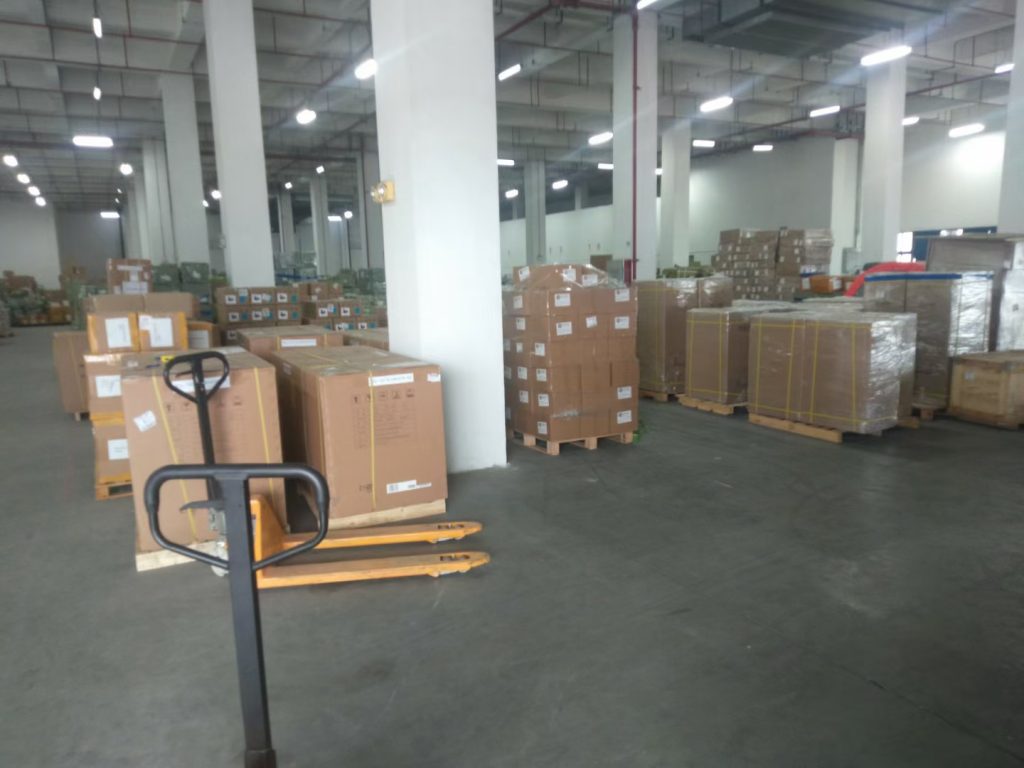
If possible, visit their DG warehouse. Look for these physical controls:
| Feature | Technical Requirement | Observation Checklist |
|---|---|---|
| Segregation Zones | Separate areas for incompatible classes. | Are Class 4.1 and Class 5.1 stored in the same corner? |
| Ventilation | Mechanical ventilation for flammable vapors. | Smell of chemicals in the air? Poor sign. |
| Spill Kits | Absorbents, neutralizers, PPE. | Are kits accessible and sealed? |
| Fire Suppression | CO2 or Dry Powder systems (Water reacts with some chems). | Are sprinklers present? (Bad for Class 3/4). |
4. Documentation Rigor: The Proof is in the Paperwork
Request samples of their previous work.
| Document | Technical Review Point |
|---|---|
| DGD (Air) | Is the ERG Code correct? Is the shipper’s signature dated and from a trained person? |
| Container Packing Certificate (Sea) | Does it certify that the cargo is secured and segregated according to the IMDG Code? |
| MSDS (GB/T 16483) | Is it in Chinese? Does it match the product exactly? |
5. Cost Structure: Why Cheap DG is a Trap
| Cost Component | Low-Cost Provider | Reliable Provider | Risk Differential |
|---|---|---|---|
| Booking Fee | $0 (Uses unknown carriers). | $50-$100 (Books with vetted carriers). | Unknown carriers often reject DG mid-transit. |
| Packaging | Uses old/expired UN boxes. | Uses certified, date-valid boxes. | Old boxes fail drop tests. |
| Insurance | Minimal coverage. | Full DG coverage (P&I Club). | Claims denied if packaging was substandard. |
FAQ: Solving Selection Dilemmas
Q1: How many years of experience is enough?
A: Look for at least 5 years of continuous DG operations. The IMDG and IATA rules change every 2 years; a forwarder needs cycles of experience to handle unexpected issues like port rejections or carrier embargoes.
Q2: Should I use a large multinational or a local specialist?
A: For complex chemicals, a local specialist in Shanghai or Ningbo often provides better hands-on control. Multinationals are excellent for general DG but may struggle with niche chemical classifications requiring local MSA liaison.
Q3: What is the most common reason DG shipments fail in China?
A:Mis-declaration or False Declaration. This happens when the forwarder does not verify the MSDS or tries to downgrade the hazard class to get cheaper rates. This leads to blacklisting.
Q4: Can I use a forwarder who is not in the port city?
A: Risky. DG requires close coordination with the port MSA and terminal. A forwarder in Zhengzhou handling a shipment from Ningbo will struggle with real-time problem-solving.
Q5: How do I verify their IATA/IMDG training?
A: Ask for the Training Certificate Number and the expiry date. You can often verify the issuing body. A legitimate trainer will have a record.
Conclusion: Trust, but Verify
Choosing a reliable DG forwarder in China requires moving beyond price. It demands a technical audit of their certifications, knowledge, and physical infrastructure.
Ready to vet your next DG partner?
Send us their profile, and we will provide a technical due diligence checklist tailored to your cargo type.