

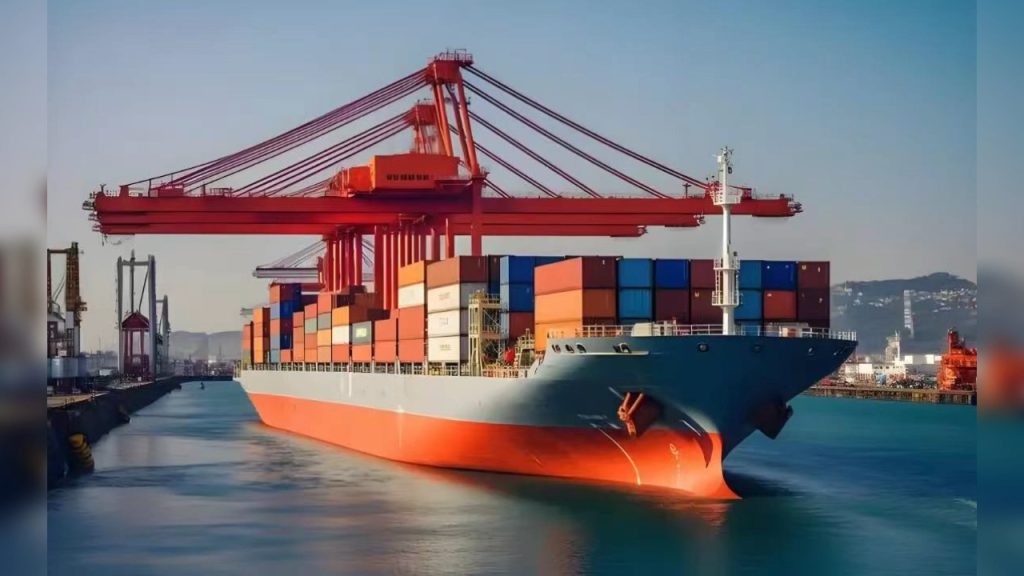
The Technical Reality of Chemical Logistics from the World’s Factory
Shipping chemicals from China is a high-stakes operation where a single error in classification or packaging can lead to cargo confiscation, environmental fines, or catastrophic accidents. Unlike general cargo, chemical logistics demands a deep understanding of molecular properties translated into transport regulations.
As a Chemical Logistics Supervisor with 19 years of experience in the Yangtze River Delta chemical corridors, I provide a technical breakdown of how professional forwarders ensure the safe transport of hazardous materials overseas.
1. The Classification Hierarchy: Beyond the MSDS
The cornerstone of safe transport is accurate classification. A professional forwarder does not take the MSDS at face value.
| Classification Level | Technical Action | Common Error |
|---|---|---|
| Identification | Match CAS number with Chinese Inventory of Hazardous Chemicals. | Assuming a chemical is “general” because it is a solid. |
| UN Number Assignment | Verify against UN Recommendations (Orange Book). | Using UN 3077 (Environmentally Hazardous) for a flammable solid. |
| Packing Group (PG) | Determine based on test data (LD50, Flash Point). | Assigning PG II when test data indicates PG I (High Danger). |
| Marine Pollutant Check | Check Appendix B of the IMDG Code. | Missing the “(MP)” suffix, leading to incorrect stowage. |
Key Insight: Chinese Customs cross-references the declared UN number with the Smart Customs 3.0 system. Discrepancies trigger immediate detention.
2. Packaging Integrity: The UN Certification
For sea freight, packaging must meet UN specifications. A reliable forwarder inspects the physical packaging, not just the certificate.
| Packaging Component | Technical Requirement | Inspection Method |
|---|---|---|
| Inner Receptacle | Chemically compatible with the substance. | Material Safety Data Sheet (MSDS) compatibility check. |
| Closure | Must be leak-proof and tamper-evident. | Inversion test and pressure differential test. |
| Absorbent Material | Must absorb 100% of the liquid content. | Calculation based on net quantity and absorbent capacity. |
| Outer Packaging | Marked with UN symbol (e.g., UN 4G/Y145/S/20/CN/12345). | Verification of the 5-year validity period and manufacturer code. |
Critical Note for Paint/Ink: These are often classified as UN 1263 or UN 3066. They require combination packaging with sufficient inert absorbent (vermiculite or silica gel) to prevent liquid migration.
3. Documentation: The “Three Pillars”
Chinese authorities require a specific triad of documents for chemical exports.
| Document | Purpose | Technical Nuance |
|---|---|---|
| MSDS (GB/T 16483) | Details chemical properties and hazards. | Must be in Chinese; English versions are often rejected for customs declaration. |
| Transportation Condition Identification Report | Issued by a qualified lab (e.g., Shanghai Institute of Chemical Industry). | This is the mandatory bridge between the MSDS and the customs declaration. |
| Dangerous Goods Declaration (DGD) | Declares hazard class, UN number, and quantity. | Must be signed by a certified DG declarer (IATA Cat. 6 or IMDG certified). |
4. Operational Workflow: The Port Gate-in
The process is time-sensitive, especially in busy ports like Shanghai and Ningbo.
- Pre-booking (7 days prior): Secure space with a DG-friendly carrier (e.g., COSCO, Evergreen). Some carriers restrict specific UN classes to certain vessels.
- Warehouse Entry: DG cargo must enter via designated DG lanes at the port. Random inspections by the MSA (Maritime Safety Administration) occur here.
- Customs Declaration: The HS code must align with the chemical name in the Identification Report. Mismatch triggers a “Risk Control” lock.
- Container Loading (LCL): Strict adherence to the Segregation Table (IMDG 7.2.4). Mixing Class 8 (Corrosive) with Class 4.1 (Flammable Solid) is prohibited.
5. Cost Structure: The Premium for Safety
| Cost Item | Typical Range (China to Rotterdam) | Reason for Premium |
|---|---|---|
| Ocean Freight | $3,500 – $7,000 / 20GP | Limited DG slots (approx. 10% of vessel capacity). |
| DG Surcharge | $800 – $2,500 | Specialized stowage and handling. |
| Terminal Handling (THC) | $750 – $950 | DG cargo requires separate stacking zones. |
| Packaging & Labor | $200 – $800 | UN-certified boxes, drums, and absorbents. |
FAQ: Solving Chemical Shipper Dilemmas
Q1: My chemical is a “paste.” Is it still considered a liquid for DG purposes?
A: Yes. According to the IMDG Code, a paste with a viscosity that allows it to conform to the shape of its container is treated as a liquid. It requires absorbent material and leak-proof inner packaging.
Q2: Can I use a “generic” MSDS downloaded from the internet?
A: Absolutely not. Chinese Customs requires an MSDS specific to your product batch and manufacturer, compliant with GB/T 16483-2008. Generic MSDS will be flagged for “false declaration.”
Q3: What is the difference between “Limited Quantity” (LQ) and “Excepted Quantity” (EQ)?
A: LQ (e.g., IMDG Code 3.4) allows larger quantities in smaller inner packagings, marked with the “Y” symbol. EQ (3.5) allows even smaller quantities with minimal marking. LQ is more common for chemical samples.
Q4: Why was my DG cargo “rolled” to the next vessel?
A: Most likely due to late gate-in. Ports have strict time windows for DG acceptance (e.g., 48 hours before sailing). If the trucker misses this window, the container is rejected regardless of booking confirmation.
Q5: Do I need a “Marine Pollution” certificate for my solvent?
A: If your solvent is listed in the IMDG Code Appendix B as a Marine Pollutant, you must declare it. This adds a “P” to the classification code (e.g., “3 (P)”) and restricts stowage to “On Deck Only” or Category A.
Conclusion: Safety is Engineered, Not Accidental
Transporting hazardous chemicals from China requires a forwarder who acts as a compliance engineer. The cost of cutting corners is far greater than the premium for expertise.
Ready to ship your chemicals safely?
Contact our chemical logistics team for a pre-shipment compliance audit and a transparent quotation.