

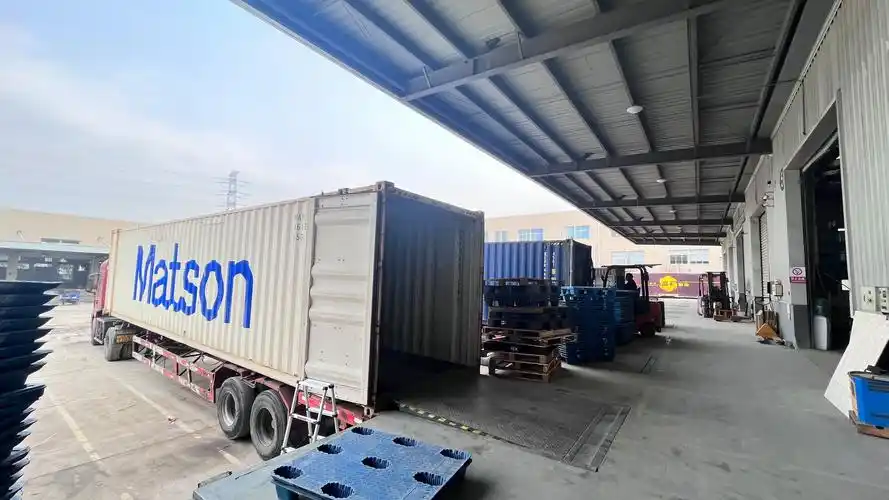
For companies importing large quantities of products from China, FCL (Full Container Load) shipping is often the most efficient and economical international transportation solution. Unlike LCL (Less than Container Load), where multiple shipments share one container, FCL allows one importer to use an entire container for their own cargo.
However, many businesses still face challenges when arranging full container shipments:
- How to choose the right container size?
- How to reduce ocean freight costs?
- How to avoid delays at Chinese ports?
- How to handle export documents correctly?
- How to select a reliable China FCL shipping forwarder?
A professional China FCL shipping service provider can help importers optimize transportation costs, improve shipping efficiency, and create a stable supply chain.
1. What Is China FCL Shipping?
FCL means Full Container Load.
It refers to a shipping method where one customer’s goods occupy an entire container.
Common container types include:
20GP Container
Suitable for:
- Heavy cargo
- Machinery
- Industrial products
- Dense goods
40GP Container
Suitable for:
- Medium-volume shipments
- General consumer products
- Large quantities of goods
40HQ Container
A high-cube container with extra height, suitable for:
- Furniture
- Packaging products
- Lightweight but large-volume cargo
Compared with LCL shipping, FCL provides better control over the entire container and is usually more cost-effective for larger shipments.
2. Why Choose FCL Shipping From China?
1. Lower Cost for Large Shipments
When cargo volume is large enough, FCL can significantly reduce shipping costs.
Instead of paying based on cubic meters, importers pay for the entire container.
Benefits include:
- Lower cost per unit
- Better container utilization
- More predictable expenses
For businesses importing regularly from China, FCL is often the preferred shipping method.
2. Faster Transportation Process
FCL usually has fewer handling steps compared with LCL.
The process is:
Factory → Container Loading → China Port → Ocean Shipping → Destination Port
Because the container does not need to be shared or consolidated, it can reduce handling time.
3. Better Cargo Protection
FCL shipments are handled less frequently.
Advantages:
- Lower risk of damage
- Reduced cargo mixing
- Better security
- Easier tracking
This is especially important for:
- Electronics
- Machinery
- Furniture
- Fragile products
4. More Flexible Loading Options
Importers can arrange container loading according to their products.
Professional forwarders can help with:
- Container selection
- Loading plans
- Cargo arrangement
- Space optimization
Proper loading can prevent damage and maximize container usage.
3. How China FCL Shipping Works
A complete FCL shipping process includes several important steps.
Step 1: Supplier Preparation
The Chinese supplier prepares:
- Products
- Packaging
- Commercial invoice
- Packing list
The freight forwarder confirms cargo details before shipment.
Step 2: Container Booking
The forwarder books container space with shipping lines.
They select:
- Suitable carrier
- Shipping route
- Departure schedule
- Container type
Step 3: Empty Container Pickup
The container is collected from the port or container yard and delivered to the factory.
Step 4: Container Loading
Goods are loaded into the container.
Important factors include:
- Weight distribution
- Packaging protection
- Loading efficiency
For large shipments, professional loading experience is important.
Step 5: Export Customs Clearance
The freight forwarder handles export procedures:
- Customs declaration
- Document checking
- Shipping paperwork
Step 6: Ocean Transportation
The container travels from China ports to the destination country.
Major China export ports include:
- Shenzhen Port
- Guangzhou Port
- Shanghai Port
- Ningbo Port
- Qingdao Port
- Xiamen Port
Step 7: Destination Delivery
After arrival:
- Import customs clearance
- Container pickup
- Local transportation
- Warehouse or final delivery
A door-to-door FCL service simplifies the entire process.
4. How Businesses Save Money With China FCL Shipping
1. Choose the Right Container Size
Using the correct container prevents wasted space.
For example:
- Small cargo volume → 20GP may be enough
- Large lightweight products → 40HQ may provide better value
A professional forwarder can calculate the best option.
2. Plan Shipments in Advance
Last-minute bookings often cost more because of:
- Limited container availability
- Peak season demand
- Higher freight rates
Early planning helps businesses secure better prices.
3. Optimize Product Packaging
Packaging directly affects container efficiency.
Businesses can reduce costs by:
- Reducing unnecessary packaging space
- Using standard carton sizes
- Improving pallet arrangement
More products per container means lower transportation cost per unit.
4. Compare Multiple Shipping Routes
Different ports may have different costs.
For example:
A factory in China may have several possible export options.
A freight forwarder can compare:
- Port charges
- Trucking costs
- Ocean rates
- Transit times
to find the best solution.
5. Work With an Experienced FCL Freight Forwarder
Professional forwarders have access to:
- Shipping line resources
- Container booking networks
- Warehouse services
- Customs support
This helps businesses avoid expensive mistakes.
5. FCL Shipping vs LCL Shipping
FCL Is Better When:
- Cargo volume is large
- You can fill a container
- You need faster handling
- Products require better protection
LCL Is Better When:
- Cargo volume is small
- You are testing products
- You do not need a full container
Choosing the right method depends on:
- Cargo volume
- Product type
- Budget
- Delivery requirements
6. Common FCL Shipping Problems and Solutions
Problem 1: Container Space Shortage
During busy seasons, containers may be difficult to book.
Solution:
Reserve shipping space early.
Problem 2: Incorrect Container Selection
Choosing the wrong container size increases costs.
Solution:
Ask your freight forwarder to calculate volume requirements.
Problem 3: Port Delays
Possible causes:
- Congestion
- Weather
- Customs inspection
Solution:
Choose a forwarder with strong port experience and tracking systems.
Problem 4: Unexpected Charges
Additional costs may include:
- Storage fees
- Demurrage fees
- Handling fees
Solution:
Request a detailed quotation before shipping.
7. Industries That Commonly Use China FCL Shipping
FCL shipping is widely used for:
Manufacturing Products
- Machinery
- Equipment
- Auto parts
Consumer Goods
- Furniture
- Electronics
- Clothing
- Household products
Construction Materials
- Tiles
- Lighting products
- Decoration materials
Agricultural Products
- Food packaging
- Agricultural equipment
8. Why Choose a Professional China FCL Shipping Partner?
A reliable FCL shipping partner provides:
- Competitive ocean freight rates
- Professional documentation support
- Warehouse and consolidation services
- Customs assistance
- Shipment tracking
- Door-to-door delivery solutions
For international buyers, a strong logistics partner reduces risks and improves business efficiency.
Conclusion
China FCL shipping is one of the best solutions for businesses importing large quantities of products. It provides better cost efficiency, faster handling, and improved cargo security compared with shared container shipping.
By choosing the right container size, optimizing packaging, planning shipments early, and working with an experienced China FCL shipping forwarder, companies can significantly reduce logistics costs and build a more reliable global supply chain.
FAQ
Q1: What is the difference between FCL and LCL shipping?
A: FCL means one customer uses a full container, while LCL means multiple customers share container space.
Q2: When should I choose FCL shipping from China?
A: FCL is usually better when your cargo volume is large enough to fill most or all of a container.
Q3: How much can a China FCL shipment save?
A: Savings depend on cargo type, route, container size, and market freight rates.
Q4: Can a China FCL freight forwarder provide door-to-door service?
A: Yes. Many professional forwarders offer complete solutions from factory pickup to final delivery.
Q5: What information is needed for an FCL shipping quote?
A: Product details, container type, loading location, destination port, shipping terms, and delivery requirements.