

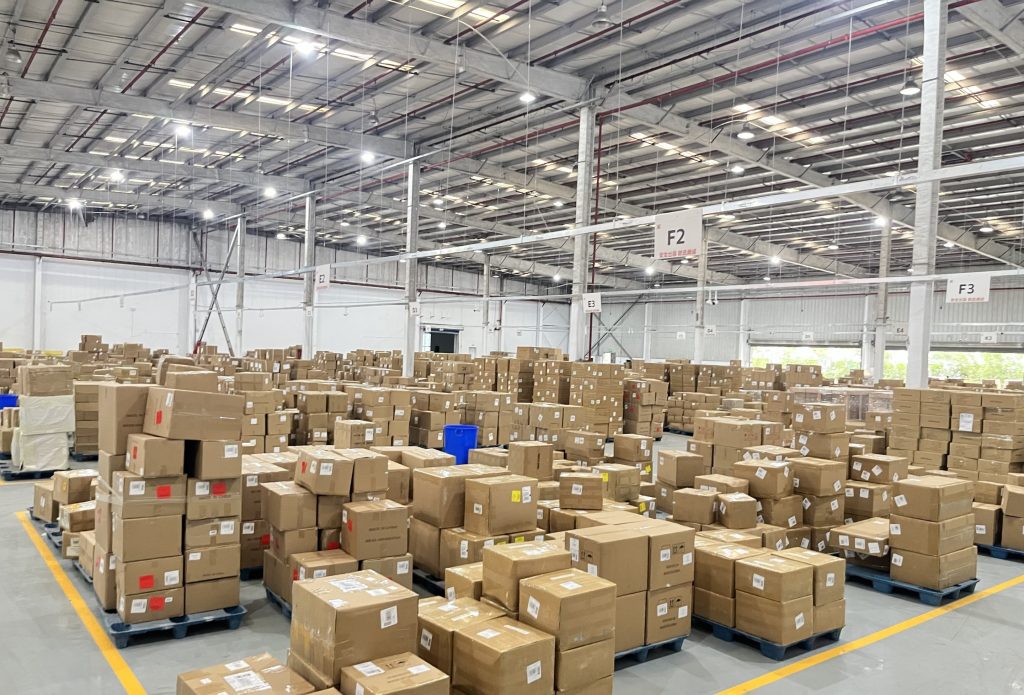
Shipping goods from China to Europe is a common logistics requirement for importers, wholesalers, e-commerce businesses, manufacturers, and sourcing companies.
China and Europe have extensive trade connections, with multiple transportation options available, including sea freight, air freight, rail freight, LCL, FCL, DDP, and door-to-door delivery.
Choosing the right shipping method depends on your product, cargo volume, weight, destination country, delivery deadline, and logistics budget.
This guide explains the main China-to-Europe shipping methods, estimated transit times, cost factors, customs considerations, DDP shipping, and how to choose the right freight solution.
1. What Are the Main Shipping Methods From China to Europe?
European importers can choose from several transportation methods.
The most common options are:
- Sea freight
- Air freight
- Rail freight
- LCL
- FCL
- DDP shipping
- Express delivery
- Multimodal transportation
Each option has different advantages.
Sea Freight
Sea freight is widely used for large commercial shipments.
It is suitable for:
- Furniture
- Machinery
- Packaging
- Building materials
- Consumer goods
- Industrial products
- Large commercial orders
Air Freight
Air freight is suitable for time-sensitive shipments.
Common cargo includes:
- Samples
- Electronics
- Fashion products
- Spare parts
- High-value goods
- Urgent inventory
Rail Freight
Rail freight can provide a middle ground between sea and air for certain China-Europe routes.
It may be suitable when:
- Sea freight is too slow
- Air freight is too expensive
- The cargo is suitable for rail transportation
- The destination is served by an appropriate rail network
DDP Shipping
DDP can provide a door-to-door solution where transportation and agreed import-related services are coordinated under the shipping arrangement.
2. China to Europe Sea Freight
Sea freight remains one of the main transportation methods for China-Europe trade.
Major Chinese export gateways include:
- Shenzhen
- Guangzhou
- Shanghai
- Ningbo
- Qingdao
- Xiamen
- Tianjin
European ports and logistics hubs include locations such as:
- Rotterdam
- Hamburg
- Antwerp-Bruges
- Valencia
- Felixstowe
- Gdansk
- Piraeus
The most appropriate route depends on the final destination and available shipping services.
For example, cargo arriving at a major European port may then move by truck or rail to an inland warehouse.
3. FCL vs. LCL for China-Europe Shipping
Sea freight can be divided into FCL and LCL.
FCL — Full Container Load
FCL means the buyer books an entire container.
Common container sizes include:
- 20GP
- 40GP
- 40HQ
FCL is generally suitable for larger shipments.
Advantages can include:
- Large cargo capacity
- Fewer consolidation steps
- Direct container transportation
- Suitable for regular commercial shipments
LCL — Less than Container Load
LCL allows smaller shipments to share container space with cargo from other customers.
LCL can be suitable when:
- You do not have enough cargo for a full container
- You want to ship smaller quantities
- Your inventory needs to move internationally without waiting for a full container
However, LCL involves consolidation and deconsolidation, which can add handling time and charges.
4. China to Europe Air Freight
Air freight is the fastest traditional transportation option for many China-Europe commercial shipments.
It can be useful for:
- Urgent orders
- Samples
- Electronics
- High-value products
- Small shipments
- Spare parts
- E-commerce replenishment
Air freight generally costs more than sea freight, but the shorter transit time can make it worthwhile for time-sensitive products.
When requesting an air freight quotation, provide:
Origin + Destination + Product + Weight + Dimensions
Both actual weight and volumetric weight may affect the chargeable weight.
5. China-Europe Rail Freight
Rail freight can be considered for certain China-Europe routes.
It may offer a balance between speed and transportation cost.
Compared with sea freight, rail can provide shorter transit times on suitable routes.
Compared with air freight, rail can be more economical for certain cargo.
However, rail service availability, routing, schedules, border procedures, and final delivery requirements can vary.
Therefore, rail should be evaluated on a shipment-by-shipment basis.
6. China to Europe DDP Shipping
DDP stands for Delivered Duty Paid.
A DDP shipping solution may coordinate:
China Factory
↓
Pickup
↓
Export Customs
↓
International Transportation
↓
European Customs
↓
Applicable Duties and Taxes
↓
Local Delivery
↓
Final Address
DDP can be attractive to overseas buyers who prefer a simplified door-to-door logistics process.
However, buyers should confirm exactly what is included in the DDP quotation.
Ask:
- Is export customs included?
- Is European import customs included?
- Are duties included?
- Are taxes included?
- Is final delivery included?
- Are remote-area charges included?
- Are there additional destination fees?
The exact arrangement depends on the country, product, importer structure, and service provider.
7. How Much Does It Cost to Ship From China to Europe?
There is no single China-Europe shipping price.
The final cost depends on several factors.
Origin
The supplier’s city affects pickup and domestic transportation costs.
Destination
Shipping to Rotterdam, Hamburg, Paris, Milan, Warsaw, Madrid, or another destination can produce different logistics costs.
Weight
Air freight is strongly influenced by chargeable weight.
Volume
Sea freight, particularly LCL, is strongly influenced by cargo volume.
Container Type
FCL prices depend on the container type and route.
Product
Special products may require additional handling or documentation.
Shipping Method
Air, sea, rail, LCL, FCL, and DDP all have different cost structures.
Delivery Address
Final-mile delivery to an inland warehouse can add transportation costs after the cargo reaches the European port or airport.
8. China to Europe Shipping Transit Times
Transit time depends on the transportation method and exact route.
As a general planning reference:
| Shipping Method | Typical Transit Range |
|---|---|
| Express | About 3–7 business days |
| Air Freight | About 3–10+ days |
| Rail Freight | Often around 12–25+ days |
| Sea Freight | Often around 25–50+ days |
| Door-to-Door DDP | Depends on method and destination |
These are general planning ranges rather than guaranteed delivery times.
The actual door-to-door time can be longer than the port-to-port or airport-to-airport transit time.
Additional time may be required for:
- Factory pickup
- Export customs
- Warehouse handling
- Port operations
- Destination customs
- Local delivery
9. What Is the Cheapest Way to Ship From China to Europe?
For many large and non-urgent shipments, sea freight can be the most economical option.
For smaller shipments, LCL may be practical.
For urgent shipments, air freight may be preferable even though the cost is higher.
For certain China-Europe routes, rail freight can offer a balance between speed and cost.
The cheapest transportation method should not be determined only by the initial freight rate.
You should compare:
Total Logistics Cost + Transit Time + Service Scope
For example, a low port-to-port rate may not be cheaper than a slightly higher door-to-door quotation once destination charges and local transportation are added.
10. How to Choose Between Sea, Air and Rail
A simple comparison is:
Choose Sea Freight When:
- Cargo is large
- Cargo is heavy
- Delivery is not urgent
- Transportation cost is important
- You are shipping regular inventory
Choose Air Freight When:
- Delivery is urgent
- Cargo is relatively small
- Products have a high value-to-weight ratio
- Inventory needs quick replenishment
Choose Rail Freight When:
- Your route supports rail transportation
- You need faster delivery than sea freight
- Air freight is too expensive
- Cargo is suitable for rail
Choose DDP When:
- You want door-to-door delivery
- You prefer a simplified import process
- The product and destination are suitable for the service
- You want logistics services coordinated under one arrangement
11. Which European Countries Can Be Served From China?
China-Europe logistics services can reach many European markets.
Common destinations include:
Western Europe
- Germany
- France
- Netherlands
- Belgium
- United Kingdom
- Ireland
- Spain
- Portugal
Northern Europe
- Sweden
- Norway
- Denmark
- Finland
Central Europe
- Poland
- Czech Republic
- Austria
- Hungary
- Slovakia
Southern Europe
- Italy
- Greece
- Croatia
- Slovenia
Southeastern Europe
- Romania
- Bulgaria
- Serbia
- Albania
- Bosnia and Herzegovina
The available shipping method and transit time vary by country and city.
12. What European Customs Documents Are Required?
The exact documents depend on the product, destination country, importer, and shipping method.
Common documents may include:
- Commercial invoice
- Packing list
- Bill of lading
- Air waybill
- Customs declaration
- Certificate of origin where applicable
- Product compliance documents where required
European imports may also be subject to product-specific regulations and tax requirements.
Certain products may require additional compliance information.
Examples include:
- Electronics
- Machinery
- Toys
- Batteries
- Chemicals
- Food
- Cosmetics
- Medical products
Importers should verify the requirements applicable to their specific products before shipment.
13. Why Product Information Is Important for China-Europe Shipping
A freight forwarder needs an accurate product description to evaluate transportation and customs requirements.
For example, do not simply write:
“Electronics”
when the shipment contains a specific electronic device with batteries.
Instead, provide detailed product information.
This helps the logistics provider determine:
- Transportation requirements
- Documentation
- Customs classification
- Potential restrictions
- Packaging requirements
- Applicable shipping method
Accurate information can reduce avoidable delays.
14. Can You Ship From Multiple Chinese Suppliers to Europe?
Yes, consolidation can be possible.
Suppose you purchase from:
Guangzhou
Shenzhen
Dongguan
Yiwu
A logistics provider may collect the goods and consolidate them at a warehouse.
The process can be:
Multiple Chinese Suppliers
↓
China Consolidation Warehouse
↓
Export Customs
↓
Sea / Air / Rail
↓
European Customs
↓
Final Delivery
This can be particularly useful for wholesalers and e-commerce businesses purchasing from multiple manufacturers.
15. China to Europe Door-to-Door Shipping
Door-to-door shipping can simplify the logistics process for buyers.
Instead of managing:
Factory → Port → Destination Port → Customs → Local Trucking
the logistics provider coordinates the transportation to the final destination.
Door-to-door services can include different combinations of:
- Factory pickup
- Export customs
- International freight
- Import customs
- Local delivery
The exact service depends on the selected Incoterm and logistics agreement.
16. China to Europe Shipping for E-Commerce
E-commerce sellers often need flexible transportation options.
For example:
Regular Inventory
Use sea freight for larger planned shipments.
Urgent Replenishment
Use air freight when stock levels are low.
Small Orders
Use express or other small-parcel services.
Multiple Suppliers
Consolidate products in China before export.
This combination can help balance logistics costs and inventory availability.
17. How to Reduce China-Europe Shipping Costs
There are several practical strategies.
Consolidate Shipments
Combine cargo from multiple suppliers where practical.
Optimize Packaging
Reduce unnecessary carton dimensions and empty space.
Plan Ahead
Avoid emergency air freight whenever possible.
Compare LCL and FCL
When volume increases, ask for both options.
Compare Multiple Routes
Different Chinese ports and European destinations can have different transportation costs.
Compare Total Costs
Do not compare only the ocean or air freight rate.
Include:
- Origin charges
- International freight
- Customs
- Destination handling
- Local delivery
- Duties and taxes where applicable
18. How to Choose a China-Europe Freight Forwarder
When selecting a logistics provider, consider:
China Origin Experience
Can the company pick up from your supplier?
Europe Destination Experience
Has the company handled your destination country and city?
Shipping Options
Can they provide air, sea, rail, LCL, FCL, or DDP where appropriate?
Clear Pricing
Does the quotation explain included and excluded charges?
Customs Support
Can they explain the customs process?
Tracking
Can you track your shipment?
Communication
Will you receive timely updates?
Door-to-Door Service
Can they arrange final delivery?
A reliable freight forwarder should be able to explain the entire route before you book.
19. What Information Is Needed for a China-Europe Shipping Quote?
Prepare:
Origin:
Chinese supplier city
Destination:
European country + city
Product:
Detailed product description
Quantity:
Cartons / pallets / pieces
Gross Weight:
Total weight
Dimensions:
Length × width × height
Cargo Value:
Commercial value
Preferred Method:
Sea / Air / Rail / LCL / FCL / DDP
Delivery Requirement:
Port-to-port / Airport-to-airport / Door-to-door
Required Delivery Date:
If applicable
With complete cargo information, the freight forwarder can provide a more useful quotation and recommend an appropriate shipping method.
20. Questions to Ask Before Booking China-Europe Shipping
Before confirming your shipment, ask:
- What is the estimated transit time?
- Is the quoted time port-to-port or door-to-door?
- What shipping method will be used?
- Is export customs clearance included?
- Is European import customs clearance included?
- Are duties and taxes included?
- Are destination charges included?
- Is local delivery included?
- Are there remote-area surcharges?
- Can I track the shipment?
- What documents are required?
- What happens if customs inspects the cargo?
These questions can help prevent misunderstandings later.
Request a China to Europe Shipping Quote
If you are importing products from China to Europe, provide your cargo information and shipping requirements.
A quotation request should include:
China Origin + European Destination + Product + Weight + Volume + Shipping Method
For example:
Origin: Shenzhen, China
Destination: Berlin, Germany
Product: Furniture
Quantity: 20 cartons
Gross Weight: 800 kg
Volume: 5 CBM
Service: Sea DDP Door-to-Door
With these details, a freight forwarder can evaluate the available route and provide a quotation based on your actual shipment.
Frequently Asked Questions
What is the cheapest way to ship from China to Europe?
For many large and non-urgent shipments, sea freight is often the most economical option. LCL can be considered for smaller cargo, while FCL can be suitable for larger shipments.
How long does shipping from China to Europe take?
Transit time depends on the method and route. Sea freight commonly takes several weeks, air freight is much faster, and rail can provide an intermediate option on suitable routes.
Is DDP shipping from China to Europe available?
DDP services may be available for suitable cargo and destinations. The exact customs, duty, tax, and delivery arrangements should be confirmed before booking.
Can I ship from several Chinese suppliers?
Yes. Depending on the cargo and service, multiple suppliers can often be consolidated at a China warehouse before export.
Is air freight better than sea freight?
Air freight is generally better when speed is the priority. Sea freight is generally more suitable for larger shipments where transportation cost is more important.
Is rail freight from China to Europe reliable?
Rail can be a useful option on suitable routes, but transit times and service availability depend on the specific route, schedule, border procedures, and final destination.
Can a China freight forwarder deliver directly to my European warehouse?
Yes, door-to-door services can be arranged for suitable shipments. Confirm whether customs clearance, duties, taxes, and final delivery are included in the quotation.
What information is needed for a China-Europe freight quote?
Provide the Chinese pickup location, European destination, product description, quantity, gross weight, carton dimensions, cargo value, preferred shipping method, and delivery requirement.
Final Takeaway
China-to-Europe shipping offers several transportation options.
Sea freight is generally suitable for large and cost-sensitive shipments.
Air freight is suitable for urgent and relatively small shipments.
Rail freight can provide an intermediate option on suitable China-Europe routes.
LCL is useful for smaller ocean shipments, while FCL is designed for full-container cargo.
DDP can simplify door-to-door logistics when the cargo and destination are suitable.
The best option depends on:
Cost + Speed + Cargo + Destination + Customs + Delivery Requirements
Before booking, compare the complete logistics cost and service scope rather than choosing a freight provider based only on the lowest advertised rate.