

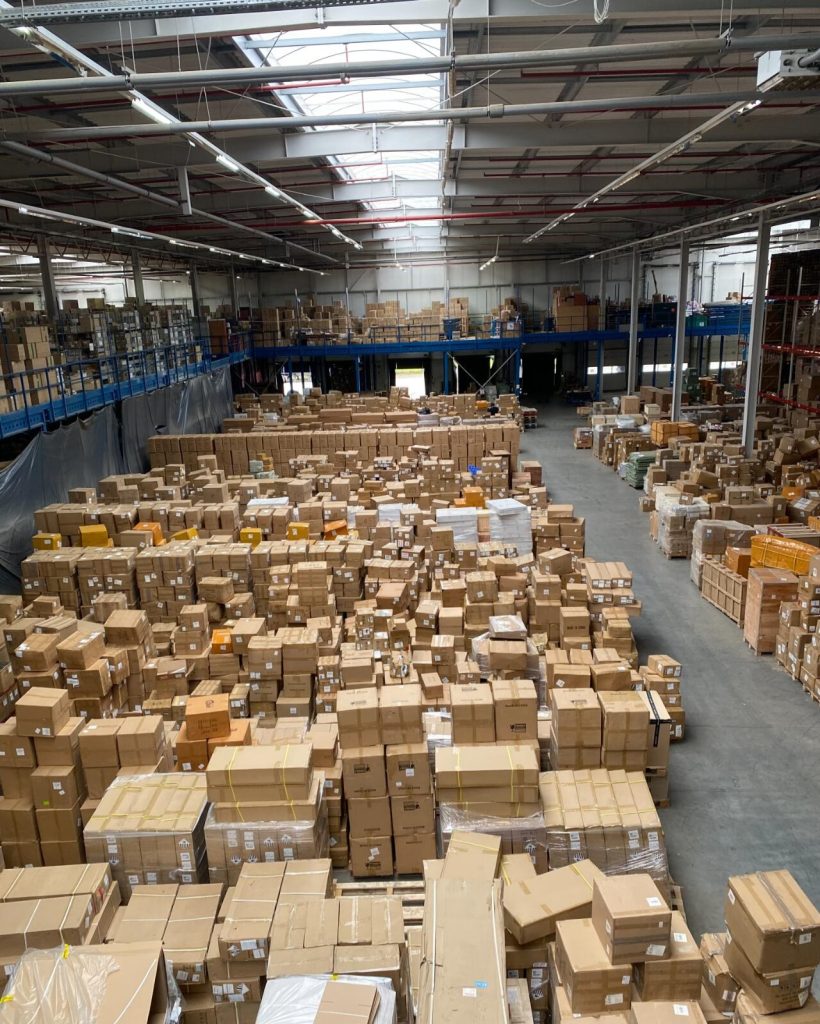
Choosing the right China freight forwarder can have a major impact on your international shipping costs, delivery time, customs clearance, and overall importing experience. For overseas buyers sourcing products from China, a freight forwarder is often responsible for coordinating multiple stages of the logistics process, including cargo pickup, warehouse handling, export documentation, customs declaration, international transportation, destination coordination, and shipment tracking.
However, not every freight forwarder provides the same level of service. Some companies specialize in sea freight, while others are stronger in air freight, DDP shipping, express delivery, rail freight, or specific international trade routes.
This guide explains how importers can evaluate and select a reliable China freight forwarder and avoid common problems before booking a shipment.
What Is a China Freight Forwarder?
A China freight forwarder is a logistics company or intermediary that arranges the transportation of goods from China to an overseas destination.
Depending on the service package, a freight forwarder may coordinate:
- Pickup from the Chinese supplier
- Domestic transportation
- Warehouse receiving
- Cargo consolidation
- Export customs declaration
- Container loading
- Ocean freight
- Air freight
- Rail freight
- Destination transportation
- Customs clearance
- Delivery to the final address
- Cargo tracking
- Shipping documentation
A freight forwarder does not necessarily operate ships, aircraft, trucks, or warehouses itself. In many cases, the forwarder works with shipping lines, airlines, trucking companies, customs brokers, overseas agents, and warehouse operators.
Therefore, when selecting a forwarder, importers should evaluate not only the quoted price but also the company’s logistics network and ability to manage the complete shipment.
Why Choosing the Right China Freight Forwarder Matters
International shipping involves many variables. A low initial quotation does not always mean that the final logistics cost will be low.
A shipment can experience unexpected costs because of:
- Incorrect cargo information
- Incorrect chargeable weight
- Port congestion
- Customs inspection
- Missing documents
- Destination handling charges
- Storage fees
- Demurrage
- Detention
- Remote-area delivery charges
- Special cargo requirements
- Import duties and taxes
- Changes in freight rates
A reliable freight forwarder should explain the major costs and conditions before the shipment is booked.
For importers, the goal should not simply be to find the cheapest freight quotation. The better objective is to find a forwarder that offers a reasonable total landed logistics cost with predictable service and clear communication.
1. Check Whether the Freight Forwarder Handles Your Trade Route
The first question should be simple:
Does the freight forwarder regularly handle shipments from China to your destination country?
International logistics requirements differ significantly between countries.
For example, shipping from China to the United States may involve different customs, delivery, and documentation requirements compared with shipping from China to Germany, Australia, Saudi Arabia, or Canada.
Ask the freight forwarder:
- Do you regularly ship to my country?
- Which Chinese ports or airports do you use?
- Do you have an overseas agent or delivery partner?
- Can you arrange door-to-door delivery?
- Can you handle customs clearance?
- Can you provide shipment tracking?
- Do you support DDP or DAP services?
- Have you handled similar products before?
A forwarder with experience on your specific route is generally easier to evaluate than a company that claims to ship everywhere but cannot explain the actual process.
2. Compare Different Shipping Methods
A professional freight forwarder should help you determine the appropriate transportation method instead of simply giving you one price.
The main options include sea freight, air freight, rail freight, and express delivery.
Sea Freight
Sea freight is usually suitable for larger shipments where transit time is less critical.
It can be particularly useful for:
- Large quantities
- Heavy cargo
- Palletized cargo
- Machinery
- Furniture
- Industrial products
- Full-container shipments
- Less-than-container-load shipments
The main advantages are relatively low transportation costs for larger volumes and the ability to move substantial quantities of cargo.
The disadvantage is that transit time is normally longer than air freight.
Air Freight
Air freight is generally suitable when delivery speed is more important than transportation cost.
Typical applications include:
- Samples
- Urgent orders
- High-value products
- Small and medium shipments
- Time-sensitive inventory replenishment
Air freight is usually more expensive per kilogram than sea freight, but it can significantly reduce transportation time.
Rail Freight
Rail transportation can be useful for certain China-Europe routes and some inland destinations.
It can provide an alternative between sea and air freight in terms of cost and transit time, depending on the origin, destination, cargo and current service availability.
Express Delivery
Express services are often suitable for:
- Samples
- Documents
- Small parcels
- Very small shipments
For commercial cargo, however, a dedicated freight forwarder may be able to provide more flexible logistics options.
3. Ask for a Detailed Freight Quotation
One of the biggest mistakes importers make is comparing only the headline freight rate.
For example, one forwarder might quote:
USD 1,000
while another quotes:
USD 1,250
The first quotation may appear cheaper, but the two quotations may not include the same services.
A professional quotation should clarify important cost items such as:
- Pickup charges
- Origin warehouse fees
- Export customs declaration
- Documentation
- Terminal charges
- Ocean or air freight
- Fuel surcharge
- Security surcharge
- Destination handling
- Customs clearance
- Import duties and taxes
- Final-mile delivery
- Insurance
- Other applicable surcharges
Before comparing quotations, make sure you are comparing the same service scope.
4. Understand Chargeable Weight
For air freight and some express services, the price may not be calculated only according to the actual weight.
Instead, the carrier may use the greater of actual weight and volumetric weight.
For example, a shipment can weigh only 20 kg but occupy a relatively large amount of space. Its chargeable weight may therefore be higher than 20 kg.
Importers should provide accurate:
- Length
- Width
- Height
- Number of cartons
- Gross weight
- Product description
The freight forwarder can then calculate the estimated chargeable weight.
Providing inaccurate dimensions can result in a significant difference between the initial quotation and the final invoice.
5. Check Customs Clearance Experience
Customs clearance is one of the most important parts of international shipping.
A freight forwarder should understand the documentation and customs requirements associated with the shipment.
Depending on the country and cargo, documents may include:
- Commercial invoice
- Packing list
- Bill of lading
- Air waybill
- Certificate of origin
- Import permits
- Product certificates
- Customs declaration information
- Other regulatory documents
The importer remains responsible for ensuring that the products comply with the destination country’s import regulations.
A good freight forwarder should not promise that every shipment will automatically clear customs without problems.
Instead, the forwarder should identify potential risks before the cargo is shipped.
6. Check Whether the Forwarder Can Handle Your Product
Different products can require different logistics arrangements.
Before booking, tell the forwarder exactly what you are shipping.
For example:
- General merchandise
- Electronics
- Machinery
- Batteries
- Chemicals
- Cosmetics
- Food products
- Medical equipment
- Oversized cargo
- Fragile products
- Wooden products
Some products may be subject to transportation restrictions or additional documentation requirements.
For lithium batteries and other regulated cargo, for example, the carrier may require specific shipping documents, packaging, labels, testing information or transportation procedures.
Never describe a product inaccurately simply to obtain a lower freight rate. Incorrect cargo declarations can create customs, carrier and insurance problems.
7. Ask About DDP, DAP and Other Incoterms
Importers should understand the difference between transportation services and Incoterms.
Some commonly used terms include:
DDP
Delivered Duty Paid generally means the seller is responsible for arranging delivery and import clearance and paying applicable duties and taxes, subject to the agreed terms and local regulations.
However, the exact service scope should always be confirmed with the freight forwarder.
DAP
Delivered at Place generally means the goods are delivered to the agreed destination, while import clearance and import duties/taxes are generally handled by the buyer.
FOB
Free on Board is commonly used for ocean shipments. The seller generally handles delivery and export formalities up to the agreed loading point, while the buyer handles the main international transportation and subsequent costs.
Importers should not choose an Incoterm simply because one quotation looks cheaper. The responsibilities, risks and costs need to be compared together.
8. Evaluate Communication and Customer Service
Communication is one of the easiest ways to identify a potentially unreliable freight forwarder.
Before placing an order, observe how the company communicates.
A professional forwarder should be able to answer questions such as:
- What is the estimated transit time?
- Which carrier will be used?
- What documents are required?
- Where will the cargo be delivered?
- What charges are included?
- What charges are excluded?
- How will customs clearance be handled?
- When will tracking information become available?
- What happens if the shipment is delayed?
If a company takes days to answer basic questions before receiving payment, communication may become even more difficult after the shipment is dispatched.
9. Ask How Shipment Tracking Works
International shipments may pass through multiple logistics stages.
A reliable forwarder should provide appropriate tracking information, depending on the transportation method.
For example:
Supplier pickup → China warehouse → Export customs → Port/Airport → International transportation → Destination customs → Local delivery → Final destination
Tracking may be provided through:
- Carrier tracking systems
- Freight forwarder portals
- Email updates
- Shipment reports
- Tracking numbers
- Milestone notifications
For larger shipments, regular milestone updates can be particularly useful.
10. Check the Company’s Documentation
Before working with a new freight forwarder, verify basic company information.
Depending on the country where the forwarder operates, you may check:
- Legal company name
- Business registration
- Office address
- Contact information
- Company website
- Shipping experience
- Service routes
- Customer references
- Relevant logistics memberships or certifications
- Commercial invoice and payment information
The bank account receiving payment should also be carefully checked.
If the company name on the quotation is completely different from the company receiving payment, ask for an explanation before transferring funds.
11. Be Careful With Extremely Cheap Freight Rates
An unusually low quotation should be investigated rather than immediately accepted.
A low rate may result from:
- Missing destination charges
- Limited delivery scope
- Incorrect weight calculation
- Promotional rates
- Different shipping routes
- Different transit times
- Excluded customs clearance
- Excluded duties and taxes
- Additional charges payable later
Ask the forwarder:
“What exactly is included in this quotation, and what additional charges could I still have to pay?”
This question can reveal more than simply asking:
“Can you give me a cheaper price?”
12. Get the Cargo Information Right Before Booking
To obtain an accurate quotation, provide complete cargo information.
A basic shipping inquiry should include:
Product:
What are you shipping?
Quantity:
How many cartons, pallets or units?
Weight:
Gross weight of the shipment.
Dimensions:
Length × width × height of each carton or pallet.
Origin:
Supplier city or warehouse location in China.
Destination:
Country, city, airport, seaport or full delivery address.
Shipping method:
Sea, air, rail or express.
Service requirement:
Port-to-port, door-to-door, DAP, DDP or another agreed arrangement.
Cargo characteristics:
General cargo, battery, liquid, oversized cargo, fragile goods, etc.
The more accurate the information, the more reliable the quotation is likely to be.
13. Understand Transit Time Correctly
Transit time is not necessarily the same as total delivery time.
For example, an ocean freight quotation might advertise a certain number of days for the main sea transportation.
But the complete shipment may also require time for:
- Supplier pickup
- Warehouse receiving
- Export customs
- Port handling
- Vessel departure
- Transshipment
- Destination customs
- Local delivery
Therefore, when comparing forwarders, ask for an estimated end-to-end transit time, not just the international transportation time.
Also remember that estimated transit times are not guarantees. Weather, congestion, customs inspections, carrier schedules and other operational factors can cause delays.
14. Ask About Cargo Insurance
International transportation involves risks.
Depending on the cargo value and transportation method, cargo insurance may be worth considering.
Potential risks can include:
- Damage
- Loss
- Theft
- Water damage
- Transportation accidents
- Handling damage
Ask the freight forwarder whether insurance is included in the quotation.
If it is not included, ask whether they can arrange cargo insurance and what the coverage and exclusions are.
Do not assume that a carrier or freight forwarder automatically covers the full commercial value of damaged or lost cargo.
15. Compare Forwarders Using Total Cost, Not Just Freight Rate
A useful way to compare freight forwarders is to create a simple comparison table.
| Item | Forwarder A | Forwarder B | Forwarder C |
|---|---|---|---|
| Pickup | Included | Extra | Included |
| Export customs | Included | Included | Extra |
| International freight | $X | $X | $X |
| Destination charges | Included | Extra | Included |
| Customs clearance | Included | Extra | Included |
| Final delivery | Included | Included | Extra |
| Insurance | Optional | Optional | Included |
| Estimated transit time | X days | X days | X days |
This approach makes it easier to identify the real cost of each service.
The cheapest headline price may not be the cheapest complete logistics solution.
16. Questions to Ask a China Freight Forwarder Before Booking
Before confirming the shipment, ask these questions:
- What shipping methods do you offer?
- Do you regularly ship to my destination country?
- Is the quotation based on actual weight or volumetric/chargeable weight?
- What costs are included?
- What costs are excluded?
- Is customs clearance included?
- Are duties and taxes included?
- Is final-mile delivery included?
- What is the estimated transit time?
- How will I track the shipment?
- What documents do you need?
- Can you handle my type of product?
- What happens if customs inspects the shipment?
- Can you provide cargo insurance?
- What payment methods do you accept?
A professional forwarder should be comfortable answering these questions clearly.
17. Common Mistakes When Choosing a China Freight Forwarder
Mistake 1: Choosing Only Based on Price
The cheapest quotation can become expensive if additional charges appear later.
Mistake 2: Not Providing Complete Cargo Information
Incomplete information can result in inaccurate quotations.
Mistake 3: Ignoring Destination Charges
Some importers focus only on the China-side transportation cost and forget destination expenses.
Mistake 4: Assuming DDP Means “No Customs Risk”
DDP does not eliminate regulatory requirements. The importer and seller should understand the agreed responsibilities and destination-country rules.
Mistake 5: Shipping Restricted Products Without Checking
Batteries, liquids, chemicals and certain specialized products may have additional transportation requirements.
Mistake 6: Not Confirming the Final Delivery Address
A residential address, commercial address, warehouse, remote area or construction site may have different delivery requirements and costs.
Mistake 7: Failing to Check the Invoice
Before payment, review the company name, service description, cargo information, amount and payment details.
18. How to Choose the Right China Freight Forwarder Step by Step
A practical selection process can be divided into seven steps.
Step 1: Prepare Your Cargo Information
Prepare the product name, quantity, carton dimensions, weight, origin and destination.
Step 2: Contact Several Forwarders
Obtain quotations from at least several suitable logistics providers.
Step 3: Compare the Same Service Scope
Make sure every quotation covers comparable transportation and delivery services.
Step 4: Check Route Experience
Prioritize companies that regularly handle your destination route.
Step 5: Confirm Customs and Documentation
Ask exactly who is responsible for export and import customs procedures.
Step 6: Confirm All Potential Charges
Ask about destination fees, duties, taxes, storage, inspection and other possible charges.
Step 7: Start With a Test Shipment
For a new business relationship, consider starting with a smaller shipment before moving large volumes.
A successful test shipment can help you evaluate communication, transit time, documentation, tracking and final billing.
What Makes a Reliable China Freight Forwarder?
A reliable China freight forwarder should provide more than a low shipping price.
Important qualities include:
- Clear quotations
- Accurate cargo calculations
- Route experience
- Professional documentation
- Transparent communication
- Reliable tracking
- Customs knowledge
- Appropriate carrier selection
- Clear responsibility allocation
- Reasonable problem-solving capability
- Consistent customer service
The best forwarder for one importer may not be the best forwarder for another.
A company importing small batches of fashion products may need a different logistics solution from an industrial buyer importing machinery by container.
The right choice depends on cargo type, shipment volume, destination, delivery requirements, budget and required transit time.
Final Checklist for Importers
Before booking a China freight forwarder, make sure you have confirmed:
✓ Company information
✓ Shipping route
✓ Cargo type
✓ Number of cartons
✓ Gross weight
✓ Dimensions
✓ Chargeable weight
✓ Shipping method
✓ Transit time
✓ Origin charges
✓ International freight
✓ Destination charges
✓ Customs clearance
✓ Duties and taxes
✓ Final delivery
✓ Insurance
✓ Tracking
✓ Payment terms
✓ Potential additional charges
If these points are clearly confirmed before shipment, the risk of unexpected logistics problems can be significantly reduced.
FAQ: China Freight Forwarders
1. What does a China freight forwarder do?
A China freight forwarder coordinates international transportation and related logistics services. Depending on the service, this may include cargo pickup, warehousing, export customs declaration, ocean or air transportation, destination coordination, customs clearance and final delivery.
2. How do I find a reliable freight forwarder in China?
Compare several companies based on route experience, service scope, quotation transparency, communication, documentation capability, tracking and customer references. Do not select a company solely because it offers the lowest price.
3. How much does a China freight forwarder charge?
There is no single standard price. The cost depends on cargo type, weight, dimensions, origin, destination, transportation method, service level, season, carrier rates and customs requirements.
4. Is sea freight cheaper than air freight from China?
For many large or heavy shipments, sea freight is generally more economical than air freight. However, the best option depends on cargo volume, destination, urgency and total logistics cost.
5. Can a China freight forwarder arrange door-to-door delivery?
Yes. Many freight forwarders offer door-to-door services, but the exact scope varies. Before booking, confirm whether pickup, customs clearance, duties, taxes and final delivery are included.
6. What information do I need to request a freight quotation?
Normally, you should provide the product name, quantity, carton count, dimensions, gross weight, origin, destination and preferred shipping method. For special cargo, provide relevant product and compliance information as well.
7. What is DDP shipping from China?
DDP, or Delivered Duty Paid, is an Incoterm under which the seller generally takes responsibility for arranging delivery and import clearance and paying applicable duties and taxes, subject to the agreed terms and local regulations.
8. What is the difference between DDP and DAP?
Under DDP, the seller generally assumes responsibility for import clearance and applicable duties and taxes. Under DAP, the buyer generally handles import clearance and import duties/taxes. The exact contractual responsibilities should always be confirmed before shipment.
9. How long does shipping from China take?
There is no universal transit time. Sea, air, rail and express services have different schedules, and the actual delivery time can be affected by customs, port congestion, carrier schedules, weather and local delivery conditions.
10. Can a freight forwarder handle lithium batteries?
Some freight forwarders can handle lithium batteries, but these shipments may require specific documentation, packaging, labeling and carrier approval. The shipper should provide accurate information before receiving a quotation.
11. Should I buy cargo insurance?
For valuable, fragile or commercially important cargo, insurance may be worth considering. Ask the freight forwarder about available coverage, exclusions, insured value and claims procedures.
12. Why is the final freight cost higher than the original quotation?
Possible reasons include changes in cargo dimensions or weight, destination charges, customs-related costs, storage, inspection, fuel or carrier surcharges, remote-area delivery and other charges that were excluded from the original quotation.
13. Can I use the same freight forwarder for every shipment?
You can, if the company consistently provides competitive pricing, reliable service and good communication. However, it is still useful to periodically compare market rates and service options.
14. What should I do if my shipment is delayed?
Contact the freight forwarder immediately and request the latest shipment status, the reason for the delay, the expected new delivery date and any actions required from you. Keep all shipping documents and communication records.
15. Should I test a freight forwarder before sending a large shipment?
Yes. For a new logistics provider, starting with a smaller shipment can help you evaluate its communication, documentation, tracking, transit performance and billing before committing to larger volumes.
Conclusion
Choosing a China freight forwarder is not simply a matter of finding the lowest shipping quotation. A professional logistics partner should be able to provide a suitable transportation solution, explain the total cost clearly, manage shipping documents, coordinate customs procedures, provide shipment updates and respond effectively when unexpected problems occur.
For importers sourcing products from China, the best approach is to prepare accurate cargo information, compare several freight forwarders, evaluate the complete service scope, confirm all major costs and test the service with a smaller shipment when appropriate.
A reliable China freight forwarder can become an important part of an importer’s supply chain. The right logistics partner can help improve delivery reliability, control transportation costs and make international sourcing from China much easier to manage.