

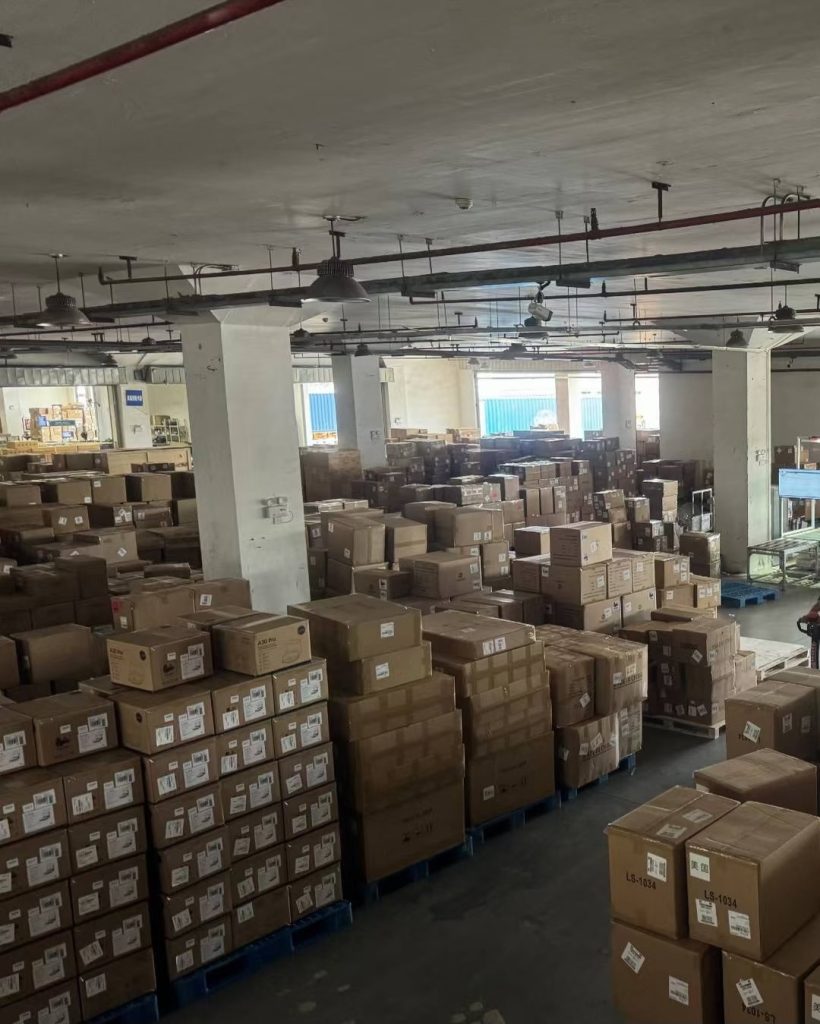
Shipping goods from China to the United States is a common requirement for importers, wholesalers, e-commerce sellers, manufacturers, and retailers. However, choosing the right transportation method can be difficult because air freight, sea freight, DDP, and door-to-door shipping have different costs, transit times, customs requirements, and service scopes.
The best option depends on your cargo type, weight, volume, delivery address, urgency, budget, and import requirements.
This guide explains the main China-to-USA shipping options and how to choose the most suitable solution.
Main China to USA Shipping Options
Importers commonly consider:
- Air freight
- Sea freight
- DDP shipping
- Door-to-door shipping
- Express shipping
- LCL shipping
- FCL container shipping
There is no single best option for every shipment.
For example, a 20 kg urgent shipment and a 20-CBM commercial shipment should not use the same logistics strategy.
1. China to USA Air Freight
Air freight is generally selected when delivery speed is more important than obtaining the lowest transportation cost.
It can be suitable for:
- Clothing
- Shoes
- Electronics
- Spare parts
- Samples
- Small commercial shipments
- Time-sensitive inventory
The final cost can depend on both actual and volumetric weight according to the applicable carrier rules.
For example, a large carton containing lightweight products can occupy significant aircraft capacity even though its actual weight is low.
Therefore, provide both:
Gross weight + carton dimensions
when requesting an air-freight quotation.
Advantages of Air Freight
- Faster than ocean transportation
- Suitable for smaller shipments
- Useful for urgent inventory
- Frequent flight options on major routes
Disadvantages
- Higher cost per kilogram
- Volumetric weight can significantly affect the price
- Special cargo may require additional handling
- Customs clearance is still required
2. China to USA Sea Freight
Sea freight is generally more suitable for larger shipments where transportation cost is more important than speed.
There are two major options.
LCL Shipping
LCL means Less than Container Load.
Your cargo shares container space with cargo belonging to other shippers.
LCL can be suitable when your shipment does not require a full container.
Typical cargo includes:
- Furniture
- Machinery
- Wholesale products
- Packaging materials
- General merchandise
FCL Shipping
FCL means Full Container Load.
The importer books an entire container.
Common container sizes include:
- 20GP
- 40GP
- 40HQ
FCL can become more economical when the cargo volume is sufficiently large.
The actual decision should be based on the complete cost rather than simply the ocean freight rate.
3. China to USA DDP Shipping
DDP stands for Delivered Duty Paid.
Under the standard Incoterms® 2020 concept, DDP places substantial responsibility on the seller, including import formalities and applicable duties/taxes, subject to applicable laws and the contractual arrangement.
In the freight market, a China-to-USA DDP service may be offered as a coordinated logistics solution covering several stages:
China pickup → international transportation → U.S. customs clearance → applicable duties/taxes → final delivery
However, buyers should always verify the exact service scope.
Do not assume that every quotation described as “DDP” includes every possible charge.
Before booking, ask:
- Is pickup included?
- Is export clearance included?
- Is U.S. customs clearance included?
- Are applicable duties and taxes included?
- Is final delivery included?
- Are residential or remote-area charges included?
- What happens if customs requests additional documentation?
- What charges are excluded?
4. China to USA Door-to-Door Shipping
Door-to-door shipping focuses on delivering cargo from the supplier or designated pickup location in China to the agreed delivery address in the United States.
A typical service may include:
Factory pickup
↓
China export handling
↓
International transportation
↓
U.S. import clearance
↓
Domestic transportation
↓
Final delivery
The exact stages depend on the selected service.
Door-to-door does not necessarily mean DDP.
For example, a door-to-door DAP arrangement can still leave import duties and taxes to the buyer.
Therefore:
Door-to-door describes the delivery scope.
DDP describes the contractual allocation of responsibilities and costs.
They are not interchangeable terms.
China to USA Air Freight vs. Sea Freight
| Factor | Air Freight | Sea Freight |
|---|---|---|
| Speed | Faster | Slower |
| Cost per kg | Generally higher | Generally lower for larger shipments |
| Small shipments | Suitable | LCL may be suitable |
| Large shipments | Can become expensive | Often more economical |
| Urgent cargo | Suitable | Usually less suitable |
| Heavy cargo | Possible | Often attractive |
| Large volume | Can be expensive | Usually more suitable |
The right choice depends on your shipment rather than simply choosing the fastest or cheapest method.
How Much Does It Cost to Ship from China to USA?
There is no fixed China-to-USA shipping price.
A freight quotation can depend on:
- Chinese origin
- U.S. destination
- Product type
- Weight
- Volume
- Number of cartons
- Shipping method
- Incoterm
- Customs requirements
- Cargo value
- Delivery address
- Fuel surcharges
- Special handling
For example, the cost of shipping 100 kg of compact clothing can be very different from shipping 100 kg of large furniture.
For an accurate quotation, provide the actual shipment details rather than asking only:
How much is shipping from China to the USA?
What Information Does a Freight Forwarder Need?
A professional freight quotation normally requires:
Origin
For example:
Guangzhou, Shenzhen, Yiwu, Ningbo, or Shanghai.
Destination
Provide:
- U.S. city
- State
- ZIP code
- Delivery address when available
Product
Give an accurate commercial description.
For example:
Men’s sports shoes
is more useful than:
Goods
Quantity
Number of pieces, cartons, pallets, or containers.
Weight
Total gross weight.
Dimensions
Length × width × height of each package.
Volume
Total CBM when available.
Cargo value
Useful for customs and insurance considerations.
Special requirements
For example:
- Lithium battery
- Oversized cargo
- Fragile products
- Dangerous goods
- Temperature-sensitive goods
The more accurate the information, the more reliable the quotation.
China to USA Customs Clearance
Customs clearance is an essential part of international shipping.
U.S. imports can involve requirements relating to:
- Customs classification
- Customs value
- Country of origin
- Import documentation
- Duties and taxes
- Product-specific regulations
- Government agency requirements
Importers should not assume that the freight forwarder can solve every customs issue without accurate information from the seller or importer.
The product description and commercial documents should accurately reflect the actual shipment.
For regulated products, additional requirements may apply.
Why the HS Code Matters
The Harmonized System (HS) code is used to classify goods for customs purposes.
The classification can affect:
- Applicable duty rates
- Customs requirements
- Import controls
- Documentation
- Government agency requirements
An incorrect classification can result in delays, additional costs, or customs disputes.
For this reason, importers should work with qualified customs professionals when classification is uncertain.
A freight forwarder can help coordinate the logistics process, but customs classification and compliance should be handled carefully.
China to USA Shipping Transit Time
Transit time varies depending on the shipping method and route.
Generally:
Air freight: Faster
Sea freight: Slower but suitable for larger shipments
Express: Usually fast for small parcels
Multimodal/DDP: Depends on the specific logistics route
Actual transit time can be affected by:
- Carrier schedules
- Port congestion
- Airport congestion
- Customs inspections
- Documentation
- Weather
- Holidays
- Domestic delivery conditions
Therefore, freight forwarders should provide an estimated transit time rather than an unrealistic guaranteed delivery date unless a guaranteed service is specifically contracted.
China to USA Shipping Ports
Major Chinese export gateways include:
- Shenzhen
- Guangzhou
- Shanghai
- Ningbo
- Qingdao
- Xiamen
Major U.S. gateways include:
- Los Angeles
- Long Beach
- New York/New Jersey
- Savannah
- Houston
- Seattle/Tacoma
The most suitable route depends on the cargo origin, destination, carrier schedule, final delivery address, and current transportation conditions.
The closest port is not always the cheapest option.
How to Choose Between LCL and FCL
A common question for importers is whether to use LCL or FCL.
LCL may be suitable when:
- Cargo volume is relatively small
- You do not need a complete container
- You want to avoid paying for unused container space
FCL may be suitable when:
- Cargo volume is large
- You can efficiently use a container
- You want greater control over the container
- You ship regularly
The exact break-even point varies according to route, destination charges, season, and market rates.
Ask your freight forwarder to quote both options when your shipment is close to the economic boundary between LCL and FCL.
China to USA DDP vs. DAP
These terms should not be confused.
DDP
The seller takes on a greater level of responsibility, including import clearance and applicable duties/taxes under the standard Incoterms concept.
DAP
The seller arranges delivery to the named destination, while the buyer generally handles import clearance and applicable import duties/taxes.
For an importer who already has U.S. customs capabilities, DAP may be appropriate.
For an importer looking for a more comprehensive logistics arrangement, DDP may be considered where legally and commercially suitable.
Common Problems When Shipping from China to the USA
Incorrect Cargo Information
Incorrect weight, dimensions, or product descriptions can cause quotation adjustments or customs issues.
Unexpected Destination Charges
A cheap international freight rate may not include all U.S. destination costs.
Always ask for the complete service scope.
Customs Delays
Incomplete or inaccurate documentation can delay clearance.
Remote Delivery
A residential or remote delivery address may have additional charges.
Special Cargo
Batteries, chemicals, food, medical products, and other regulated goods may require additional review.
Unrealistic Transit-Time Promises
International transportation is affected by many factors.
A reliable forwarder should provide a realistic estimate.
How to Reduce China to USA Shipping Costs
1. Consolidate Cargo
Combine shipments from multiple Chinese suppliers when practical.
2. Optimize Packaging
Reduce unnecessary package dimensions without compromising product protection.
3. Compare Air and Sea
Do not automatically choose air freight for every shipment.
4. Compare LCL and FCL
For larger shipments, request both quotations.
5. Plan Ahead
Avoid expensive urgent transportation whenever possible.
6. Compare Complete Quotations
Compare the total cost rather than just the headline freight rate.
7. Provide Accurate Information
Correct dimensions and weights reduce unexpected adjustments.
How to Select a China-USA Freight Forwarder
When comparing logistics providers, evaluate:
- Experience on the China-USA route
- Experience with your cargo
- Shipping methods offered
- Customs coordination
- Destination delivery capability
- Quotation transparency
- Communication
- Tracking
- Insurance options
- Service terms
- Handling of unexpected problems
Do not choose a forwarder simply because its initial quotation is the lowest.
A reliable partner should be able to explain how your shipment will move from the Chinese supplier to the U.S. destination.
China to USA Shipping Quote Checklist
Before requesting a quotation, prepare:
- [ ] Pickup city in China
- [ ] U.S. destination city
- [ ] ZIP code
- [ ] Product description
- [ ] Quantity
- [ ] Number of cartons
- [ ] Gross weight
- [ ] Carton dimensions
- [ ] Total CBM
- [ ] Cargo value
- [ ] Shipping method
- [ ] Desired delivery time
- [ ] Special cargo information
- [ ] Required Incoterm
Then ask the freight forwarder to provide:
- [ ] Total freight cost
- [ ] Included services
- [ ] Excluded charges
- [ ] Estimated transit time
- [ ] Customs arrangement
- [ ] Duty/tax arrangement
- [ ] Final delivery scope
- [ ] Tracking method
- [ ] Quotation validity
Frequently Asked Questions
What is the cheapest way to ship from China to the USA?
For larger shipments, sea freight is often more economical than air freight, but the cheapest option depends on weight, volume, destination, and service requirements.
How should I choose air freight or sea freight?
Choose air freight when speed is important. Consider sea freight when the shipment is larger and transportation cost is more important than speed.
What is China-to-USA DDP shipping?
DDP is a delivery term under which the seller takes on substantial responsibility for delivery, import formalities, and applicable duties/taxes, subject to the applicable law and contractual arrangement.
Is door-to-door the same as DDP?
No. Door-to-door describes the delivery scope, while DDP describes the allocation of responsibilities and costs under the applicable Incoterm.
Can a freight forwarder handle U.S. customs clearance?
A freight forwarder can coordinate customs-related logistics services, but customs clearance must comply with U.S. laws and regulations. The exact responsibilities depend on the service arrangement.
What information do I need to get a China-to-USA shipping quote?
Provide the origin, destination, product, quantity, gross weight, package dimensions, total volume, cargo value, shipping method, and any special cargo requirements.
Final Takeaway
China-to-USA shipping offers several options, including air freight, sea freight, LCL, FCL, DDP, and door-to-door transportation.
The best solution depends on your cargo and business requirements.
For urgent and relatively compact shipments, air freight may be appropriate. For larger shipments where cost efficiency is important, sea freight may be more suitable. DDP can simplify the logistics process when its contractual and legal requirements are properly arranged, while door-to-door shipping focuses on moving the cargo to the agreed final destination.
Before booking, compare the complete cost, transit-time estimate, customs arrangement, destination charges, delivery scope, and responsibilities.
A well-prepared shipping quotation should make it clear what happens from the moment your goods leave the factory in China until they reach your U.S. destination.