

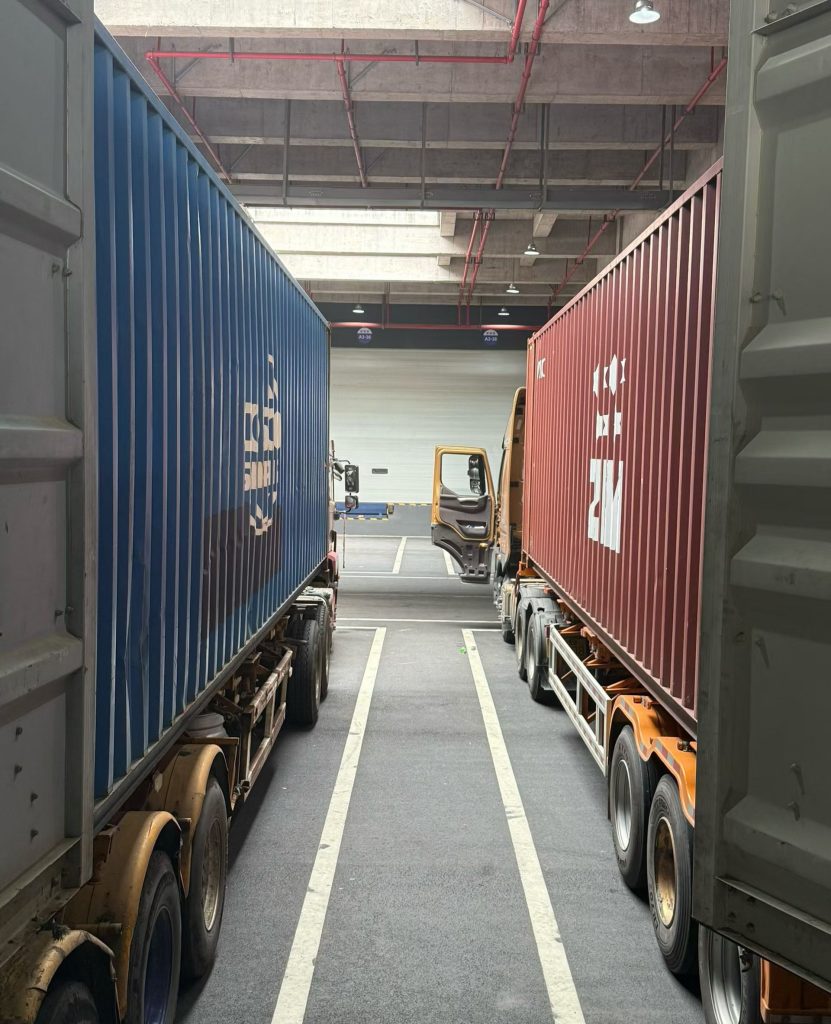
China DDP shipping has become an important logistics option for importers, wholesalers, e-commerce businesses, and international buyers purchasing products from China.
The main attraction of DDP is simplicity. Instead of arranging every stage separately, the buyer can use a logistics service designed to coordinate transportation from China through import clearance and delivery to the agreed destination, subject to the specific DDP arrangement and local regulations.
However, DDP is often misunderstood. A quotation such as “DDP $X/kg” does not automatically mean that every possible cost and responsibility is covered.
Before choosing China DDP shipping, buyers should understand what DDP means, how costs are calculated, how customs clearance works, how transit time is estimated, and what risks need to be checked before booking.
What Is China DDP Shipping?
DDP stands for Delivered Duty Paid.
Under the Incoterms® 2020 definition, DDP places a high level of responsibility on the seller, including arranging transportation to the agreed destination and handling import formalities and duties/taxes, subject to the applicable laws and contractual arrangements.
In practical China shipping services, buyers may encounter DDP arrangements that combine:
- Pickup from a Chinese supplier
- Export procedures
- International transportation
- Import customs clearance
- Applicable duties and taxes
- Destination transportation
- Final delivery
However, the exact service scope must always be confirmed in writing.
DDP is a contractual delivery term, not simply a shipping method.
The actual transportation can involve air freight, sea freight, rail freight, road transportation, or a combination of different modes.
How Does China DDP Shipping Work?
A typical DDP shipment can involve several stages.
Step 1: Cargo pickup in China
The logistics provider collects the goods from the supplier or receives them at a designated warehouse.
The buyer should provide:
- Supplier address
- Product description
- Quantity
- Weight
- Package dimensions
- Commercial value
- Required shipping destination
Step 2: Export preparation
The shipment is prepared for export.
Depending on the cargo, documents may include:
- Commercial invoice
- Packing list
- Export-related documentation
- Product information
- Transportation documents
- Special certificates where required
The exact documentation depends on the product, origin, destination, and transportation method.
Step 3: International transportation
The cargo is transported from China to the destination country.
Possible transportation modes include:
- Air freight
- Ocean freight
- Rail freight
- Road freight
- Multimodal transportation
Step 4: Import customs clearance
The shipment must comply with the destination country’s import requirements.
Customs may review:
- Product description
- Customs value
- HS classification
- Country of origin
- Import documentation
- Applicable duties and taxes
- Regulatory requirements
Step 5: Duties and taxes
Under a properly structured DDP arrangement, the seller is responsible for import duties and taxes according to the agreed terms and applicable law.
However, buyers should not assume that every “DDP” quotation automatically covers every possible tax or government charge.
The quotation and contract should specify what is included.
Step 6: Final delivery
After import clearance, the cargo is delivered to the agreed destination.
This may be:
- Commercial warehouse
- Factory
- Office
- Residential address
- Amazon-related facility
- Third-party warehouse
Special delivery restrictions may apply depending on the destination.
What Does China DDP Shipping Cost?
There is no universal China DDP price.
The cost can depend on:
- Origin city
- Destination country
- Destination postcode
- Cargo type
- Weight
- Volume
- Chargeable weight
- Shipping method
- Cargo value
- HS code
- Import duties
- VAT or other taxes
- Customs requirements
- Delivery distance
- Remote-area conditions
- Fuel surcharges
- Special handling requirements
For example, two shipments may both weigh 100 kg but have completely different DDP costs because one contains compact clothing while the other contains large machinery parts.
Why Weight and Volume Matter
For air freight and some other transportation services, the chargeable weight may be influenced by both actual and volumetric weight.
A lightweight but bulky shipment can therefore cost more than a compact shipment with the same actual weight.
For example, imagine two shipments:
Shipment A
100 kg
1 CBM
Shipment B
100 kg
5 CBM
Although the actual weight is identical, Shipment B occupies significantly more transportation space.
The applicable freight calculation therefore needs to consider the specific carrier and service rules.
When requesting a DDP quotation, always provide:
Gross weight + package dimensions + total volume.
What Is Usually Included in a DDP Quotation?
A DDP quotation may include some or all of the following:
| Service | DDP Arrangement |
|---|---|
| Factory pickup | Often included |
| Export handling | Often included |
| International transportation | Included |
| Import customs clearance | Intended to be included |
| Import duties/taxes | Intended to be included under DDP |
| Destination delivery | Usually included to agreed destination |
| Special charges | Must be confirmed |
| Remote-area delivery | May be extra |
| Storage | May be extra |
| Inspection-related costs | Depends on circumstances |
The key phrase is:
Always confirm the exact scope of the quotation.
Do not rely solely on the word “DDP.”
DDP vs. DAP: What Is the Difference?
DDP and DAP are often confused.
Under DAP (Delivered at Place), the seller arranges delivery to the named destination, but the buyer normally handles import clearance and applicable import duties/taxes.
Under DDP (Delivered Duty Paid), the seller takes on the greater responsibility associated with import clearance and payment of import duties/taxes, subject to the applicable legal framework.
For an importer, the practical difference can be significant.
DAP
Seller:
Transport → Destination
Buyer:
Import clearance → Duties/taxes → Further delivery
DDP
Seller:
Transport → Import clearance → Duties/taxes → Agreed destination
The exact responsibilities should be confirmed in the sales contract and shipping documentation.
China DDP Air Freight
China DDP air freight is often considered when speed is important.
It can be suitable for:
- Samples
- Clothing
- Shoes
- Electronics
- Spare parts
- Consumer products
- Time-sensitive inventory
The advantages can include:
- Faster transportation
- Door-to-door service
- Simplified logistics coordination
- Less involvement for the buyer in arranging individual transportation stages
However, air freight generally costs more than sea freight for large-volume shipments.
The buyer should compare:
DDP air freight vs. DDP sea freight
rather than assuming air freight is automatically the best option.
China DDP Sea Freight
DDP sea freight can be attractive for larger shipments where delivery speed is less important than transportation cost.
It may be suitable for:
- Furniture
- Machinery
- Large quantities of products
- Heavy cargo
- Bulk shipments
- Containerized cargo
Depending on the shipment, the logistics provider may use:
LCL
or
FCL
LCL is used for cargo sharing container space, while FCL is used for a full container.
The most suitable option depends on volume, destination, cargo characteristics, and overall cost.
China DDP Rail Freight
For certain destinations, particularly routes connecting China with Europe and Central Asia, rail and multimodal transportation may be considered.
The actual feasibility depends on:
- Origin
- Destination
- Current rail services
- Border conditions
- Cargo characteristics
- Available schedules
- Customs requirements
A freight forwarder should assess the actual route instead of offering rail simply because it appears cheaper than air freight.
China DDP Transit Time
There is no universal DDP transit time.
Transit time depends on:
- Origin in China
- Destination
- Transportation mode
- Customs processing
- Carrier schedules
- Port or airport congestion
- Border procedures
- Final-mile delivery
- Holidays
- Inspections
- Weather and other operational conditions
Therefore, professional quotations should normally provide an estimated transit time, rather than promising an exact delivery date without contractual guarantees.
For example:
Estimated transit time: 8–15 business days
is more useful than simply saying:
Fast delivery.
Ask the forwarder to specify whether the transit time starts from:
- Factory pickup
- Warehouse receipt
- Departure from China
- Flight departure
- Vessel departure
This prevents misunderstandings.
China DDP Customs Clearance
Customs clearance is one of the most important parts of DDP shipping.
The destination customs authority may examine:
- HS code
- Product description
- Declared value
- Country of origin
- Quantity
- Commercial documents
- Product certifications
- Import licenses
- Applicable duties and taxes
A vague product description can create problems.
For example, writing:
Parts
is much less useful than providing an accurate commercial description of the actual product.
The importer and seller should ensure that the commercial documentation accurately describes the cargo.
Are Duties and Taxes Included in China DDP?
Under the standard concept of DDP, the seller bears responsibility for applicable import duties and taxes.
However, the practical arrangement needs to comply with destination-country laws.
Before accepting a DDP quotation, ask:
Which duties and taxes are included?
Also ask:
What happens if customs assesses additional charges?
This is particularly important for products with complicated tariff classifications or special regulatory requirements.
What Products Can Be Shipped by DDP?
Many ordinary commercial products can potentially be transported using DDP arrangements, including:
- Clothing
- Shoes
- Bags
- Furniture
- Household products
- Consumer electronics
- Machinery
- Auto parts
- Packaging products
- General merchandise
But special cargo requires additional review.
Examples include:
- Lithium batteries
- Dangerous goods
- Chemicals
- Medical products
- Food
- Agricultural products
- Oversized machinery
- Products requiring certification
Never assume that a standard DDP rate applies to special cargo.
Common China DDP Risks
DDP can simplify international shipping, but it does not eliminate logistics risk.
1. Unrealistically Low Quotations
An unusually low price can be attractive.
But if important costs are excluded, the buyer may later face unexpected charges.
Always ask for a complete cost breakdown.
2. Incorrect Product Declaration
Incorrect product descriptions or customs information can create customs problems.
The commercial documents should accurately describe the actual cargo.
3. Unclear Tax Arrangement
Some quotations use the word “DDP” without clearly explaining how import duties and taxes are handled.
This should be clarified before shipment.
4. Remote-Area Charges
A destination outside the normal delivery network may incur additional charges.
Provide the complete delivery address or postcode before confirming the quotation.
5. Special Cargo Problems
Batteries, chemicals, oversized machinery, and other sensitive products can require special transportation arrangements.
Tell the freight forwarder about these characteristics before booking.
How to Choose a China DDP Freight Forwarder
Before selecting a logistics provider, consider:
Route experience
Does the company regularly handle your destination?
Cargo experience
Has it handled your type of product?
Customs knowledge
Can it clearly explain the import requirements?
Price transparency
Are included and excluded charges clearly listed?
Communication
Can you reach a responsible shipment contact?
Tracking
Can the shipment be tracked appropriately?
Documentation
Are invoices, packing lists, transportation documents, and other required records handled properly?
Delivery capability
Can the provider actually arrange delivery to your final destination?
A low price should not be the only selection criterion.
What Information Should You Provide for a DDP Quote?
To obtain a useful quotation, send:
Origin:
Guangzhou, Shenzhen, Yiwu, Shanghai, etc.
Destination:
Country + city + postcode
Product:
Exact commercial description
Quantity:
Number of pieces/cartons
Gross weight:
Total shipment weight
Dimensions:
Length × width × height
Total volume:
CBM
Cargo value:
Commercial value
Special characteristics:
Battery, liquid, oversized, fragile, etc.
Service requested:
DDP air, DDP sea, DDP rail, etc.
With complete information, a freight forwarder can assess the shipment more accurately.
China DDP Shipping Checklist
Before booking, confirm:
- [ ] Origin pickup location
- [ ] Final delivery address
- [ ] Cargo description
- [ ] HS code when available
- [ ] Gross weight
- [ ] Package dimensions
- [ ] Total CBM
- [ ] Cargo value
- [ ] Transportation method
- [ ] Estimated transit time
- [ ] Customs clearance arrangement
- [ ] Duties and taxes
- [ ] Final delivery
- [ ] Remote-area charges
- [ ] Special cargo requirements
- [ ] Additional-charge policy
- [ ] Tracking method
- [ ] Written quotation
- [ ] Contract/service terms
Frequently Asked Questions
Is China DDP shipping door-to-door?
DDP can be arranged as a door-to-door service, but the exact delivery scope should be confirmed. The named destination in the contract is important.
Does DDP include customs clearance?
Under the standard DDP concept, the seller is responsible for import clearance, subject to applicable law and the agreed contractual arrangement.
Does DDP include import taxes?
DDP places responsibility for applicable import duties and taxes on the seller, but buyers should verify exactly which taxes and charges are included in their quotation.
Is DDP cheaper than regular shipping?
Not necessarily. DDP may have a higher quoted freight rate because more logistics services are included. The correct comparison is the total cost and service scope.
Can I use DDP for large shipments?
Yes, DDP arrangements can be used for different shipment sizes, but the transportation method and customs arrangement should be evaluated according to the cargo.
Can batteries be shipped from China by DDP?
Some battery shipments may be transported through specialized services, but batteries can be subject to transportation and import restrictions. The cargo must be declared accurately and accepted by the relevant carrier and destination authorities.
How do I get a China DDP shipping quotation?
Provide the origin, destination, product description, weight, dimensions, volume, cargo value, and any special cargo information. Ask the forwarder to clearly state what the DDP quotation includes.
Final Takeaway
China DDP shipping can make international sourcing easier by coordinating transportation, import procedures, duties and taxes, and delivery under a single contractual arrangement.
However, DDP does not mean “no risk” or “every cost is automatically included.”
Before booking, verify the cargo requirements, destination regulations, customs arrangement, tax responsibility, transit-time estimate, delivery scope, and potential additional charges.
For importers, the best DDP partner is not necessarily the company offering the lowest price. It is the provider that can offer a transparent quotation, realistic transit time, compliant customs process, reliable transportation, and clear responsibility from pickup in China to the agreed destination.