

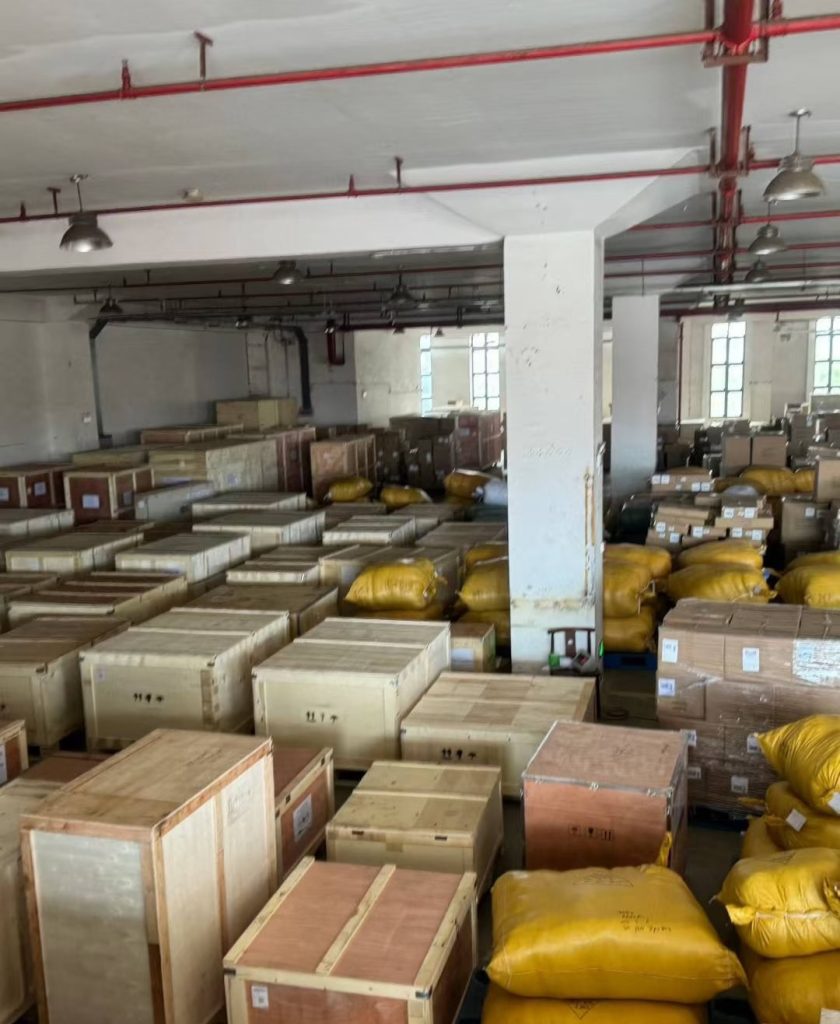
Shipping costs from China are one of the first questions asked by international buyers, wholesalers, e-commerce sellers, and manufacturers. However, there is no single standard price for shipping goods from China because freight costs depend on the cargo, origin, destination, transportation method, weight, volume, delivery terms, and customs requirements.
A shipment from Shenzhen to Los Angeles can have a completely different cost from a shipment from Guangzhou to Berlin or Shanghai to Dubai.
This guide explains how China shipping costs are calculated, which charges importers need to consider, how air freight compares with sea freight and rail freight, and how to request a more accurate quotation from a China freight forwarder.
What Determines the Cost of Shipping from China?
The main factors affecting international shipping costs include:
- Shipping origin in China
- Destination country and city
- Air, sea, rail, or express transportation
- Gross weight
- Volumetric weight
- Cargo volume
- Number of cartons or pallets
- Cargo type
- Incoterm
- Customs clearance requirements
- Import duties and taxes
- Delivery address
- Fuel and carrier surcharges
- Seasonal market conditions
- Special cargo requirements
The most important point is that shipping cost should be calculated according to the actual shipment rather than a general price per kilogram found online.
1. Air Freight Cost from China
Air freight is normally suitable for cargo that requires relatively fast transportation or has a higher value-to-weight ratio.
Air freight pricing can depend on both:
Actual weight
and
Volumetric weight
The carrier or freight forwarder may charge according to whichever is higher, depending on the applicable pricing rules.
A common volumetric-weight formula for air freight is:
Length × Width × Height ÷ 6000
when dimensions are measured in centimeters, although the applicable divisor can vary by carrier, route, and service.
For example, if one carton measures:
60 × 40 × 40 cm
the volumetric weight using a 6000 divisor would be:
60 × 40 × 40 ÷ 6000 = 16 kg
If the actual gross weight is only 10 kg, the billable weight may therefore be based on the volumetric weight, depending on the service.
This is why buyers should provide both dimensions and gross weight when requesting an air-freight quotation.
2. Sea Freight Cost from China
Sea freight is often suitable for larger shipments where delivery speed is less important than transportation cost.
There are two common categories:
LCL — Less than Container Load
LCL allows multiple customers’ cargo to share container space.
It can be suitable for smaller shipments that do not require a full container.
Pricing may depend on:
- Chargeable volume
- Origin handling
- Destination handling
- Port charges
- Documentation
- Customs clearance
- Delivery
FCL — Full Container Load
FCL is used when a shipper books an entire container.
Common container types include:
- 20GP
- 40GP
- 40HQ
The final cost can include more than the ocean freight itself.
For example:
Ocean freight + origin charges + documentation + customs + destination charges + delivery
Therefore, when comparing sea-freight quotations, always check the complete cost structure.
3. Rail Freight from China
Rail freight can be an option for certain China-Europe and China-Central Asia shipments.
It may provide a balance between air freight and sea freight in terms of transportation speed and cost, although actual transit times and availability vary according to the route, rail schedule, border conditions, and destination.
Rail freight is particularly worth evaluating when:
- Air freight is too expensive
- Sea freight is too slow
- The destination is connected efficiently by rail
- Cargo is suitable for rail transportation
A freight forwarder should evaluate the actual origin and destination before recommending rail freight.
4. Express Shipping from China
Express services are commonly used for:
- Samples
- Documents
- Small parcels
- E-commerce orders
- Urgent shipments
The cost is generally higher per kilogram than large-volume sea freight.
However, express shipping can be attractive for small shipments because the process is relatively simple and delivery is usually faster.
For commercial cargo, buyers should compare express, air freight, and DDP options instead of assuming express is automatically the best choice.
How Shipping Weight Affects the Price
Shipping companies may use different pricing methods depending on the transportation mode.
For example:
Air freight
Usually considers:
Actual weight vs. volumetric weight
Sea LCL
Often considers:
Chargeable volume and/or weight according to the applicable tariff
FCL
Usually based primarily on:
Container type and route
Express
Often considers:
Chargeable weight
This is why simply telling a freight forwarder:
“I have 100 kg of goods.”
may not be enough to obtain an accurate quotation.
You should also provide the package dimensions.
What Is Volumetric Weight?
Volumetric weight reflects the amount of transportation space occupied by cargo.
Imagine two shipments that both weigh 20 kg.
Shipment A consists of compact metal components.
Shipment B consists of large but lightweight plastic products.
Although both weigh 20 kg, Shipment B occupies much more space.
The carrier therefore needs a method to account for the space used by the cargo.
This is the purpose of volumetric-weight calculations.
For buyers shipping lightweight products, understanding volumetric weight can prevent significant differences between an initial estimate and the final freight charge.
Shipping Cost Is More Than the Freight Rate
One of the most common mistakes importers make is comparing only the headline freight rate.
For example:
Ocean freight: $500
does not necessarily mean the complete shipping cost is $500.
Additional costs can include:
- Factory pickup
- Export documentation
- Warehouse handling
- Export customs clearance
- Port charges
- Destination handling
- Customs clearance
- Import duties
- VAT or other taxes
- Delivery
- Storage
- Inspection
- Special handling
The exact charges depend on the route, Incoterm, cargo, destination, and service arrangement.
Therefore, ask for the total service scope, not just the transportation rate.
How Incoterms Affect Your Shipping Cost
The same shipment can have different costs depending on the agreed Incoterm.
Common terms include:
- EXW
- FOB
- CIF
- DAP
- DDP
For example, under EXW, the buyer may need to arrange more transportation and export-related costs from the supplier’s location.
Under FOB, the seller generally handles certain origin-side responsibilities up to the agreed loading point, while the buyer handles the main international transportation and subsequent costs according to the contract.
Under DDP, the seller or its logistics provider takes on substantially more responsibility through delivery, subject to the precise contractual arrangement and local legal requirements.
Therefore, when comparing quotations, make sure the quotations are based on the same Incoterm and service scope.
Why China DDP Shipping Prices Can Be Difficult to Compare
DDP quotations can appear very simple:
$X per kg, door to door.
But buyers should ask what the price actually includes.
Confirm whether the quotation covers:
- Pickup in China
- Export customs clearance
- International transportation
- Destination customs clearance
- Duties and taxes
- Final-mile delivery
- Residential delivery
- Remote-area charges
- Special handling
Also provide accurate cargo information.
For example, a quotation for ordinary clothing should not automatically be applied to:
- Lithium batteries
- Machinery
- Dangerous goods
- Oversized cargo
- Products requiring special import permits
A professional freight forwarder should review the cargo before confirming the final shipping cost.
Example: Information Needed to Calculate Shipping Costs
Suppose an importer wants to ship products from Guangzhou to New York.
The buyer provides:
Product: Shoes
Quantity: 500 pairs
Cartons: 25
Gross weight: 500 kg
Total volume: 3 CBM
Origin: Guangzhou, China
Destination: New York, USA
Service: Door-to-door
A freight forwarder can then compare:
Option 1: Air Freight
Suitable when faster delivery is important.
Option 2: Sea LCL
Suitable when the shipment is larger and delivery speed is less urgent.
Option 3: DDP
Potentially useful when the importer wants the logistics provider to coordinate more of the import and delivery process.
The best choice depends on the buyer’s priorities rather than simply the lowest rate.
How to Get a More Accurate China Shipping Quote
When contacting a freight forwarder, provide the following information:
1. Pickup location
For example:
Guangzhou, Guangdong, China
2. Destination
Country + city + postal code + delivery address when available.
3. Product description
Do not simply write “goods.”
Instead write:
- Shoes
- Clothing
- Furniture
- Machinery parts
- Electronics
4. Quantity
Number of cartons, pallets, or pieces.
5. Weight
Gross weight.
6. Dimensions
Length × width × height of each package.
7. Total CBM
If available.
8. Cargo value
Useful for customs and insurance considerations.
9. Preferred shipping method
Air, sea, rail, express, or DDP.
10. Delivery requirement
Port-to-port, airport-to-airport, door-to-door, etc.
Providing complete information helps the forwarder calculate a more realistic quotation.
How to Compare Three Freight Forwarder Quotations
Imagine you receive:
Forwarder A: $1,500
Forwarder B: $1,700
Forwarder C: $1,900
Do not immediately choose A.
Instead create a comparison:
| Item | Forwarder A | Forwarder B | Forwarder C |
|---|---|---|---|
| Pickup | Included | Included | Extra |
| Export clearance | Included | Included | Included |
| Main freight | Included | Included | Included |
| Customs clearance | Extra | Included | Included |
| Duties/taxes | Extra | Included | Included |
| Final delivery | Included | Included | Included |
| Transit time | Estimated | Estimated | Estimated |
After comparing the actual service scope, the $1,500 quotation may no longer be the cheapest.
This is why experienced importers compare landed cost and service scope, not just freight rates.
When Should You Choose Air Freight?
Air freight may be suitable when:
- Cargo is relatively urgent
- Shipment volume is moderate
- Product value is relatively high
- Inventory needs to be replenished quickly
- Sea freight transit time is too long
Typical examples include:
- Fashion products
- Samples
- Electronics
- Spare parts
- Time-sensitive inventory
The best decision depends on the cargo and route.
When Should You Choose Sea Freight?
Sea freight may be suitable when:
- Cargo volume is large
- Delivery time is flexible
- Cost per unit is important
- The shipment is suitable for container transportation
For regular importers, sea freight can be particularly attractive for larger shipments.
When Should You Choose DDP?
DDP may be worth considering when the importer wants a more comprehensive logistics service.
It can be particularly convenient for buyers who do not have extensive experience managing international customs and destination logistics.
However, always confirm the precise terms, responsibilities, taxes, customs arrangements, and delivery scope before booking.
How to Reduce Shipping Costs from China
There are several legitimate ways to control international shipping costs.
Consolidate shipments
Combining multiple supplier shipments into one larger shipment can sometimes improve transportation economics.
Optimize packaging
Large empty spaces increase volumetric weight and transportation space.
Compare transportation modes
Ask for air, sea, rail, and applicable DDP options.
Compare multiple forwarders
Obtain several quotations with the same shipment information.
Plan ahead
Urgent shipments can be significantly more expensive than properly planned transportation.
Use the correct Incoterm
Choose an Incoterm that clearly defines responsibility for transportation and costs.
Provide accurate cargo information
Incorrect weight or dimensions can result in unexpected adjustments.
Frequently Asked Questions
How much does it cost to ship goods from China?
There is no universal shipping price. The cost depends on origin, destination, transportation method, weight, volume, cargo type, Incoterm, customs requirements, and delivery location.
Is shipping from China cheaper by sea or air?
Sea freight is generally more economical for larger shipments, while air freight is generally faster and may be more suitable for smaller or time-sensitive cargo.
Why did my final freight charge become higher than the original quote?
Possible reasons include incorrect weight or dimensions, additional destination charges, customs-related costs, remote-area delivery, special cargo handling, storage, or changes in the transportation conditions.
Does DDP shipping include customs clearance?
A DDP quotation is generally intended to cover more of the import process than standard port-to-port shipping, but the exact services included must be confirmed with the logistics provider.
How can I get an accurate shipping quotation from China?
Provide the origin, destination, product description, number of packages, gross weight, package dimensions, total volume, cargo value, and desired shipping method.
Should I choose the cheapest freight forwarder?
Not necessarily. Compare the complete cost, service scope, transit-time estimate, communication, customs arrangements, and delivery capabilities before making a decision.
Final Takeaway
The cost of shipping goods from China depends on much more than the freight rate.
A reliable calculation should consider the complete transportation chain from the Chinese supplier to the final destination, including origin handling, international transportation, customs, duties and taxes where applicable, destination charges, and final delivery.
For importers, the best strategy is to provide accurate cargo information, compare quotations based on identical service conditions, understand the applicable Incoterms, and choose a freight forwarder that provides transparent pricing.
A slightly higher quotation can sometimes represent better value if it includes more services and reduces the risk of unexpected charges.
The objective should be the lowest reliable total logistics cost—not simply the lowest advertised freight rate.