

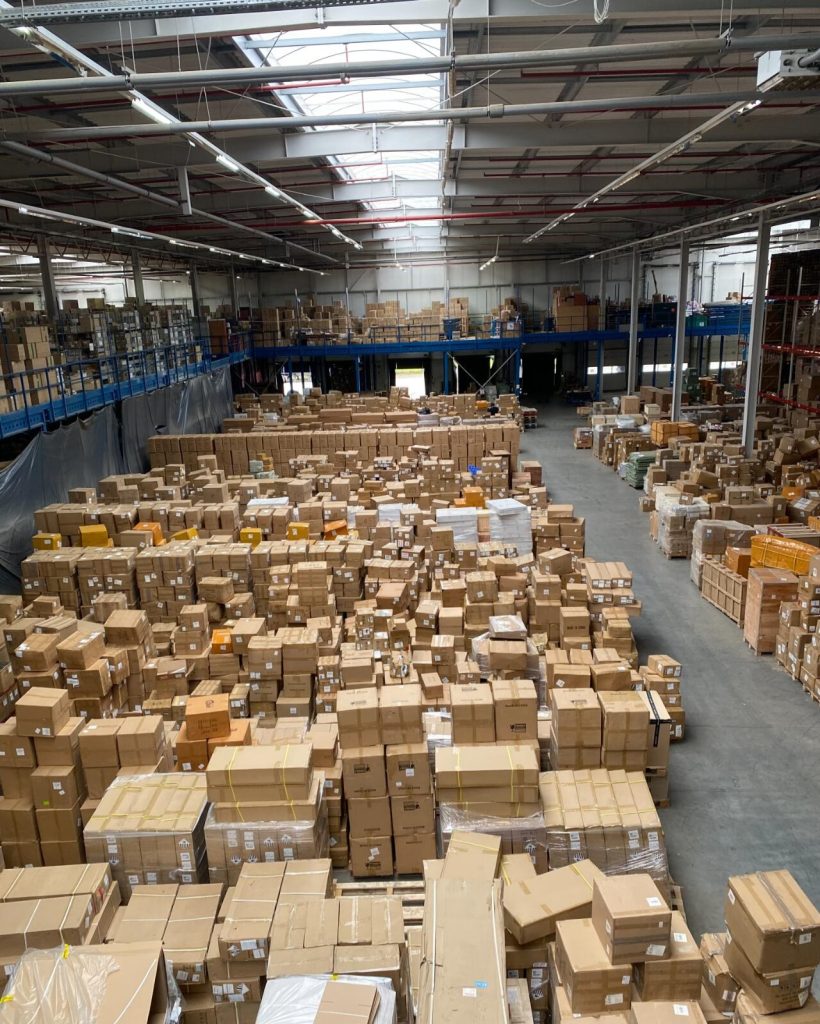
Choosing a reliable China freight forwarder is one of the most important decisions for importers, wholesalers, e-commerce sellers, manufacturers, and international buyers sourcing products from China. The right freight forwarding partner can help control shipping costs, arrange transportation, manage export documentation, coordinate customs clearance, and reduce the risk of unexpected delays.
However, choosing a freight forwarder based only on the lowest quotation can create problems. A low initial price may exclude destination charges, customs-related costs, handling fees, or other services that appear later.
This guide explains how to evaluate a China freight forwarder, what questions to ask before placing an order, how to compare quotations, and how to identify a logistics partner that is suitable for long-term international shipping.
What Does a China Freight Forwarder Do?
A China freight forwarder coordinates the movement of cargo from the supplier or factory to the final destination. Depending on the service, a freight forwarder may arrange transportation, export procedures, warehousing, consolidation, customs documentation, and delivery.
Common services include:
- Ocean freight
- Air freight
- Rail freight
- Express shipping
- LCL consolidation
- FCL container shipping
- Door-to-door shipping
- DDP shipping
- Export customs clearance
- Warehousing and cargo consolidation
- Cargo pickup from Chinese factories
- International shipment tracking
The exact services depend on the freight forwarder’s network, licenses, carrier relationships, destination capabilities, and business model.
For an importer, the important question is not simply whether a company calls itself a “freight forwarder.” The important question is whether it can reliably handle your specific cargo, route, shipping method, and destination requirements.
1. Check Whether the Freight Forwarder Handles Your Type of Cargo
Before requesting a quotation, explain exactly what you are shipping.
For example:
- Clothing
- Shoes
- Furniture
- Machinery
- Electronics
- Auto parts
- Agricultural equipment
- Batteries
- Chemicals
- Oversized equipment
- General consumer goods
Different products can have very different transportation requirements.
A standard shipment of clothing is usually much easier to handle than lithium batteries, machinery containing batteries, oversized equipment, or products subject to special import regulations.
Ask the freight forwarder:
Can you handle my product and destination legally and safely?
If the answer is unclear, ask for the required documentation before making payment.
For regulated or sensitive cargo, a professional forwarder should be able to explain the applicable transportation restrictions rather than simply promising that the shipment can be delivered.
2. Verify the Shipping Route
A freight forwarder may be experienced on one route but less experienced on another.
For example, a company may have strong experience with:
China → USA
but limited experience with:
China → Africa
or:
China → Central Asia
Therefore, do not evaluate a freight forwarder only by its overall company profile.
Evaluate its experience with your actual route.
Important questions include:
- Which Chinese origin cities do you support?
- Which airports or seaports are normally used?
- Do you provide door-to-door delivery?
- Which destination airports or ports do you use?
- Do you have destination partners?
- What is the estimated transit time?
- Is customs clearance included?
- Is final-mile delivery included?
The answers should be specific rather than simply saying “We ship worldwide.”
3. Compare the Complete Shipping Cost
Price is important, but the cheapest quotation is not always the cheapest shipment.
A freight quotation can contain several components.
Depending on the shipping method, these may include:
| Cost Item | Possible Charge |
|---|---|
| Factory pickup | Yes |
| Export handling | Yes |
| Origin warehouse | Sometimes |
| Export customs clearance | Sometimes |
| Main transportation | Yes |
| Fuel surcharge | Sometimes |
| Destination handling | Sometimes |
| Customs clearance | Depending on service |
| Import duties and taxes | Depending on Incoterm |
| Final delivery | Depending on service |
| Storage | If applicable |
| Special cargo surcharge | Depending on cargo |
When comparing quotations, ask the forwarder:
What exactly is included in this price, and what additional charges could occur?
This question can prevent many disputes.
4. Understand the Difference Between DDP and Other Shipping Terms
DDP shipping is frequently requested by international buyers because it can simplify the importing process.
Under a properly arranged DDP service, the logistics provider may coordinate transportation, customs clearance, applicable duties and taxes, and final delivery according to the agreed terms.
However, DDP should not automatically be assumed to mean that every possible cost is included.
Before accepting a DDP quotation, confirm:
- Pickup location
- Destination address
- Cargo description
- Cargo value
- Weight
- Volume
- Shipping method
- Customs clearance arrangement
- Duties and taxes
- Final delivery
- Possible remote-area charges
- Whether the quotation includes all known fees
A professional quotation should clearly state the scope of the service.
5. Ask for a Detailed Freight Quotation
A reliable freight forwarder should be able to provide a quotation that is understandable.
For example, instead of receiving:
$3/kg, DDP
you should ask for more information.
A useful quotation should clarify:
Origin: Shenzhen, China
Destination: New York, USA
Cargo: Shoes
Gross weight: 500 kg
Volume: 3 CBM
Shipping method: Air freight
Service: Door-to-door
Customs clearance: Included
Destination delivery: Included
Estimated transit time: Stated separately
Validity: Clearly stated
The exact format will vary between forwarders, but the important point is transparency.
6. Check the Freight Forwarder’s Communication
Communication quality is often overlooked when selecting a logistics partner.
International shipping involves multiple stages. Problems can occur because of weather, port congestion, customs inspections, flight changes, documentation errors, or destination delivery issues.
A reliable logistics partner should provide clear communication when something changes.
Before placing a large shipment, evaluate:
- How quickly do they answer?
- Do they understand your questions?
- Do they provide written quotations?
- Can they explain additional charges?
- Do they provide tracking information?
- Who will handle your shipment after booking?
- How are urgent problems handled?
If communication is already poor before you place an order, the situation may become more difficult once your cargo is in transit.
7. Ask About Cargo Tracking
Tracking requirements depend on the transportation method.
For air and ocean shipments, you may receive information such as:
- Booking confirmation
- Master bill or house bill information
- Flight information
- Vessel information
- Container number
- Departure date
- Arrival estimate
- Customs status
- Delivery status
Ask the forwarder:
How will I track my shipment after departure?
For regular commercial shipments, having clear shipment milestones is particularly useful because it allows the buyer to coordinate inventory and receiving arrangements.
8. Verify Company Information
Before sending a large payment or valuable cargo, verify the freight forwarder’s basic company information.
Depending on the jurisdiction and business arrangement, you can check:
- Registered company name
- Business registration
- Company address
- Contact information
- Company website
- Relevant logistics qualifications
- Industry memberships or licenses where applicable
- Bank account beneficiary
- Contract information
Pay particular attention when the payment account does not match the contracting company.
For example, if you sign a contract with one company but are suddenly asked to transfer money to an unrelated personal account, stop and verify the reason.
9. Don’t Choose a Freight Forwarder Based Only on Price
Suppose you receive three quotations:
Forwarder A: $1,800
Forwarder B: $2,050
Forwarder C: $2,400
It may appear that Forwarder A is the obvious choice.
But you need to determine whether all three quotations include the same services.
For example:
- Is pickup included?
- Is export clearance included?
- Is destination clearance included?
- Are duties included?
- Is final delivery included?
- Are remote-area charges included?
- Are fuel surcharges included?
- Is the price based on actual or volumetric weight?
After comparing the complete service scope, the actual cost difference may be much smaller than it initially appears.
The correct comparison is not simply price versus price. It is service scope versus service scope.
10. Ask About Transit Time Realistically
Transit time should normally be provided as an estimate rather than an absolute guarantee unless a specific guaranteed service has been contractually agreed.
For example, an air shipment may be described as:
Estimated transit time: 5–10 business days
rather than:
Guaranteed delivery in exactly 5 days.
Transit time can be affected by:
- Flight schedules
- Vessel schedules
- Port congestion
- Customs inspections
- Weather
- Holidays
- Documentation problems
- Destination delivery conditions
A professional forwarder should explain these variables instead of promising an unrealistically short delivery time simply to win an order.
11. Start With a Small Shipment
If you are working with a new freight forwarder, you do not necessarily need to start with a large shipment.
A small trial shipment can help you evaluate:
- Pickup performance
- Warehouse handling
- Documentation
- Tracking
- Communication
- Transit time
- Customs coordination
- Final delivery
- Billing accuracy
After the first shipment is completed successfully, you can consider increasing the shipping volume.
This is particularly useful when developing a long-term relationship with a new logistics provider.
12. Ask These Questions Before Booking
Before confirming a shipment, ask the freight forwarder:
- What shipping method do you recommend for my cargo?
- What is the estimated transit time?
- What is the total shipping cost?
- What charges are included?
- What charges are excluded?
- Is customs clearance included?
- Are duties and taxes included?
- Is final delivery included?
- What documents do you need from me?
- How will I track the shipment?
- What happens if customs inspects the cargo?
- What happens if the shipment is delayed?
- How are additional charges handled?
- Who will be my shipment contact?
- Can you provide a written quotation and service terms?
The answers can reveal whether the forwarder has a clear operating process.
China Freight Forwarder Checklist
Before choosing a logistics partner, use this basic checklist:
- [ ] Company information can be verified
- [ ] Experience with your shipping route
- [ ] Experience with your cargo type
- [ ] Clear shipping quotation
- [ ] Clearly defined service scope
- [ ] Transparent additional charges
- [ ] Reasonable transit-time estimate
- [ ] Customs clearance arrangement explained
- [ ] Tracking available where applicable
- [ ] Clear communication
- [ ] Written service terms
- [ ] Payment information matches the contracted company
- [ ] Suitable destination delivery capability
The more boxes that can be confidently checked, the lower the risk of unexpected problems.
What Information Should You Send When Requesting a Freight Quote?
To receive an accurate quotation, provide as much information as possible.
At minimum, send:
Pickup location:
City and province in China
Destination:
Country, city, and preferably the complete delivery address
Product:
Detailed cargo description
Quantity:
Number of cartons/pallets/packages
Gross weight:
Total weight
Dimensions:
Length × width × height of each package
Total volume:
CBM if available
Shipping method:
Air, sea, rail, express, or DDP
Cargo value:
Commercial value of the shipment
Special requirements:
Battery, oversized cargo, temperature control, fragile goods, etc.
The more complete the information, the more accurate the freight forwarder can make the quotation.
Final Thoughts
Choosing a China freight forwarder should not be based on a single low price.
A suitable logistics partner should have the ability to handle your cargo type, shipping route, customs requirements, transportation method, and final delivery requirements.
The best approach is to compare several quotations, examine the complete service scope, verify company information, ask detailed questions, and test a new logistics provider with a smaller shipment before committing to larger volumes.
For businesses importing from China regularly, the goal should not simply be finding the cheapest shipment.
The goal is finding a reliable, transparent, responsive, and cost-effective freight forwarding partner that can support your business as shipping volume grows.
FAQ
What is the best way to find a China freight forwarder?
Compare several freight forwarders based on route experience, cargo capabilities, quotation transparency, communication, customs support, tracking, and delivery capabilities rather than price alone.
How do I know if a China freight forwarder is reliable?
Verify the company’s business information, ask for clear service terms, examine its experience with your route and cargo, and consider starting with a small shipment.
Is the cheapest China freight forwarder the best choice?
Not necessarily. A low quotation may exclude destination charges, customs costs, duties, delivery fees, or other expenses. Compare the complete landed shipping cost.
Can a China freight forwarder arrange door-to-door delivery?
Many freight forwarders offer door-to-door services, but the exact scope varies. Confirm whether pickup, export clearance, international transportation, destination customs clearance, taxes, and final delivery are included.
What information is needed for a freight quotation?
Normally you should provide the origin, destination, product description, quantity, package dimensions, gross weight, volume, cargo value, and any special handling requirements.
Should I use the same freight forwarder for every shipment?
If a forwarder consistently provides reliable service, transparent pricing, good communication, and successful deliveries, maintaining a long-term relationship can be beneficial. However, periodically comparing market rates can help ensure competitive pricing.