

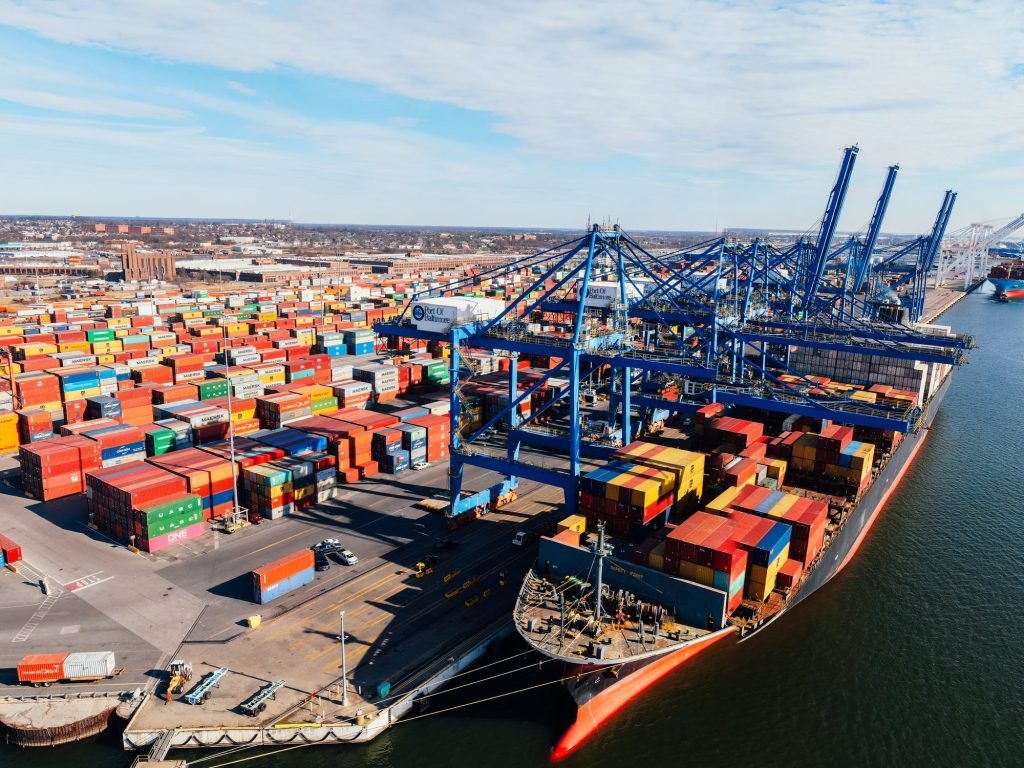
Shipping goods from China to Europe requires more than choosing a transportation company and paying a freight charge. Importers need to consider the shipping method, transit time, customs clearance, VAT, duties, delivery address, cargo type, and total landed cost.
For European buyers, common transportation options include air freight, sea freight, rail freight, express delivery, and DDP services. The best option depends on the cargo volume, urgency, destination country, and import requirements.
This guide explains how to choose a suitable China-to-Europe shipping solution.
1. Main Shipping Methods from China to Europe
The most common options are:
- Air freight
- Sea freight
- Rail freight
- Express shipping
- LCL shipping
- FCL container shipping
- DDP door-to-door shipping
Each method has different advantages.
| Method | Speed | Cost | Suitable For |
|---|---|---|---|
| Express | Very fast | High | Small parcels and samples |
| Air freight | Fast | High | Urgent commercial cargo |
| Rail freight | Medium | Medium | Suitable China-Europe routes |
| Sea freight | Slower | Lower for large cargo | Bulk shipments |
| DDP | Route-dependent | Route-dependent | Door-to-door logistics |
Transit times are estimates and can change because of customs, carrier schedules, weather, congestion, holidays, and other operational factors.
2. China to Europe Air Freight
Air freight is suitable for importers who need their goods relatively quickly.
It can be useful for:
- Clothing
- Shoes
- Electronics
- Spare parts
- Samples
- High-value products
- Urgent inventory
The complete process may include:
Factory pickup → Export clearance → Airport handling → Air transportation → EU customs clearance → Final delivery
The actual transit time depends on the Chinese origin, European destination, airline, customs process, and delivery service.
Air freight normally costs more than sea or rail transportation, so it is particularly useful when delivery speed has a significant commercial value.
3. China to Europe Sea Freight
Sea freight is one of the main options for large commercial shipments.
It can be suitable for:
- Furniture
- Machinery
- Building materials
- Wholesale goods
- Packaging
- Large-volume inventory
There are two main options.
LCL
Less than Container Load allows several customers to share container space.
It can be suitable for smaller shipments that do not require an entire container.
FCL
Full Container Load uses a dedicated container.
Common container types include:
- 20GP
- 40GP
- 40HQ
For larger shipments, FCL can provide better container utilization and potentially lower transportation costs per unit.
4. China-Europe Rail Freight
Rail freight provides another transportation option for suitable China-Europe routes.
A typical route can involve:
China → Central Asia/transit countries → Europe
The exact route depends on the service and destination.
Rail freight can be attractive when:
- Air freight is too expensive
- Sea freight is too slow
- The cargo is suitable for rail transportation
- The origin and destination are served by an appropriate rail network
However, rail transit times can vary because of border procedures, customs, transshipment, railway schedules, and network conditions.
5. What Is China-to-Europe DDP Shipping?
DDP means Delivered Duty Paid under Incoterms® rules.
A properly structured DDP arrangement places substantial responsibility on the seller, including import formalities and applicable duties and taxes, subject to the applicable law and contractual arrangement.
A logistics provider may offer a DDP service such as:
China factory → Pickup → International transportation → European customs clearance → Applicable duties/taxes → Final delivery
However, buyers should confirm exactly what the quotation includes.
Ask:
- Is pickup included?
- Is export clearance included?
- Is European customs clearance included?
- Are duties included?
- Is VAT included?
- Is final delivery included?
- Are remote-area charges included?
- Are inspection or storage charges included?
Do not assume that every service advertised as “DDP” has the same scope.
6. EU Customs Clearance
European imports may require customs declaration and supporting documentation.
Depending on the shipment, documents can include:
- Commercial invoice
- Packing list
- Transport documents
- HS classification
- Origin information
- Importer information
- Product-specific compliance documents
The exact requirements depend on the product and destination.
Importers should provide accurate information to the customs broker or logistics provider.
Incorrect product descriptions or customs classifications can lead to delays, additional costs, or compliance problems.
7. Import Duties When Shipping from China to Europe
Import duties depend on the product classification and applicable EU tariff rules.
A simplified example is:
Customs Duty = Applicable Customs Value × Duty Rate
For example, if the customs value were €20,000 and the applicable duty rate were 6%:
€20,000 × 6% = €1,200
This is only an example.
Actual customs valuation and duty calculation can involve additional rules, so importers should verify the applicable tariff treatment for their specific product.
8. VAT for European Imports
VAT is another important consideration.
EU countries apply VAT according to their applicable national rules.
The amount and calculation can depend on factors such as:
- Customs value
- Import duty
- Transportation costs
- Insurance
- Other applicable charges
- Importer’s VAT status
Therefore, buyers should not simply calculate:
Product price × VAT rate
without checking the applicable import VAT rules.
Businesses importing goods commercially should understand their VAT obligations before choosing a shipping arrangement.
9. EU EORI Number
For many commercial imports into the European Union, an EORI number is an important customs identification requirement.
EORI stands for:
Economic Operators Registration and Identification
Importers should verify whether they need an EORI number and ensure that the customs information provided to their broker is correct.
A freight forwarder can help coordinate the customs process, but the importer should understand its own customs responsibilities.
10. Product Compliance in the European Market
Shipping the goods to Europe is only part of the process.
The product may also need to comply with applicable European requirements.
Depending on the product, this can involve:
- CE marking
- Product safety requirements
- Labeling
- Packaging requirements
- Electrical requirements
- Chemical regulations
- Battery regulations
- Environmental obligations
Not every product requires CE marking, and CE marking does not apply to every category.
Importers should determine the specific requirements for their products before shipping.
11. China to Europe Door-to-Door Shipping
Door-to-door service means the logistics provider arranges transportation from the agreed origin to the agreed final destination.
A typical process is:
Chinese supplier
↓
Pickup
↓
Export customs
↓
International transportation
↓
European customs
↓
Local transportation
↓
Final delivery
Door-to-door does not automatically mean DDP.
For example, a DAP arrangement can provide delivery to the agreed destination while the buyer remains responsible for import clearance and applicable duties/taxes.
Therefore, always confirm the Incoterm.
12. How Much Does China-to-Europe Shipping Cost?
There is no universal China-to-Europe shipping price.
The quotation depends on:
- Origin city
- Destination country
- Destination postcode
- Product
- Weight
- Volume
- Number of cartons
- Shipping method
- Incoterm
- Customs requirements
- Delivery address
For example, shipping 50 kg of compact products by air is very different from shipping 20 CBM of machinery by sea.
For an accurate quotation, provide:
Product + weight + dimensions + volume + origin + destination
13. What Information Does a Freight Forwarder Need?
When requesting a China-Europe freight quotation, provide:
Origin
For example:
- Shenzhen
- Guangzhou
- Shanghai
- Ningbo
- Yiwu
Destination
Provide:
- Country
- City
- ZIP/postcode
- Delivery address when available
Cargo
Provide:
- Product name
- Quantity
- Cartons
- Pallets
- Gross weight
- Dimensions
- CBM
- Cargo value
Service
Specify whether you need:
- Air freight
- Sea LCL
- Sea FCL
- Rail freight
- DDP
- DAP
- Door-to-door
This allows the freight forwarder to calculate a more accurate quotation.
14. China to Europe Shipping Time
Transit time depends heavily on the selected transportation method.
In general:
Express: Fastest for small parcels
Air freight: Fast
Rail: Medium
Sea freight: Generally slower
But the total door-to-door time can include:
- Supplier preparation
- Pickup
- Export handling
- International transportation
- Customs clearance
- Destination handling
- Final delivery
Therefore, ask for:
Estimated total door-to-door transit time
rather than relying only on the international transportation segment.
15. How to Reduce China-to-Europe Shipping Costs
Consolidate Shipments
Combining multiple supplier shipments can sometimes reduce overall transportation costs.
Optimize Packaging
Reducing unnecessary packaging dimensions can be particularly important for air freight.
Compare Air, Rail and Sea
Do not assume that one transportation method is always the cheapest.
Compare LCL and FCL
If your shipment volume is relatively large, request both options.
Plan Inventory in Advance
Better planning can reduce the need for expensive urgent transportation.
Compare Complete Quotes
Look beyond the headline freight rate and compare the complete door-to-door cost.
16. Common China-Europe Shipping Problems
Incorrect Documentation
Incorrect invoices, packing lists, or product descriptions can delay customs.
Incorrect HS Classification
An incorrect classification can affect duties and customs processing.
Missing Product Compliance
Certain products may require additional compliance documentation.
Unexpected Destination Charges
A low freight rate may exclude European destination costs.
Customs Inspection
Inspection can increase clearance time and cost.
Incorrect Delivery Information
An incomplete postcode or address can delay final delivery.
Unrealistic Transit-Time Expectations
International logistics involves variables that cannot always be controlled.
A professional forwarder should provide a realistic estimated transit time.
17. How to Choose a China-Europe Freight Forwarder
Before booking, evaluate:
- China-Europe route experience
- Experience with your product
- Air/sea/rail options
- Customs coordination
- European delivery network
- Quotation transparency
- Tracking
- Communication
- Insurance options
- Additional-charge policy
- Transit-time estimates
Do not choose a logistics provider based solely on the lowest quotation.
A slightly higher price may provide a much more complete service.
China-to-Europe Freight Quotation Checklist
Before confirming a shipment, check:
- [ ] Origin confirmed
- [ ] Destination confirmed
- [ ] Product description confirmed
- [ ] Weight confirmed
- [ ] Dimensions confirmed
- [ ] CBM confirmed
- [ ] Shipping method confirmed
- [ ] Incoterm confirmed
- [ ] Export clearance confirmed
- [ ] Import clearance confirmed
- [ ] Duties confirmed
- [ ] VAT arrangement confirmed
- [ ] Destination charges confirmed
- [ ] Final delivery confirmed
- [ ] Transit time confirmed
- [ ] Tracking available
- [ ] Insurance discussed
Frequently Asked Questions
What is the best way to ship goods from China to Europe?
It depends on the cargo. Air freight is suitable for urgent shipments, sea freight is often suitable for large volumes, and rail can be attractive on suitable China-Europe routes.
Is DDP shipping from China to Europe safe?
DDP can be a convenient logistics arrangement when properly structured, but buyers should verify the service provider, customs arrangement, duties, VAT, product compliance, and exact delivery scope.
Does DDP include European VAT?
Do not assume this automatically. Ask the provider exactly what taxes are included and how the import is declared.
Do I need an EORI number?
Many commercial EU importers need an EORI number for customs activities. Confirm the specific requirement for your business and import arrangement.
How do I get a China-to-Europe freight quotation?
Provide the product, quantity, weight, carton dimensions, CBM, Chinese origin, European destination, and required transportation method.
Is sea freight cheaper than rail freight?
It can be for many large-volume shipments, but the actual comparison depends on the route, cargo volume, transit requirements, and complete door-to-door costs.
Final Takeaway
Shipping from China to Europe requires careful planning of transportation, customs, VAT, duties, product compliance, and final delivery.
For urgent and relatively compact cargo, air freight can provide faster transportation. For larger shipments, sea freight can often provide better cost efficiency. Rail freight offers another option on suitable China-Europe routes, while DDP can provide a more comprehensive door-to-door arrangement when correctly structured.
Before booking, compare the complete landed cost, not just the international freight rate.
The most useful freight quotation should clearly state:
Shipping method + transit time + customs arrangement + duties/taxes + destination charges + final delivery + excluded costs.
This allows European importers to compare China freight forwarders on a true like-for-like basis.