

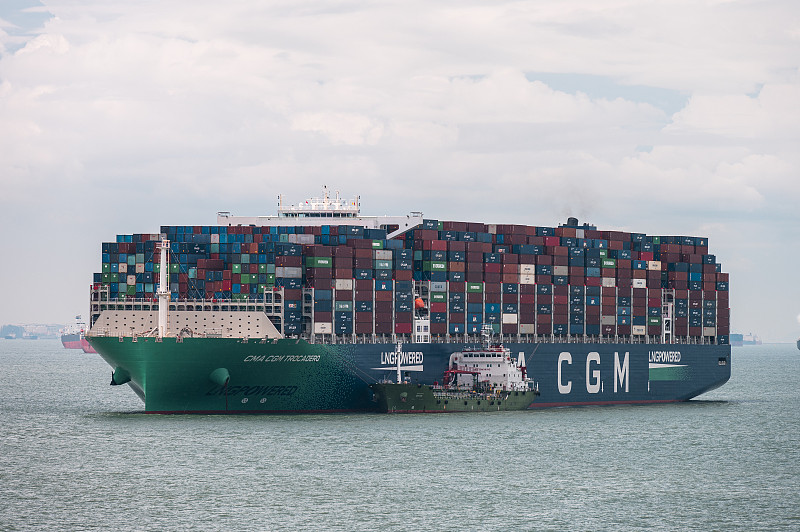
The global logistics landscape in 2026 looks very different from just a few years ago. Geopolitical realignments, the mainstream adoption of AI in supply chain management, stricter environmental regulations, and the relentless growth of cross-border e-commerce have reshaped what importers expect from their logistics partners. In this environment, the gap between an average freight forwarder and a truly great one has never been wider.
A “good enough” forwarder can book space and move boxes. But a great China freight forwarder in 2026 acts as a strategic extension of your business — anticipating disruptions before they happen, leveraging technology to give you total visibility, and adapting to regulatory shifts that would leave less agile competitors scrambling. Here’s what separates the best from the rest in today’s market.
1. Digital-First Operations with Real-Time Visibility
In 2026, “we’ll email you an update” is no longer acceptable. Great forwarders have fully embraced digital transformation. They offer:
- Live tracking dashboards that show your shipment’s location, temperature (for sensitive goods), and customs status in real time.
- API integrations with major e-commerce platforms (Amazon, Shopify, TikTok Shop) and ERP systems, so inventory updates flow automatically.
- AI-powered ETA predictions that factor in weather, port congestion, and carrier performance history — giving you a more accurate arrival window than the carrier’s own estimates.
- Digital document management — no more faxing or emailing PDFs back and forth. Bills of lading, commercial invoices, and certificates of origin are generated, signed, and stored in a secure online portal.
A great forwarder doesn’t make you chase information. The information comes to you — proactively and automatically.
2. Agile Adaptation to Trade Policy Shifts
Trade policies in 2026 are in constant flux. New tariffs, anti-dumping duties, and country-specific import bans can emerge with little warning. The best forwarders employ dedicated compliance teams that monitor regulatory changes daily — not just in China, but in every destination country they serve.
When the U.S. adjusts Section 301 tariffs or the EU tightens rules on product certifications, a top-tier forwarder reaches out to affected clients before the changes take effect, explains the impact, and offers actionable solutions: rerouting through a different country of origin, adjusting HS code classification within legal boundaries, or shifting to a bonded warehouse strategy to defer duties. They don’t just react; they anticipate.
3. Multi-Modal Flexibility and Diversified Routing
The Red Sea crisis, Panama Canal drought, and periodic port shutdowns in Asia have taught importers a hard lesson: relying on a single route or mode is risky. Great forwarders in 2026 have already built diversified networks that give them — and you — options.
If ocean freight through a key chokepoint is disrupted, they can pivot to:
- China-Europe Rail via the Middle Corridor (Trans-Caspian route) as an alternative to the traditional northern route.
- Air freight charters with pre-negotiated standby capacity.
- China-Vietnam or China-Thailand transshipment to navigate country-specific tariffs.
- Cross-border trucking for regional Asia-to-Europe or Asia-to-Middle East routes.
They present these alternatives with clear cost and timing comparisons, empowering you to make informed decisions rather than leaving you stranded.
4. Proactive, Human-Centric Communication
Technology handles the routine updates, but when a crisis hits, you need a human who knows your business. The best forwarders assign a dedicated account manager who:
- Understands your product categories, seasonal patterns, and risk tolerance.
- Is reachable across multiple channels (email, WhatsApp, WeChat, phone) during your business hours — not just China business hours.
- Provides context, not just facts. Instead of “Your shipment is delayed,” they say: “Your shipment is delayed 4 days due to a typhoon in Ningbo. We’ve rebooked on a COSCO sailing departing Aug 20. Here’s how this affects your Amazon restock timeline, and here’s what we recommend for your next order to stay on track.”
That level of proactive, contextual communication is what turns a service provider into a trusted partner.
5. Sustainability and Green Shipping Options
Environmental, Social, and Governance (ESG) requirements are no longer optional for businesses selling into the EU, UK, or North America. The EU’s Carbon Border Adjustment Mechanism (CBAM) and corporate net-zero commitments are filtering down to every link in the supply chain.
Forwarders that stand out in 2026 offer:
- Carbon footprint reporting for every shipment, calculated to ISO 14083 standards.
- Green shipping alternatives, such as ocean carriers using biofuel or LNG-powered vessels, and airlines participating in carbon offset programs.
- Sustainable packaging advice to reduce waste and lower dimensional weight charges.
- Eco-friendly route optimization that minimizes empty miles and consolidates loads efficiently.
If your customers or investors care about sustainability — and in 2026, most do — your forwarder should help you measure and reduce your logistics carbon footprint, not just move your goods.
6. Transparent, Data-Driven Pricing
Great forwarders in 2026 use data analytics to benchmark their rates against market indexes (like the Freightos Baltic Index or Xeneta) and share that context with clients. They’ll tell you: “Current rates from Shanghai to Los Angeles are trending 12% above the 12-month average due to peak season. We recommend booking by 2026 before the next GRI (General Rate Increase) takes effect.”
This level of transparency builds trust and helps you budget accurately. Combined with all-inclusive DDP quotes and no hidden fees, it means you always know exactly where your money is going.
7. Robust Risk Management and Insurance
A great forwarder treats risk management as a core service, not an afterthought. They:
- Offer all-risk cargo insurance with clear claim procedures and fast payouts.
- Maintain financial security through bonds and memberships in networks like WCA’s payment protection program.
- Have contingency plans for every major disruption scenario: port strikes, carrier bankruptcies, customs system outages, and extreme weather.
- Provide regular compliance audits of your shipments to ensure documentation accuracy and minimize the risk of seizures or fines.
FAQ: Choosing a Great China Freight Forwarder in 2026
Q1: How has AI changed the freight forwarding industry by 2026?
A: AI is now used for predictive ETA calculations, automated document processing (OCR for bills of lading and invoices), dynamic pricing optimization, and demand forecasting. The best forwarders use AI to flag potential delays before they happen and suggest preventive actions. However, AI augments — it doesn’t replace — experienced logistics professionals who handle exceptions and build client relationships.
Q2: What is “green shipping” and is it more expensive?
A: Green shipping refers to logistics practices that reduce carbon emissions — such as using carriers with low-emission vessels, optimizing consolidation to reduce partial loads, and offering carbon offset programs. In 2026, the cost premium for green options has narrowed significantly. Some eco-friendly routes are now comparable in price to standard options, especially when factoring in potential carbon taxes or CBAM fees in the EU. Many forwarders also offer carbon-neutral shipping at a small fixed percentage markup.
Q3: How important is it that my forwarder has a sustainability certification?
A: Increasingly important, especially if you sell to European or North American customers with ESG reporting requirements. Look for forwarders certified under ISO 14001 (environmental management) or those participating in the Smart Freight Centre’s GLEC framework for emissions calculation. Even without formal certification, a forwarder should be able to provide shipment-level carbon reports that your company can use for its own sustainability disclosures.
Q4: What should I ask a forwarder to test their “crisis management” capabilities?
A: Ask: “Walk me through exactly what happened with your clients during the 2024 Red Sea disruptions (or another recent major event). What did you do, how fast did you act, and what was the outcome?” A great forwarder will have specific, detailed answers — including which clients they rerouted, which alternative carriers they used, and how they communicated with customers. Vague answers like “We handled it fine” are a red flag.
Q5: Are traditional freight forwarders being replaced by digital freight platforms?
A: Not entirely. Digital platforms (like Flexport, Freightos, or Shippo) excel at spot quotes, instant bookings, and SMB-friendly interfaces. However, they often struggle with complex, non-standard shipments, destination-country nuances, and high-touch customer service. The best forwarders in 2026 blend the two: they offer a sleek digital interface for day-to-day tasks while maintaining a team of experts for strategic guidance and problem-solving.
Q6: How do I know if a forwarder is truly keeping up with 2026 standards or just marketing themselves that way?
A: Look for proof, not promises. Ask for a demo of their tracking portal or client dashboard. Request a sample carbon emissions report. Ask to see their crisis management SOP document. Check if their team members hold current certifications (IATA, FIATA, Customs Broker licenses). A forwarder that truly operates at 2026 standards will be transparent, proud of their systems, and happy to show you how they work.
Q7: Should I switch forwarders if my current one is “good enough”?
A: If your current forwarder is reliable, transparent, and communicative, that’s valuable — don’t switch without a compelling reason. But if they lack digital tools, can’t provide carbon data, struggle with multi-modal options, or go silent during disruptions, 2026 is the year to upgrade. The cost of staying with a subpar forwarder — missed sales, surprise fees, compliance risks — compounds every quarter. Start by running a trial shipment with a more advanced forwarder alongside your existing one to compare performance objectively.
The freight forwarders that thrive in 2026 aren’t just the ones with the lowest rates or the biggest networks. They’re the ones who combine cutting-edge technology with deep human expertise, who treat your business goals as their own, and who evolve as fast as global trade itself. Choose a partner who’s already operating at that level — and you’ll turn logistics from a bottleneck into a competitive advantage.