

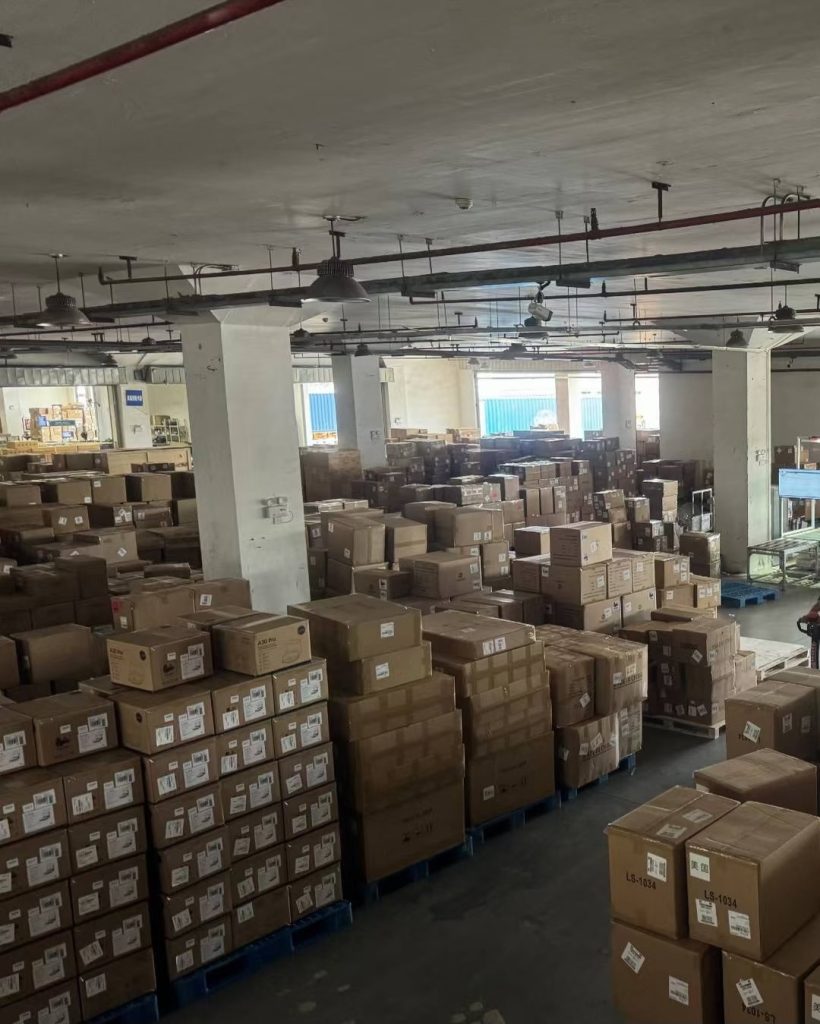
Choosing the right China freight forwarder can have a major impact on your international shipping costs, delivery times, customs clearance, and overall importing experience.
For businesses purchasing products from China, selecting a freight forwarder is not simply about finding the lowest shipping price. A quotation that looks cheap at first may exclude important charges or provide a service that does not match your actual requirements.
A reliable freight forwarder should be able to explain the shipping process clearly, provide transparent pricing, handle the required logistics procedures, and communicate effectively when problems occur.
This guide explains how importers can evaluate a China freight forwarder before trusting them with commercial cargo.
What Does a China Freight Forwarder Do?
A freight forwarder coordinates the transportation of goods from the supplier to the destination.
Depending on the service, a freight forwarder may arrange:
- Supplier pickup
- Warehousing
- Cargo consolidation
- Export documentation
- Export customs clearance
- Ocean freight
- Air freight
- Rail freight
- Import customs clearance
- Local transportation
- Door-to-door delivery
- DDP logistics
- Cargo tracking
- Shipment documentation
The exact services depend on the forwarder and the shipping arrangement.
Some forwarders specialize in particular routes, industries, cargo types, or transportation methods.
Therefore, the best freight forwarder for one importer may not necessarily be the best option for another.
Why Is Choosing the Right China Freight Forwarder Important?
International shipping involves many separate stages.
A problem at any stage can affect the entire shipment.
For example, a mistake in the export documentation can delay customs clearance.
A problem with cargo dimensions can change the final freight charge.
A missing import document can delay delivery after the shipment arrives in Europe.
A reliable freight forwarder helps coordinate these processes and communicates with the relevant parties.
The goal is not simply to move cargo from China to another country.
The goal is to move the cargo:
Safely + legally + predictably + cost-effectively
1. Check Whether the Freight Forwarder Understands Your Shipping Route
Not every logistics company has the same experience with every destination.
If you regularly ship from China to Germany, France, the Netherlands, Poland, Italy, Spain, the United Kingdom, or another European market, ask the forwarder about its experience with that specific route.
Important questions include:
- Which Chinese cities can you collect cargo from?
- Which European destinations do you serve?
- Do you provide door-to-door delivery?
- Do you handle LCL shipments?
- Do you handle FCL shipments?
- Do you offer air freight?
- Do you offer DDP services where appropriate?
- How is customs clearance handled?
- Who handles final delivery?
A forwarder that understands the specific route can often provide more useful advice than a company offering only generic international shipping.
2. Make Sure the Company Can Handle Your Type of Cargo
The product itself can affect the logistics process.
General consumer goods are usually easier to handle than products with special transportation or regulatory requirements.
Examples of cargo that may require additional attention include:
- Lithium batteries
- Chemicals
- Machinery
- Oversized equipment
- Food products
- Cosmetics
- Medical products
- Electrical equipment
- Dangerous goods
- Products containing magnets or other restricted components
Before requesting a final quotation, provide an accurate product description.
Do not simply tell the forwarder:
“It is a machine.”
Instead, provide details such as:
- Product name
- Main materials
- Dimensions
- Weight
- Battery information
- Product value
- Intended use
- Packaging information
This allows the logistics provider to determine whether special handling or documentation may be required.
3. Do Not Choose a Freight Forwarder Based Only on Price
Price is important, but the lowest quotation is not always the best quotation.
Consider a simple example.
Forwarder A quotes:
USD 1,200
Forwarder B quotes:
USD 1,450
At first glance, Forwarder A appears cheaper.
However, after checking the quotation, you discover that Forwarder A excludes:
- Destination handling
- Customs clearance
- Local delivery
- Certain documentation charges
Forwarder B includes these services.
The final cost may therefore be very different.
Always ask:
“What exactly is included in this price?”
4. Ask for a Complete Freight Quotation
A professional quotation should clearly explain the service scope.
Depending on the shipment, the quotation may include:
- Pickup charges
- Origin warehouse charges
- Export customs clearance
- Documentation
- International freight
- Fuel or applicable surcharges
- Destination handling
- Import customs clearance
- Duties and taxes where applicable
- Final delivery
- Other applicable fees
Not every shipment requires every item.
The important point is that the buyer should understand what has been included and what has not.
5. Check Whether the Quotation Is Port-to-Port or Door-to-Door
This is one of the most important questions to ask.
Port-to-Port
The forwarder transports the cargo between designated ports.
The buyer may need to arrange:
- Import customs clearance
- Destination handling
- Inland transportation
- Final delivery
Door-to-Door
The logistics provider coordinates transportation from the supplier or agreed pickup point to the final delivery address.
Door-to-door can simplify the shipping process for importers.
However, always confirm the exact service scope.
The phrase “door-to-door” should not be assumed to mean that every possible cost is automatically included.
6. Understand DDP Shipping Before Choosing It
DDP stands for Delivered Duty Paid.
For many importers, DDP can simplify the international shipping process by coordinating transportation and agreed import procedures through to the destination.
A typical DDP logistics process may look like:
Supplier → China pickup → Export customs → International transportation → Import clearance → Local delivery → Final address
DDP can be attractive for businesses that do not want to coordinate multiple logistics providers.
However, DDP is not suitable for every shipment.
The availability and structure of DDP can depend on:
- Product type
- Destination country
- Import regulations
- Cargo value
- Customs requirements
- Required documentation
Before accepting a DDP quotation, ask the provider to clearly explain what the price includes.
7. Look for Clear Communication
Communication is one of the most important factors in international logistics.
A shipment can encounter unexpected situations.
For example:
- Supplier delays
- Customs questions
- Vessel changes
- Flight changes
- Warehouse issues
- Missing documents
- Destination delivery problems
A reliable freight forwarder should communicate important changes rather than leaving the customer without information.
Before booking a shipment, pay attention to how the company communicates during the quotation stage.
Ask yourself:
- Does the company respond clearly?
- Does it answer specific questions?
- Does it explain costs?
- Does it understand the cargo?
- Does it provide useful shipping options?
- Does it provide a clear quotation?
If communication is poor before you place the order, it may become more difficult after the cargo has been shipped.
8. Ask How Shipment Tracking Works
Tracking requirements depend on the transportation method.
Depending on the shipment, tracking information may include:
- Booking information
- Container number
- Bill of lading number
- Air waybill number
- Vessel information
- Flight information
- Customs status
- Delivery status
Ask the freight forwarder what tracking information will be available and how updates will be provided.
For commercial importers, predictable shipment updates can help with inventory planning.
9. Check the Company’s Physical Operations
A professional freight forwarder should be able to explain where it operates and how your cargo will be handled.
Depending on the service, useful information may include:
- China warehouse locations
- Office locations
- Pickup coverage
- Consolidation facilities
- Partner network
- Customs clearance arrangements
- Destination delivery network
For larger or recurring shipments, importers may also want to understand whether the company uses its own facilities, contracted warehouses, overseas partners, or a combination of these.
The purpose is not to require every forwarder to own warehouses everywhere.
The important issue is whether the logistics chain is clearly organized.
10. Check Reviews and Customer Feedback Carefully
Online reviews can provide useful information, but they should not be the only factor in your decision.
Look for consistent feedback about:
- Communication
- Pricing transparency
- Delivery performance
- Customs handling
- Problem resolution
- Cargo handling
- Customer service
Be cautious if reviews appear highly repetitive, overly generic, or impossible to verify.
A few negative reviews do not automatically mean that a freight forwarder is unreliable.
International logistics involves many external factors, and individual shipping problems can happen.
The more useful question is:
How did the company respond when something went wrong?
11. Ask About Customs Clearance
Customs clearance is an important part of international shipping.
A shipment can arrive at the destination country but still be unable to reach the buyer because customs procedures have not been completed.
Ask:
- Who handles export customs clearance?
- Who handles import customs clearance?
- What documents are required?
- Are taxes included?
- Who is responsible for customs communication?
- What happens if customs requests additional information?
Importers should also understand that customs requirements depend on the destination country and product.
A freight forwarder can coordinate logistics and provide guidance, but the importer must ensure that the goods comply with applicable laws and regulations.
12. Make Sure Your Product Description Is Accurate
One common cause of logistics problems is an inaccurate cargo description.
For example, saying:
“Electronics”
may not be enough information.
A better description identifies the actual product and relevant characteristics.
Accurate information can help the freight forwarder determine:
- Shipping method
- Applicable restrictions
- Documentation
- Packaging requirements
- Customs procedures
- Possible additional charges
Never deliberately provide incorrect cargo information simply to obtain a lower quotation.
That can create much bigger problems later.
13. Compare Transit Time, Not Just Freight Cost
Suppose you receive three quotations.
| Forwarder | Estimated Cost | Estimated Transit |
|---|---|---|
| A | $1,100 | 45 days |
| B | $1,250 | 32 days |
| C | $1,400 | 25 days |
Which one is best?
There is no universal answer.
If your inventory is not urgent, Forwarder A may be suitable.
If you need faster replenishment, Forwarder C may provide better overall value.
Therefore, compare:
Price + Transit Time + Service Scope + Reliability
rather than price alone.
14. Ask About Unexpected Charges
Before booking, ask whether additional charges could apply.
Potential charges may include:
- Remote-area delivery
- Storage
- Demurrage
- Detention
- Customs inspection
- Re-delivery
- Address correction
- Oversized cargo handling
- Additional documentation
- Special cargo handling
Not all of these charges apply to every shipment.
The important thing is to understand the conditions under which additional charges could occur.
15. Start with a Small Shipment
If you are working with a new freight forwarder, you do not necessarily need to begin with your largest shipment.
For a new business relationship, consider starting with a smaller shipment.
This allows you to evaluate:
- Communication
- Pickup performance
- Documentation
- Tracking
- Transit time
- Customs coordination
- Final delivery
- Invoice accuracy
If the experience is good, you can gradually increase shipment volume.
What Questions Should You Ask a China Freight Forwarder?
Before booking, you can send the following questions:
- Where can you collect my cargo in China?
- Can you pick up directly from my supplier?
- Which shipping methods are available?
- Can you provide LCL and FCL shipping?
- Can you provide air freight?
- Is door-to-door service available?
- Is DDP available for my cargo and destination?
- What is included in the quotation?
- Are destination charges included?
- Is customs clearance included?
- Are duties and taxes included?
- What is the estimated transit time?
- How will I track my shipment?
- What documents do you need?
- Are there any cargo restrictions?
- What additional charges could occur?
- How long is the quotation valid?
- What happens if the shipment is delayed?
A professional provider should be able to answer these questions clearly.
What Information Should You Send When Requesting a Quote?
The more accurate your cargo information, the more useful the quotation will be.
Prepare:
Origin:
China city or supplier address
Destination:
Country, city, and postal code
Product:
Exact product name and description
Quantity:
Cartons, pallets, or units
Gross weight:
Total shipment weight
Dimensions:
Length × width × height
Volume:
Total CBM if available
Cargo value:
Commercial value
Shipping method:
Sea, air, rail, express, or DDP
Delivery requirement:
Port-to-port or door-to-door
For example:
Origin: Shenzhen, China
Destination: Rotterdam, Netherlands
Product: Furniture hardware
Quantity: 12 cartons
Gross weight: 280 kg
Carton size: 60 × 40 × 40 cm
Total volume: approximately 1.15 CBM
Service: Door-to-door
Preferred method: Sea freight
With this information, the freight forwarder can evaluate the shipment much more accurately.
Red Flags When Choosing a Freight Forwarder
Be cautious if a logistics provider:
- Gives an unusually low price without explaining the service scope
- Refuses to provide a detailed quotation
- Cannot explain customs procedures
- Avoids questions about additional charges
- Gives inconsistent information
- Does not clearly identify the shipping method
- Provides unrealistic delivery promises
- Requests payment without adequate documentation
- Changes the quotation repeatedly without explanation
- Cannot explain where your cargo will be handled
None of these points alone proves that a company is unreliable, but several warning signs together should encourage additional verification.
A Reliable Freight Forwarder Should Provide More Than a Low Price
A good freight forwarding relationship should provide value throughout the shipment.
The ideal provider should help you understand:
Which shipping method is suitable?
What will the shipment cost?
How long will it take?
What documents are required?
What customs procedures apply?
What happens if there is a problem?
What charges are included?
These answers are often more important than simply finding the lowest number on a quotation.
China Freight Forwarder Selection Checklist
Before booking your next shipment, use this checklist:
Company
- Clear company information
- Verifiable business operations
- Relevant route experience
- Suitable cargo experience
Pricing
- Detailed quotation
- Clear service scope
- Transparent additional charges
- Clear quotation validity
Shipping
- Appropriate transportation method
- Realistic transit time
- Tracking information
- Suitable pickup and delivery arrangements
Customs
- Clear export process
- Clear import process
- Documentation requirements explained
- Product compliance considered
Communication
- Fast and clear responses
- Regular shipment updates
- Defined contact person
- Problem-solving capability
Final Thoughts
Choosing a reliable China freight forwarder is an important decision for any business importing goods from China.
The right provider should not simply offer a low shipping rate. It should help you choose an appropriate transportation method, understand the total logistics cost, prepare the necessary documentation, coordinate customs procedures, track the shipment, and arrange delivery according to the agreed service.
When comparing freight forwarders, look beyond the headline price.
Compare:
Total Cost + Transit Time + Service Scope + Customs Support + Communication + Reliability
Most importantly, provide accurate cargo information when requesting a quotation.
Request a China Freight Forwarding Quote
If you are importing products from China, you can request a customized freight quotation by providing:
- China pickup location
- Destination country and city
- Product name
- Number of cartons or pallets
- Gross weight
- Carton dimensions
- Total CBM
- Cargo value
- Preferred shipping method
- Port-to-port or door-to-door requirement
The freight forwarder can then compare suitable logistics options and provide a quotation based on your actual shipment.
Need help choosing the right shipping method from China? Send your cargo details and destination to request a customized freight solution and quotation.