

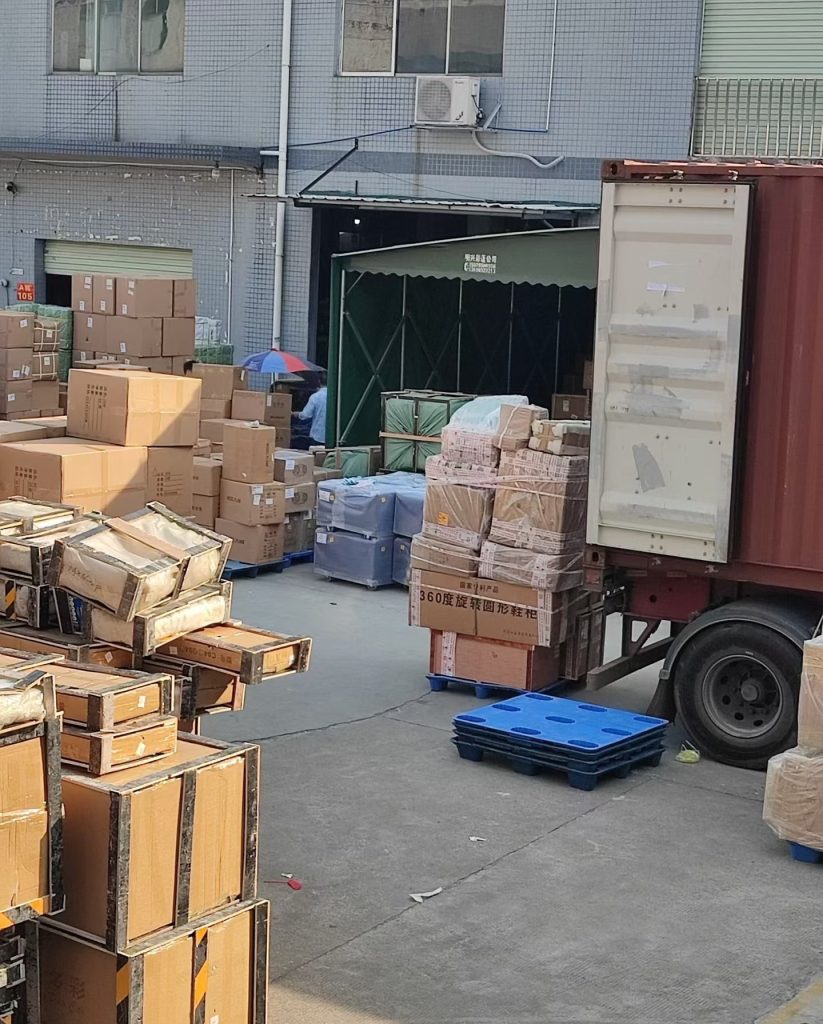
For businesses importing products from China, international shipping can involve many different steps, including supplier pickup, export customs clearance, international transportation, import procedures, taxes, and final delivery.
This is why many importers are interested in China DDP shipping.
DDP, or Delivered Duty Paid, is a shipping arrangement designed to provide a more integrated delivery service. Depending on the specific agreement, the logistics provider coordinates transportation from China through the destination country and arranges delivery to the agreed final address.
For small businesses, e-commerce sellers, wholesalers, and importers without an established logistics team, DDP can make the shipping process easier to manage.
However, DDP is not simply a shipping price. Buyers need to understand what is included, how customs clearance is handled, which charges apply, and whether the service is suitable for their products.
This guide explains how China DDP shipping works and what you should check before booking a shipment.
What Does DDP Mean?
DDP stands for Delivered Duty Paid.
Under the DDP Incoterm, the seller has extensive responsibility for arranging delivery to the agreed destination, including applicable import clearance and duties under the contractual arrangement.
In freight forwarding practice, however, buyers may also encounter logistics providers offering “DDP shipping” as a door-to-door logistics service.
Because commercial arrangements can differ, it is important to confirm the exact service scope before shipment.
A typical China DDP logistics process may look like:
Chinese Supplier → Pickup → Export Customs → International Transportation → Import Customs Clearance → Local Delivery → Final Address
The actual process depends on the origin, destination, product, transportation method, and agreed service.
How Does China DDP Shipping Work?
A typical DDP shipment involves several stages.
Step 1: Cargo Pickup in China
The freight forwarder collects the goods from the supplier or receives them at a designated warehouse.
The pickup location could be in:
- Shenzhen
- Guangzhou
- Dongguan
- Foshan
- Yiwu
- Shanghai
- Ningbo
- Xiamen
- Qingdao
- Other Chinese cities
The cost of domestic transportation may depend on the distance, cargo volume, weight, and pickup requirements.
Step 2: Warehouse Receiving and Cargo Inspection
If the shipment is sent to a freight forwarder’s warehouse, the warehouse may check:
- Number of cartons
- Weight
- Dimensions
- Packaging condition
- Shipping marks
- Product description
For consolidated shipments, cargo from multiple suppliers may be received and organized before international transportation.
Accurate cargo information is important because incorrect dimensions or weight can affect the final freight cost.
Step 3: Export Customs Clearance
Before leaving China, commercial cargo normally needs to comply with applicable export requirements.
The required documents can depend on:
- Product type
- Exporter
- Destination
- Shipping method
- Customs requirements
Common commercial documents may include:
- Commercial invoice
- Packing list
- Product information
- Shipping documents
- Export declaration information
Special products may require additional documentation.
Step 4: International Transportation
After export procedures are completed, the cargo moves to the destination country.
Depending on the shipment, transportation may involve:
- Ocean freight
- Air freight
- Rail freight
- Express
- Multimodal transportation
The best method depends on cargo size, weight, destination, urgency, and budget.
Step 5: Import Customs Clearance
When the cargo reaches the destination country, import customs procedures need to be completed.
The customs process may involve:
- Import declaration
- Product classification
- Customs documentation
- Duty calculation
- Tax calculation
- Customs inspection when required
This is an important part of DDP shipping.
Importers should not assume that every product can automatically be shipped under DDP.
Some goods require special licenses, certifications, registrations, or regulatory compliance.
Step 6: Duties and Taxes
The term DDP generally means that applicable duties and taxes are handled by the responsible party according to the agreed commercial arrangement.
However, the exact tax and duty treatment depends on the destination country, product classification, customs value, and applicable regulations.
Before accepting a DDP quote, ask:
Are import duties and taxes included in the quoted price?
Also ask whether any special customs or destination charges are excluded.
Step 7: Final Delivery
After import clearance, the cargo is transferred to local transportation for final delivery.
The destination may be:
- Company warehouse
- Retail store
- E-commerce warehouse
- Amazon-related facility
- Distribution center
- Residential address
- Commercial address
The final delivery process depends on the destination and local carrier requirements.
What Is Included in a China DDP Quote?
A DDP quote can potentially include multiple logistics services.
Depending on the agreement, the quotation may cover:
- China supplier pickup
- China domestic transportation
- Warehouse handling
- Export customs clearance
- International transportation
- Import customs clearance
- Duties and taxes
- Destination handling
- Local delivery
But there is an important point:
Do not assume every DDP quotation includes everything.
Different logistics providers structure their services differently.
Before booking, ask the provider for a written breakdown of what is included.
What Is Usually Not Included?
Potential exclusions can include:
- Special packaging
- Storage beyond the agreed free period
- Customs inspection-related costs
- Remote-area delivery
- Re-delivery
- Address changes
- Special handling
- Product certification
- Import licenses
- Unexpected regulatory requirements
- Charges caused by inaccurate cargo information
These exclusions vary by provider and destination.
The safest approach is to ask for a complete quotation and service scope before shipping.
What Products Can Be Shipped from China by DDP?
DDP can be used for many types of commercial products, depending on destination-country requirements.
Examples may include:
- Clothing
- Shoes
- Bags
- Furniture
- Hardware
- Packaging products
- Household products
- Consumer goods
- Machinery
- Industrial components
- Electronics
- E-commerce products
However, some products require additional review.
Examples include:
- Lithium batteries
- Dangerous goods
- Chemicals
- Food
- Cosmetics
- Medical products
- Radio equipment
- Certain electrical products
- Oversized machinery
The product should be declared accurately before the freight forwarder confirms the shipping solution.
Can Batteries Be Shipped from China by DDP?
Some battery shipments can be transported internationally, but batteries are not ordinary cargo.
Depending on the battery type, transportation method, quantity, packaging, and destination, additional requirements may apply.
The freight forwarder may need information such as:
- Battery type
- Watt-hour rating
- Battery capacity
- UN classification where applicable
- Safety documentation
- Packaging information
- Product photos
- MSDS/SDS or other required documents
Never describe restricted or regulated cargo as ordinary goods simply to obtain a lower quotation.
The correct logistics solution should be determined from the actual cargo characteristics.
China DDP by Sea
Sea DDP can be attractive for larger commercial shipments where delivery speed is less important than transportation cost.
It can be suitable for:
- Furniture
- Machinery
- Hardware
- Large quantities of consumer goods
- Pallets
- Bulk commercial shipments
A typical sea DDP route may involve:
Supplier → China warehouse/port → Ocean freight → European port → Customs clearance → Local delivery
The total delivery time depends on the specific route and destination.
Buyers should ask for a realistic door-to-door transit estimate rather than relying only on the ocean sailing time.
China DDP by Air
Air DDP is generally faster than sea DDP but costs more.
It can be useful for:
- Small commercial shipments
- Urgent inventory
- Fashion products
- E-commerce replenishment
- Higher-value products
- Time-sensitive orders
The total transit time includes more than flight time.
It can also include:
- Supplier pickup
- Export clearance
- Airport handling
- Import clearance
- Local delivery
Therefore, ask for the complete door-to-door estimate.
China DDP for E-Commerce Sellers
DDP can be particularly useful for e-commerce businesses that purchase inventory from Chinese suppliers.
A seller may need:
- Supplier pickup
- Cargo consolidation
- Warehouse handling
- Export customs clearance
- International transportation
- Import clearance
- Final delivery
For e-commerce sellers, delivery predictability can be as important as the freight price.
Inventory delays can lead to:
- Stock shortages
- Missed sales
- Delayed customer orders
- Higher emergency shipping costs
Therefore, e-commerce sellers should compare both cost and delivery performance.
China DDP for Amazon Sellers
Amazon sellers may require transportation from Chinese factories to warehouses or fulfillment locations in the destination market.
Depending on the shipment, the logistics process may involve:
Chinese supplier → Freight forwarder warehouse → Consolidation → Export clearance → International shipping → Import clearance → Final warehouse delivery
However, Amazon and other fulfillment networks can have specific receiving, labeling, booking, and packaging requirements.
The seller should confirm the destination warehouse requirements before shipment.
A freight forwarder can arrange transportation, but the seller remains responsible for ensuring that the goods meet applicable platform and regulatory requirements.
Is China DDP Cheaper Than Other Shipping Methods?
Not necessarily.
DDP is a service arrangement rather than a single transportation method.
A DDP quotation can include several services that are not included in a port-to-port freight quotation.
For example:
Port-to-port quotation
may cover only international transportation between designated ports.
A DDP door-to-door quotation may cover:
- Pickup
- Export clearance
- International transportation
- Import clearance
- Duties and taxes
- Local delivery
Therefore, comparing only the headline price can be misleading.
The correct comparison is:
Total landed cost + service scope + delivery time
Why Are Some DDP Quotes Much Cheaper Than Others?
If you receive three DDP quotations with large price differences, do not immediately choose the cheapest one.
Ask each provider:
- What is included?
- Are duties included?
- Are taxes included?
- Is customs clearance included?
- Is final delivery included?
- Are destination charges included?
- Are there weight or volume limits?
- Are there remote-area fees?
- What happens if customs requests additional documentation?
- What products are excluded?
A very low quote may be based on a different service structure.
The cheapest quotation is not necessarily the cheapest final cost.
How Is DDP Different from DAP?
DDP and DAP are both commonly discussed in international shipping, but they allocate responsibilities differently.
Under DAP, the seller generally arranges delivery to the agreed destination, but import clearance, duties, and taxes are generally handled by the buyer.
Under DDP, the seller has broader responsibility, including import clearance and duties under the Incoterm.
For buyers, the main practical difference is who handles the import-side obligations.
However, the exact contractual structure should always be confirmed before shipment.
DDP vs. Traditional Freight Forwarding
With traditional freight arrangements, an importer may need to coordinate several separate services:
Supplier → Export agent → Shipping line/air carrier → Destination customs broker → Local trucking company
With an integrated DDP service, the buyer may have one logistics provider coordinating multiple stages.
This can reduce communication complexity.
However, traditional arrangements can also be useful for experienced importers that already have customs brokers, warehouses, or local transportation providers.
The best option depends on the buyer’s logistics capabilities.
Advantages of China DDP Shipping
1. Simplified Logistics
One provider can coordinate multiple stages.
2. Door-to-Door Delivery
The cargo can be arranged for delivery to an agreed destination.
3. Easier Cost Planning
A comprehensive quote can make budgeting easier.
4. Useful for Small Businesses
Companies without their own logistics department may find an integrated service easier to manage.
5. Suitable for E-Commerce
DDP can simplify international inventory transportation for online sellers.
Potential Disadvantages of DDP
DDP is not perfect for every situation.
Potential issues include:
Higher Quoted Cost
A comprehensive service may cost more than a port-to-port rate.
Less Control
The buyer may have less direct control over individual logistics stages.
Product Restrictions
Certain products may not be suitable for standard DDP services.
Customs Complexity
Import regulations vary between countries.
Unexpected Charges
Charges can occur if the original cargo information is incomplete or incorrect.
This is why buyers should carefully review the quotation before shipping.
How to Choose a China DDP Freight Forwarder
A reliable provider should be able to explain:
- Available shipping methods
- Origin pickup options
- Warehouse locations
- Export procedures
- Import clearance process
- Tax and duty arrangements
- Transit time
- Final delivery
- Cargo restrictions
- Additional charges
Ask for a detailed quotation rather than only a single price.
You should also pay attention to communication.
If a provider cannot clearly explain the service before you book, it may be difficult to resolve problems after the cargo has already departed.
What Information Is Needed for a China DDP Quote?
To receive an accurate quotation, provide:
Pickup location:
City or supplier address in China
Destination:
Country, city, postal code, and delivery address if available
Product:
Exact product name
Quantity:
Number of cartons, pallets, or units
Weight:
Total gross weight
Dimensions:
Length × width × height of each package
Volume:
Total CBM if available
Cargo value:
Commercial value
Shipping requirement:
Sea DDP, air DDP, rail, or another option
For example:
Pickup: Guangzhou, China
Destination: Amsterdam, Netherlands
Product: Shoes
Quantity: 25 cartons
Gross weight: 360 kg
Total volume: 2.1 CBM
Service: Door-to-door DDP
Delivery type: Commercial address
This information allows a freight forwarder to evaluate the shipment more accurately.
China DDP Shipping FAQ
What does DDP mean in shipping?
DDP stands for Delivered Duty Paid. Under the Incoterm, the seller takes on extensive responsibility for delivery to the agreed destination, including import clearance and duties. In freight-forwarding services, “DDP” is also commonly used to describe integrated door-to-door shipping arrangements, so the exact service scope should be confirmed.
Does DDP include customs clearance?
DDP generally involves import customs clearance being handled by the responsible party under the agreed arrangement. Always confirm the specific customs service included in the quotation.
Does DDP include tax?
Under the DDP Incoterm, the seller is responsible for applicable duties and taxes. However, when buying a logistics service described as “DDP,” confirm exactly which taxes and charges are included in the quoted price.
Can I use DDP for small shipments?
Yes, depending on the destination, product, and service availability. Small businesses often use integrated shipping services because they can simplify transportation and customs coordination.
Is DDP faster than sea freight?
Not necessarily. DDP can use sea, air, rail, or other transportation methods. The transportation method determines much of the transit time.
Is DDP suitable for e-commerce businesses?
DDP can be useful for e-commerce sellers because it can combine international transportation, customs handling, and final delivery. However, sellers should confirm destination warehouse and regulatory requirements before shipping.
Can DDP be used for machinery?
It may be possible, but machinery can have special requirements depending on its size, weight, power source, battery content, and destination-country regulations.
Can I ship products directly from my supplier under DDP?
In many cases, the freight forwarder can arrange pickup directly from the supplier. The exact pickup service depends on the supplier location and shipment requirements.
How to Avoid Problems with China DDP Shipping
Before confirming your shipment, follow these steps:
Step 1: Describe the Cargo Accurately
Provide the exact product information.
Step 2: Confirm the Destination
Give the complete delivery location where possible.
Step 3: Request a Detailed Quote
Ask the provider to list what is included.
Step 4: Confirm Customs Responsibility
Ask who handles export and import clearance.
Step 5: Confirm Duties and Taxes
Do not assume they are included without written confirmation.
Step 6: Confirm Delivery Time
Ask for a realistic door-to-door transit estimate.
Step 7: Ask About Additional Charges
Understand the circumstances that could create extra costs.
Step 8: Keep Shipment Documents
Keep invoices, packing lists, shipping documents, and other relevant records.
Final Thoughts
China DDP shipping can be an effective logistics solution for importers that want a more integrated door-to-door service.
Instead of coordinating every stage independently, buyers can work with a freight forwarder to arrange pickup, export procedures, international transportation, import clearance, and final delivery under an agreed service structure.
However, DDP should not be selected based only on a low price.
Before booking, confirm:
What is included?
Who handles customs?
Are duties and taxes included?
What is the estimated transit time?
Are there any additional charges?
Is the service suitable for the specific product?
A clear quotation and accurate cargo information can significantly reduce misunderstandings.
Request a China DDP Shipping Quote
If you are importing products from China and need door-to-door delivery, prepare the following information:
- China pickup city
- European or international destination
- Product name
- Number of cartons or pallets
- Gross weight
- Package dimensions
- Total CBM
- Cargo value
- Preferred shipping method
- Delivery address
Send these details to a freight forwarder and ask for a complete China DDP shipping quotation, including the service scope, estimated transit time, customs arrangements, and applicable charges.
Need to ship from China to your warehouse or business address? Send your cargo details and destination to request a customized DDP shipping solution and freight quote.