

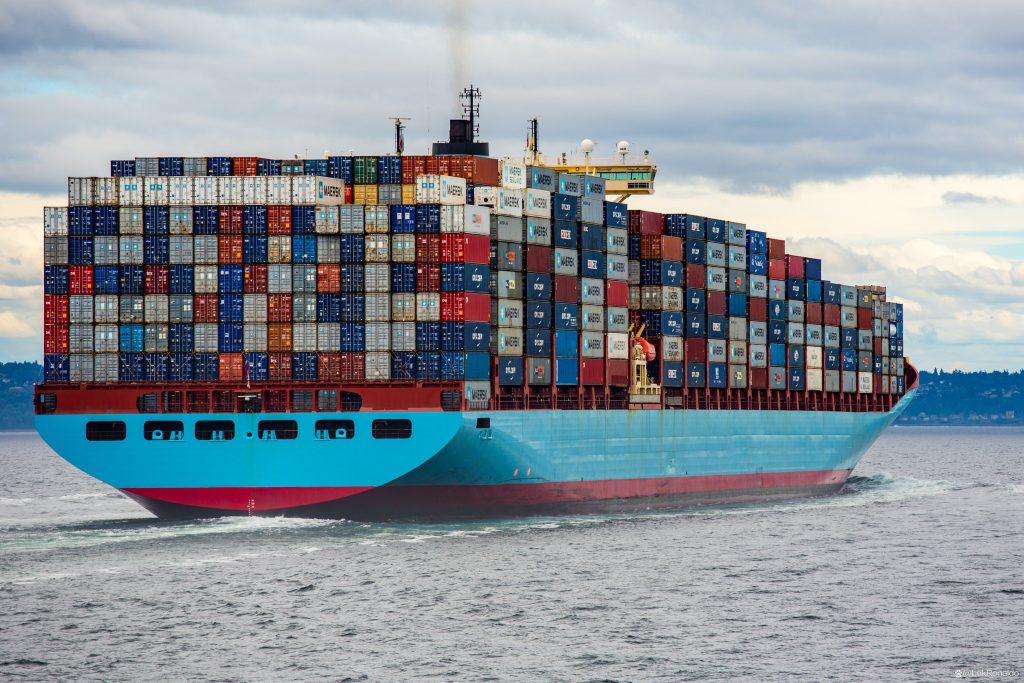
If you are importing products from China, freight cost is one of the most important factors when calculating your total purchasing cost. However, international shipping is not simply a matter of multiplying the cargo weight by a freight rate.
The final shipping cost can include transportation, pickup, warehouse handling, export customs, port or airport charges, international freight, destination handling, customs clearance, duties, taxes and final delivery.
This guide explains how China shipping costs are calculated and what importers should check before accepting a freight quotation.
1. What Determines the Cost of Shipping from China?
The total logistics cost is affected by several factors:
- Product type
- Cargo volume
- Gross weight
- Chargeable weight
- Origin city
- Destination country
- Destination city
- Transportation method
- Shipping route
- Carrier
- Season
- Customs requirements
- Delivery address
- Incoterm
- Special cargo requirements
For this reason, two shipments with the same weight can have very different freight costs.
2. Main Shipping Methods from China
The most common options are:
Sea Freight
Suitable for larger shipments and cargo that is not extremely time-sensitive.
Air Freight
Suitable for urgent or relatively high-value shipments where delivery speed is important.
Rail Freight
Useful for certain international routes, particularly some China-Europe services.
Express
Often suitable for samples, documents and small parcels.
Multimodal Transportation
Combines different transportation methods to balance cost and transit time.
3. How Sea Freight Costs Are Calculated
Sea freight can be divided into:
- FCL
- LCL
FCL
For full-container shipments, the price is generally based on the container type, route and applicable charges.
Common containers include:
- 20GP
- 40GP
- 40HQ
The total cost may include both origin and destination charges.
LCL
LCL freight is commonly calculated according to cargo volume and applicable minimum charges.
For example, if your cargo volume is:
2.5 CBM
the forwarder may calculate the ocean freight based on the applicable LCL rate.
However, LCL pricing can involve additional warehouse and destination charges.
4. What Is CBM?
CBM means cubic meter.
It is commonly used for calculating the volume of sea freight cargo.
For example:
60 × 40 × 50 cm
Convert the dimensions to meters:
0.6 × 0.4 × 0.5 = 0.12 CBM
If there are 20 cartons:
0.12 × 20 = 2.4 CBM
Therefore, the total cargo volume is 2.4 CBM.
Accurate dimensions are important when requesting an LCL quotation.
5. How Air Freight Costs Are Calculated
Air freight is commonly calculated according to chargeable weight.
The carrier may compare:
- Actual gross weight
- Volumetric weight
The applicable chargeable weight is determined according to the carrier’s rules.
A commonly used volumetric calculation is:
Length × Width × Height ÷ 6000
For example:
60 × 40 × 40 ÷ 6000 = 16 kg
If the actual gross weight is 12 kg, the chargeable weight may be based on the applicable volumetric calculation.
The exact divisor can vary, so confirm it with the forwarder.
6. Why the Quoted Price May Change
A common problem occurs when the buyer gives estimated cargo information.
For example, a buyer says:
Weight: 100 kg
The forwarder provides a quotation.
But after the cargo arrives at the warehouse, the actual measurement shows:
Gross weight: 120 kg
or the volumetric weight is significantly higher.
The final freight cost may therefore increase.
To reduce this problem, provide the most accurate information possible.
7. China Domestic Pickup Costs
Your supplier may be located far from the international port or airport.
For example:
- Factory in Dongguan
- Export airport in Guangzhou
- Port in Shenzhen
The freight forwarder may need to arrange domestic trucking.
The cost can depend on:
- Distance
- Cargo volume
- Vehicle type
- Loading requirements
- Toll charges
- Waiting time
- Pickup location
Some quotations include pickup, while others charge it separately.
8. Warehouse Handling Charges
If your cargo is consolidated at a freight forwarder’s warehouse, warehouse charges may apply.
Possible services include:
- Receiving
- Weighing
- Measuring
- Sorting
- Labeling
- Repacking
- Palletizing
- Consolidation
- Storage
Not every shipment requires all these services.
Ask the forwarder which warehouse services are included.
9. Export Customs Clearance Costs
Commercial shipments leaving China may require export customs procedures.
Depending on the arrangement, the freight quotation may include:
- Customs declaration
- Documentation
- Customs processing
- Brokerage services
However, additional charges may apply if the shipment requires special documentation or inspection.
The cargo information should accurately describe the actual goods.
10. Ocean Freight Charges
For sea freight, the international ocean transportation charge is only one part of the total logistics cost.
Other possible charges include:
- Terminal handling
- Documentation
- Origin handling
- Fuel-related surcharges
- Security charges
- Destination handling
- Container-related charges
The exact charges vary by carrier, port and route.
11. Air Freight Surcharges
Air freight can also contain additional charges.
Examples include:
- Fuel surcharge
- Security surcharge
- Handling fee
- Documentation fee
- Special cargo fee
- Peak-season surcharge
The exact structure varies among airlines and logistics providers.
When comparing quotations, ask whether the quoted rate is an all-in rate or only the basic transportation rate.
12. Destination Charges
Destination charges are often overlooked by new importers.
They may include:
- Destination terminal handling
- Customs clearance
- Documentation
- Warehouse handling
- Local transportation
- Delivery appointment fees
A freight quotation from China may look inexpensive if destination charges are excluded.
Therefore, always ask for the estimated total cost to your final destination.
13. Import Duties and Taxes
Import duties and taxes depend on:
- Destination country
- Product type
- HS code
- Customs value
- Country of origin
- Applicable regulations
Possible charges include:
- Customs duty
- Import VAT
- GST
- Excise taxes
- Other government charges
The freight forwarder’s transportation fee is not necessarily the same as the total import cost.
14. DDP Shipping Costs
DDP means Delivered Duty Paid.
Under DDP, the seller generally takes responsibility for arranging delivery and handling import clearance and applicable duties and taxes, subject to the agreed terms and local requirements.
A DDP quotation may include:
China pickup + export customs + international freight + import customs + duties/taxes + final delivery
However, the exact inclusions must be confirmed.
Two companies may both advertise “DDP,” while offering different service scopes.
15. DAP Shipping Costs
DAP means Delivered at Place.
Under DAP, the seller generally arranges transportation to the agreed destination, while the buyer handles import clearance and applicable duties and taxes.
A DAP quotation may therefore look cheaper than DDP.
But the buyer must calculate:
DAP freight + customs clearance + import duties + taxes + destination charges
before deciding which option is actually cheaper.
16. Example of a Total Shipping Cost
Suppose an importer ships goods from China to Europe.
The quotation includes:
- Factory pickup: $150
- Export customs: $80
- Ocean freight: $700
- Destination handling: $180
- Customs clearance: $120
- Local delivery: $250
The logistics cost before import duties and taxes would be:
$1,480
If duties and taxes are not included, they need to be calculated separately.
This is why importers should focus on total landed cost.
17. What Is Landed Cost?
Landed cost is the overall cost of getting the goods from the supplier to the buyer’s usable destination.
It can include:
- Product purchase price
- China domestic transportation
- Export costs
- International freight
- Insurance
- Customs clearance
- Import duties
- Import taxes
- Destination handling
- Final delivery
For businesses, landed cost is often more useful than the freight rate alone because it reflects the actual cost of obtaining inventory.
18. Why Shipping Rates Change
International freight rates can change because of:
- Fuel prices
- Seasonal demand
- Carrier capacity
- Port congestion
- Trade conditions
- Exchange rates
- Peak seasons
- Equipment availability
- Route changes
Therefore, a freight quotation should be treated according to its stated validity period.
Ask the forwarder:
“How long is this quotation valid?”
19. Peak Season Shipping Costs
Freight rates may increase during periods of high demand.
For example:
- Major shopping seasons
- Christmas
- Chinese New Year preparation
- Seasonal inventory replenishment
- Other regional peak periods
During busy periods, buyers may also experience:
- Limited vessel space
- Higher air freight rates
- Longer warehouse processing
- More difficult booking availability
Planning shipments early can reduce some of these risks.
20. How to Reduce China Shipping Costs
Consolidate Cargo
Combine shipments from multiple suppliers when practical.
Optimize Packaging
Reduce unnecessary carton volume while maintaining sufficient protection.
Compare FCL and LCL
Do not automatically assume LCL is cheaper.
Compare Air and Sea
For non-urgent cargo, sea freight may provide substantial savings.
Book Early
Early planning gives you more transportation options.
Compare Complete Quotations
Look at all costs, not only the basic freight rate.
Use Accurate Cargo Data
Correct measurements prevent unexpected freight adjustments.
21. How to Compare Freight Forwarder Quotations
Suppose you receive three quotations:
| Item | Forwarder A | Forwarder B | Forwarder C |
|---|---|---|---|
| Pickup | Included | $100 | Included |
| Export customs | Included | Included | $80 |
| International freight | $800 | $700 | $750 |
| Destination handling | $200 | $300 | Included |
| Customs clearance | $100 | $150 | Included |
| Final delivery | $250 | $300 | $280 |
| Total | $1,350 | $1,550 | $1,030 |
At first glance, Forwarder C appears cheapest.
But before accepting it, confirm whether the quotation truly includes all relevant costs and whether there are conditions or exclusions.
The key is to compare equivalent services.
22. Questions to Ask Before Booking
Before confirming a shipment, ask the freight forwarder:
- Is this an all-in quotation?
- What charges are excluded?
- Is pickup included?
- Is export customs included?
- Is destination handling included?
- Is import customs included?
- Are duties and taxes included?
- Is final delivery included?
- How is chargeable weight calculated?
- How long is the quotation valid?
- Are there remote-area charges?
- Are there potential inspection charges?
- What is the estimated transit time?
- What happens if the cargo dimensions change?
These questions can significantly reduce unexpected costs.
23. Hidden Charges to Watch For
The term “hidden charges” does not necessarily mean a freight forwarder is dishonest. Some costs simply depend on actual circumstances.
Potential additional charges include:
- Storage
- Customs inspection
- Repacking
- Additional documentation
- Remote-area delivery
- Residential delivery
- Oversized cargo
- Special cargo handling
- Demurrage
- Detention
- Port storage
Ask the forwarder which charges are predictable and which are based on actual circumstances.
24. Insurance and Shipping Cost
Cargo insurance is separate from transportation cost unless explicitly included.
Insurance may be useful for products where the financial loss from damage or loss would be significant.
The buyer should understand:
- Whether insurance is included
- Coverage amount
- Covered risks
- Exclusions
- Claims procedure
Do not assume that the freight forwarder is automatically responsible for all cargo losses.
25. How Product Type Affects Shipping Cost
Different products can require different logistics arrangements.
For example:
Shoes and Clothing
Generally easier to ship as general cargo, although packaging volume can be significant.
Machinery
May require special handling because of weight and dimensions.
Batteries
May require special transportation procedures and documentation.
Chemicals
May be classified as dangerous goods and require specialized handling.
Food
May require additional import documentation or health-related compliance.
Always tell the forwarder the actual product type before requesting a final quotation.
26. Why Cargo Dimensions Matter So Much
Two shipments can have the same gross weight but completely different freight costs.
For example:
Shipment A: 500 kg, 2 CBM
Shipment B: 500 kg, 8 CBM
The second shipment occupies significantly more space.
For air freight, volumetric weight can become especially important.
For sea freight, container utilization and LCL volume are also important.
Good packaging design can therefore directly influence logistics costs.
27. How to Get a More Accurate Freight Quote
Send the forwarder a complete shipment request:
Product:
Quantity:
Cartons:
Carton dimensions:
Gross weight:
Total CBM:
Origin city:
Destination country:
Destination city:
Delivery address:
Shipping method:
Incoterm:
Cargo type:
For special cargo, also provide relevant product specifications.
This allows the forwarder to calculate the shipment more accurately.
Frequently Asked Questions
1. How much does it cost to ship goods from China?
There is no universal price. Shipping cost depends on the product, weight, volume, origin, destination, transportation method and required service.
2. Is sea freight cheaper than air freight?
For many large commercial shipments, sea freight is generally more economical, but the best option depends on cargo size, route and delivery requirements.
3. How is LCL freight calculated?
LCL freight is commonly related to cargo volume and applicable route pricing, with possible minimum charges and local handling fees.
4. How is air freight calculated?
Air freight is commonly based on chargeable weight, which can be determined by actual weight or volumetric weight under the carrier’s applicable rules.
5. What is CBM?
CBM means cubic meter and is commonly used to measure cargo volume for sea freight.
6. Does the freight price include customs clearance?
Not necessarily. Customs clearance should be specifically confirmed in the quotation.
7. Does DDP include duties and taxes?
DDP generally places applicable duties and taxes with the seller, but the exact inclusions should be confirmed in writing.
8. Why did my final freight cost increase?
Possible reasons include differences between estimated and actual weight or dimensions, additional handling, customs inspection or other charges not included in the original quotation.
9. How can I get a lower shipping price?
Compare multiple forwarders, consolidate cargo, optimize packaging, provide accurate shipment information and select the appropriate transportation method.
10. Should I choose the cheapest freight forwarder?
Not necessarily. Compare the total cost, service scope, transit time, communication and reliability.
11. What is the difference between freight rate and landed cost?
Freight rate refers primarily to transportation or logistics charges. Landed cost includes the broader cost of getting the goods to the buyer, including applicable customs, duties, taxes and delivery.
12. How long is a freight quotation valid?
The validity period depends on the forwarder, carrier and route. Always ask before booking because international freight rates can change.
Conclusion
The cost of shipping goods from China depends on much more than the basic ocean or air freight rate.
A professional cost calculation should consider cargo weight, volume, chargeable weight, origin, destination, transportation method, customs, taxes, destination charges and final delivery.
When comparing China freight forwarders, do not choose based only on the lowest number shown in the quotation. Ask for a complete breakdown of included and excluded charges and calculate the estimated total landed cost.
For importers, accurate cargo information is one of the simplest ways to obtain a reliable quotation. Providing the product type, carton dimensions, weight, volume, origin and destination allows the freight forwarder to select an appropriate route and calculate the logistics cost more accurately.
A transparent quotation, clear responsibilities and realistic transit-time expectations can help businesses control shipping expenses and avoid unexpected charges when importing from China.