

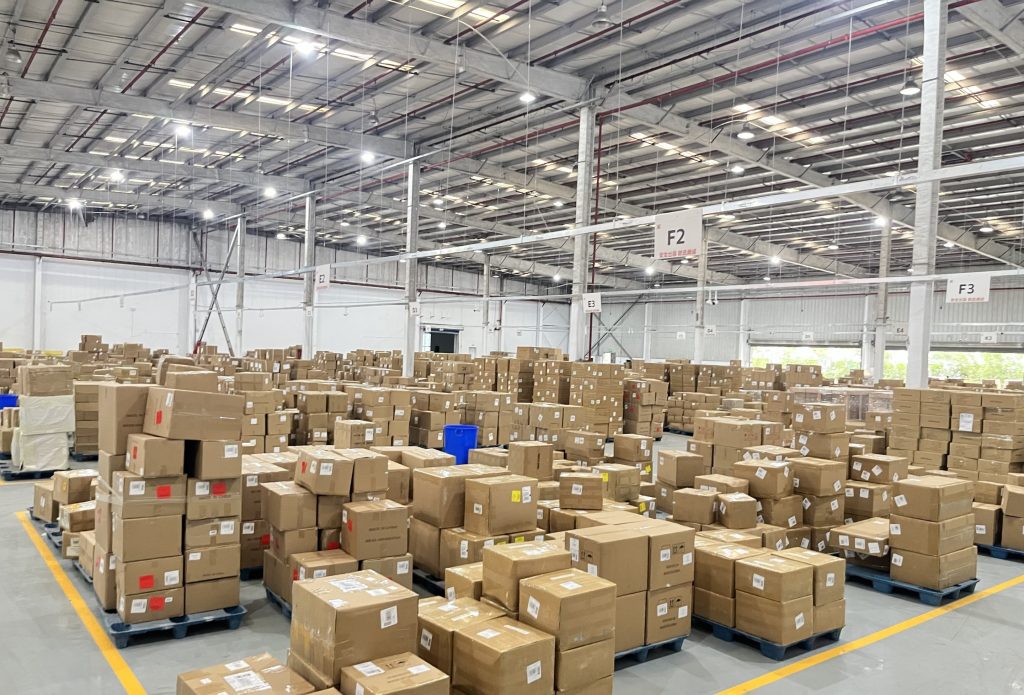
For small businesses importing products from China, booking an entire shipping container is often unnecessary.
If your cargo does not fill a full container, LCL shipping can be a practical alternative.
LCL stands for Less than Container Load. Instead of renting an entire container, your cargo shares container space with goods belonging to other importers.
For startups, wholesalers, online sellers, distributors, and small importers, LCL can provide access to international ocean freight without requiring a full container of products.
However, choosing LCL is not simply about finding the lowest price per CBM. The total cost, transit time, origin handling, destination charges, customs clearance, cargo characteristics, and final delivery requirements all need to be considered.
This guide explains how China LCL shipping works, how much information is needed for a quotation, how to control costs, and when LCL is the right choice for your business.
What Is LCL Shipping?
LCL means Less than Container Load.
With FCL shipping, one importer uses an entire container.
With LCL shipping, cargo from several importers is consolidated into one container.
A simplified LCL process looks like this:
Chinese Supplier → China Warehouse → Cargo Consolidation → Export Customs → Ocean Freight → Destination Warehouse → Import Customs → Final Delivery
The exact process depends on the shipping route and service provider.
LCL allows businesses to ship smaller quantities without waiting until they have enough cargo to fill a container.
Who Is LCL Shipping Suitable For?
LCL can be useful for businesses that regularly purchase smaller quantities from China.
Typical users include:
- Small importers
- Startups
- E-commerce sellers
- Online retailers
- Wholesalers
- Distributors
- Product testing businesses
- Manufacturers purchasing components
- Buyers importing several pallets
- Companies working with multiple Chinese suppliers
For example, a company may purchase 2 CBM of products from China.
Booking a complete 20-foot container for only 2 CBM would usually be inefficient.
LCL allows the importer to pay for the space or freight service required for the smaller shipment instead.
How Does China LCL Shipping Work?
The process generally involves several stages.
1. Supplier Sends Cargo to the China Warehouse
The supplier delivers the cargo to a designated warehouse or the freight forwarder arranges pickup.
The warehouse receives the cargo and records the shipment information.
2. Cargo Is Measured and Weighed
The warehouse may verify:
- Number of cartons
- Gross weight
- Dimensions
- Volume
- Packaging condition
This step is important because freight charges may be based on the actual shipment information.
3. Cargo Is Consolidated
Cargo from different customers is combined into a container.
This process allows multiple small shipments to use the same container space.
4. Export Customs Clearance
The consolidated cargo is prepared for export and handled according to applicable customs procedures.
5. Ocean Transportation
The container is transported from China to the destination country.
Transit time depends on:
- Origin port
- Destination port
- Shipping route
- Vessel schedule
- Transshipment
- Port congestion
- Customs procedures
6. Destination Deconsolidation
After arrival, the container is moved to a destination facility where individual shipments are separated.
7. Import Customs Clearance
Each shipment may need to complete applicable import procedures.
8. Final Delivery
After customs clearance, the cargo can be delivered to the buyer’s warehouse, office, distribution center, or other agreed destination.
What Is the Minimum CBM for China LCL Shipping?
There is no single worldwide minimum volume that applies to every LCL service.
Different freight forwarders and shipping routes may have different minimum chargeable volumes.
Some providers may quote very small shipments, while others may apply minimum charges that make very small cargo less economical.
This is why buyers should request a quotation based on their actual:
- Weight
- Dimensions
- CBM
- Origin
- Destination
- Cargo type
Do not assume that a smaller shipment will always result in a proportionally lower freight bill.
How Is LCL Freight Calculated?
LCL pricing can involve several components.
Depending on the route, charges may include:
- Ocean freight
- Origin warehouse handling
- Consolidation
- Documentation
- Export customs clearance
- Destination handling
- Deconsolidation
- Import customs clearance
- Delivery
- Other applicable charges
For LCL shipments, the chargeable quantity may be calculated using volume, weight, or applicable tariff rules.
The exact calculation depends on the shipping route and service.
This is why a freight forwarder needs accurate cargo dimensions and weight before providing a final quotation.
Why Is the CBM Important?
CBM means cubic meter.
The standard calculation is:
Length × Width × Height ÷ 1,000,000
when the dimensions are measured in centimeters.
For example, one carton measuring:
60 × 40 × 50 cm
has a volume of:
60 × 40 × 50 ÷ 1,000,000
= 0.12 CBM
If you have 10 identical cartons:
0.12 × 10
= 1.2 CBM
Accurate volume information helps the freight forwarder calculate the shipment more effectively.
Does LCL Use Actual Weight or Volume?
This depends on the applicable pricing rules.
For many LCL shipments, the freight calculation considers the relationship between cargo volume and weight.
Heavy cargo with relatively small volume can behave differently from lightweight cargo with large dimensions.
For example:
- Metal parts may be heavy but compact.
- Plastic products may be lightweight but occupy significant space.
- Furniture can have a high volume relative to its weight.
Therefore, provide both gross weight and dimensions when requesting an LCL quote.
How Much Does China LCL Shipping Cost?
There is no universal LCL shipping price.
The total cost depends on:
- China origin
- Destination
- CBM
- Gross weight
- Cargo type
- Shipping season
- Port
- Destination charges
- Customs requirements
- Final delivery address
- Service level
A quotation based only on “price per CBM” may not represent the final amount you actually pay.
For example, a quote might appear inexpensive until additional charges are added for:
- Origin handling
- Documentation
- Destination handling
- Customs clearance
- Delivery
Therefore, always ask for the total estimated logistics cost and a clear breakdown of included services.
Why Can a Small LCL Shipment Be More Expensive Than Expected?
Small shipments can be affected by minimum charges.
Imagine two shipments:
Shipment A: 1 CBM
Shipment B: 5 CBM
The second shipment has five times the volume, but the total logistics cost may not be exactly five times higher.
Fixed or minimum charges can have a larger impact on very small shipments.
These can include:
- Documentation
- Warehouse handling
- Customs processing
- Terminal charges
- Delivery
- Minimum freight charges
This is why buyers should compare the total landed cost rather than simply multiplying a published CBM rate.
LCL vs. FCL: Which Is Better?
The right choice depends on shipment volume and business requirements.
| Factor | LCL | FCL |
|---|---|---|
| Container space | Shared | Dedicated |
| Suitable for | Smaller shipments | Larger shipments |
| Cargo consolidation | Required | Generally not required |
| Cost structure | Based on shipment | Based on container |
| Handling | More stages | Fewer consolidation stages |
| Flexibility | High for smaller loads | Better for large volumes |
| Best for | Small and medium cargo | Large-volume shipments |
There is no universal volume at which every importer should switch from LCL to FCL.
The break-even point depends on the route, current freight rates, destination charges, cargo type, and service requirements.
A freight forwarder can compare both options based on your actual shipment.
When Should You Choose LCL?
LCL may be appropriate when:
- Your cargo volume is relatively small.
- You do not need a full container.
- Your products are not extremely time-sensitive.
- You want to ship commercial quantities without waiting to fill a container.
- You want to consolidate goods from several suppliers.
For example, a buyer purchasing 3–8 CBM of general cargo may want to compare LCL against the cost of an FCL shipment.
The correct choice should be based on the actual quotation.
When Is FCL Better Than LCL?
FCL may become more attractive when:
- Cargo volume is large.
- You have enough goods to efficiently use a container.
- Cargo requires dedicated space.
- You want to reduce handling during consolidation.
- You have regular high-volume shipments.
FCL can also provide greater control over the container because the cargo is not mixed with other customers’ shipments.
Can I Consolidate Goods from Multiple Suppliers?
Yes, consolidation is one of the major advantages of using a freight forwarder in China.
Suppose you purchase:
- 1 CBM from Shenzhen
- 1.5 CBM from Dongguan
- 2 CBM from Guangzhou
Instead of arranging three separate international shipments, you may be able to send the products to one warehouse for consolidation.
The freight forwarder can then combine the shipments into one LCL export shipment.
This can simplify logistics and potentially reduce duplicated international shipping costs.
However, warehouse handling and consolidation charges should be included in the quotation.
How Does Supplier Consolidation Work?
A typical process is:
Supplier A → China warehouse
Supplier B → China warehouse
Supplier C → China warehouse
Then:
Warehouse → Consolidation → Export → LCL shipment → Europe/Other destination → Customs → Final delivery
Before purchasing from multiple suppliers, confirm whether the freight forwarder can receive cargo from all of them and how long the warehouse can hold the goods.
How Long Does China LCL Shipping Take?
LCL transit time depends on:
- Origin
- Destination
- Shipping route
- Vessel schedule
- Consolidation schedule
- Port handling
- Customs clearance
- Final delivery
The international ocean transportation itself may take several weeks, but the complete door-to-door process can take longer.
There may also be additional time for:
- Supplier pickup
- Warehouse receiving
- Consolidation
- Export clearance
- Destination deconsolidation
- Import customs clearance
- Local delivery
Therefore, ask the freight forwarder for a door-to-door transit estimate if your business requires delivery to a specific address.
How Can Small Businesses Reduce LCL Costs?
1. Consolidate Multiple Orders
Combining cargo from several suppliers can reduce duplicated international shipments.
2. Optimize Packaging
Oversized cartons can increase the total volume.
Ask suppliers whether packaging can be optimized without damaging the products.
3. Compare LCL and FCL
Do not automatically assume LCL is cheaper.
If your volume is large enough, FCL may provide better overall value.
4. Compare Door-to-Door and Port-to-Port Costs
A cheap port-to-port quote may require you to pay additional destination charges.
Calculate the complete cost before making a decision.
5. Provide Accurate Dimensions
Incorrect carton dimensions can cause unexpected charges after the warehouse measures the cargo.
6. Plan Ahead
Urgent shipments may require expensive transportation alternatives.
Good inventory planning allows you to compare slower and more economical shipping options.
What Products Are Suitable for LCL?
Many general commercial products can be transported by LCL.
Examples include:
- Clothing
- Shoes
- Bags
- Furniture
- Hardware
- Packaging
- Household goods
- Industrial components
- Machinery parts
- Consumer products
- E-commerce inventory
However, some products may require special handling.
Examples include:
- Batteries
- Chemicals
- Dangerous goods
- Food
- Cosmetics
- Medical products
- Certain electronics
- Oversized equipment
Always provide the exact product description before booking.
Can I Ship Machinery by LCL?
Small machinery or machine components may sometimes be shipped by LCL.
However, machinery can have special requirements depending on:
- Weight
- Dimensions
- Packaging
- Battery content
- Fuel or oil
- Oversized components
- Lifting requirements
Heavy machinery may require special loading equipment or a different transportation solution.
Ask the freight forwarder to review the cargo details before confirming LCL.
Can LCL Cargo Be Shipped Door-to-Door?
Yes, depending on the destination and logistics provider.
A door-to-door LCL service can potentially include:
Supplier pickup → China warehouse → Consolidation → Export customs → Ocean freight → Destination handling → Import customs → Local delivery
This can be convenient for small businesses that do not have their own customs broker or local transportation provider.
However, confirm exactly what the quote includes.
Can LCL Be Combined with DDP?
Depending on the route, product, and service provider, an integrated LCL door-to-door or DDP solution may be available.
This can simplify the process for importers who want one provider to coordinate:
- Pickup
- Consolidation
- Export clearance
- Ocean transportation
- Import procedures
- Final delivery
The buyer should confirm whether duties, taxes, customs clearance, and destination charges are included before accepting a DDP quotation.
Common Mistakes When Using LCL Shipping
Mistake 1: Looking Only at the Ocean Freight Rate
The ocean freight rate is only one part of the total logistics cost.
Mistake 2: Providing Incorrect Dimensions
Incorrect measurements can result in additional charges.
Mistake 3: Ignoring Destination Charges
Some buyers compare origin freight prices without considering destination handling and delivery.
Mistake 4: Waiting Until the Last Minute
LCL consolidation has schedules. Last-minute shipments may miss a planned sailing.
Mistake 5: Giving an Incomplete Product Description
Special cargo can require additional handling or documentation.
Mistake 6: Assuming LCL Is Always Cheaper
For sufficiently large shipments, FCL may be more economical.
What Information Does a Freight Forwarder Need for an LCL Quote?
To receive an accurate quotation, provide:
Origin:
China city or supplier location
Destination:
Country, city, port, and postal code where applicable
Product:
Exact product name
Quantity:
Number of cartons or pallets
Gross weight:
Total shipment weight
Dimensions:
Length × width × height for each package
Total CBM:
Total cargo volume
Cargo value:
Commercial value
Shipping requirement:
Port-to-port or door-to-door
For example:
Origin: Yiwu, China
Destination: Warsaw, Poland
Product: Household accessories
Quantity: 18 cartons
Gross weight: 420 kg
Carton dimensions: 60 × 40 × 50 cm
Total volume: approximately 2.16 CBM
Service: Door-to-door LCL
With these details, a freight forwarder can compare the available LCL options and provide a more meaningful quotation.
LCL Shipping FAQ
What does LCL mean?
LCL means Less than Container Load. Your cargo shares container space with shipments from other importers.
Is LCL cheaper than FCL?
For smaller shipments, LCL can be more economical because you do not need to pay for an entire container. However, once cargo volume becomes larger, FCL may become more cost-effective.
Can I ship one pallet from China by LCL?
Yes, one pallet can potentially be shipped by LCL, depending on the route, cargo type, dimensions, and service availability.
Can I combine products from several Chinese suppliers?
Yes. Many freight forwarders provide supplier consolidation services through a China warehouse.
How do I calculate LCL CBM?
Multiply the length, width, and height of each package and convert the result to cubic meters. Then add the volumes of all packages.
Is LCL suitable for e-commerce sellers?
Yes. LCL can be useful for e-commerce sellers who purchase inventory from China but do not need a full container.
Can LCL be delivered to my warehouse?
Yes, door-to-door LCL service may be available depending on the destination and logistics provider.
How long does LCL shipping take from China?
Transit time varies by route, destination, consolidation schedule, customs clearance, and final delivery. A freight forwarder should provide a route-specific estimate.
Can I ship batteries by LCL?
Some battery cargo can be shipped, but additional transportation and documentation requirements may apply. Provide complete battery information before requesting a quotation.
Should I choose LCL or air freight?
LCL is generally more suitable when transportation cost is more important and the cargo can tolerate a longer transit time. Air freight may be better when delivery speed is a priority.
How to Choose an LCL Freight Forwarder
When comparing freight forwarders, ask:
- Do you provide LCL from my supplier’s city?
- Can you collect cargo from multiple suppliers?
- Where is your consolidation warehouse?
- What is the minimum chargeable volume?
- How is the freight calculated?
- What origin charges apply?
- What destination charges apply?
- Is customs clearance included?
- Is final delivery included?
- What is the estimated transit time?
- How is the cargo tracked?
- What happens if the shipment is delayed?
- Are there restrictions for my product?
A reliable freight forwarder should provide clear answers and explain the complete logistics cost.
Final Thoughts
LCL shipping provides small businesses with a practical way to import commercial quantities from China without booking an entire container.
It can be particularly useful for:
- Small and medium-sized importers
- E-commerce sellers
- Wholesalers
- Startups
- Businesses purchasing from multiple Chinese suppliers
However, the best LCL solution is not necessarily the one with the lowest advertised price.
Before booking, compare:
Total Cost + Transit Time + Destination Charges + Customs Service + Final Delivery
Accurate cargo information is also essential.
Provide the exact product description, number of cartons, dimensions, weight, CBM, origin, and destination so that the freight forwarder can calculate the shipment properly.
Request a China LCL Shipping Quote
If you have a small shipment from China and do not need a full container, send your cargo details to a freight forwarder for an LCL comparison.
Please provide:
- China pickup city
- Destination country and city
- Product name
- Number of cartons or pallets
- Gross weight
- Carton dimensions
- Total CBM
- Cargo value
- Preferred delivery method
- Port-to-port or door-to-door requirement
The freight forwarder can then compare LCL, FCL, air freight, and other suitable options based on your actual shipment.
Have a small shipment from China? Send your cargo details and destination to request a customized LCL shipping quotation and find the most suitable way to move your goods.