

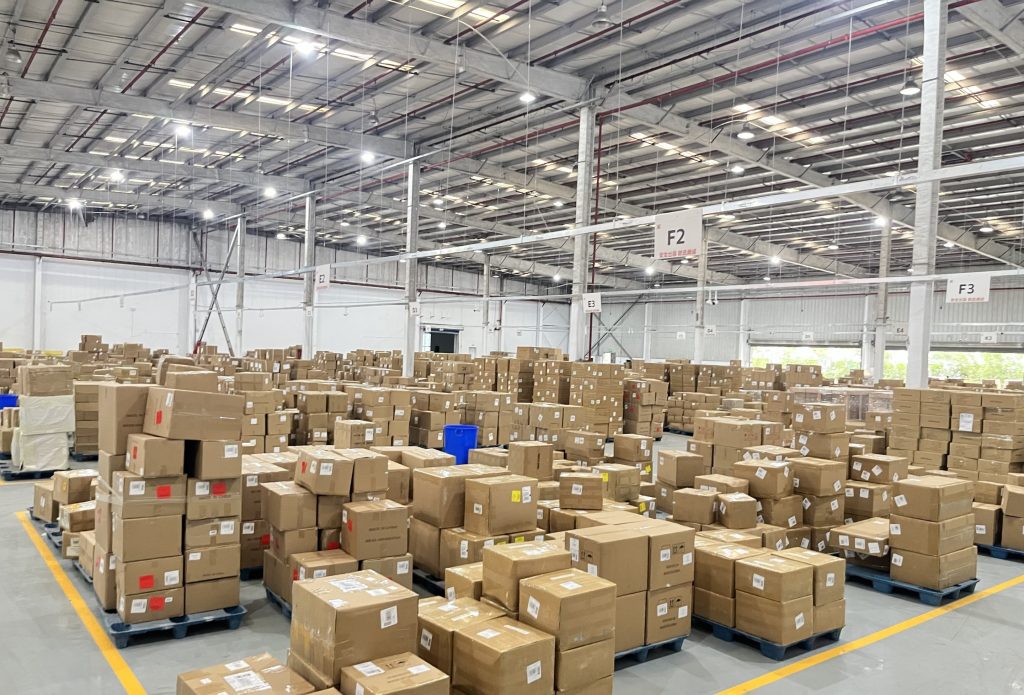
For international buyers, getting products from a Chinese supplier to an overseas warehouse is more complicated than simply booking transportation. The shipment may involve factory pickup, warehouse consolidation, export customs clearance, international transportation, import customs, duties and taxes, local delivery and final unloading.
A reliable freight forwarder can coordinate these stages and provide a complete door-to-door logistics solution. However, buyers should understand how the process works so they can compare quotations, prepare documents and avoid unexpected charges.
This guide explains how to ship goods from China directly to your warehouse and how to choose the right freight forwarding service.
1. What Is China-to-Warehouse Shipping?
China-to-warehouse shipping means transporting goods from a supplier or factory in China to the buyer’s designated warehouse in another country.
A typical shipment may follow:
Chinese Factory → Pickup → China Warehouse → Export Customs → Port/Airport → International Transportation → Import Customs → Local Delivery → Overseas Warehouse
Depending on the service, the freight forwarder may coordinate most or all of these steps.
This type of service is especially useful for:
- E-commerce businesses
- Importers
- Wholesalers
- Distributors
- Retailers
- Manufacturers
- B2B buyers
- Companies without their own logistics department
2. Why Ship Directly to Your Warehouse?
Direct warehouse delivery can simplify the supply chain.
Instead of managing multiple logistics providers, the buyer can work with one freight forwarder to coordinate:
- Supplier pickup
- Consolidation
- International freight
- Customs clearance
- Local transportation
- Final delivery
This can reduce administrative work and make shipment tracking easier.
3. Step 1: Confirm Your Supplier Information
Before booking transportation, collect accurate information from the Chinese supplier.
Important information includes:
- Supplier name
- Factory location
- Pickup address
- Contact person
- Cargo ready date
- Product description
- Quantity
- Number of cartons
- Carton dimensions
- Gross weight
- Packing list
- Commercial invoice
If you are purchasing from multiple suppliers, provide the details for every supplier.
4. Step 2: Confirm Your Warehouse Information
The overseas warehouse also needs to provide accurate receiving information.
Important information may include:
- Warehouse name
- Warehouse address
- Contact person
- Phone number
- Receiving hours
- Booking requirements
- Delivery appointment requirements
- Dock availability
- Pallet requirements
- Maximum vehicle size
- Labeling requirements
Some warehouses will not accept freight without a scheduled delivery appointment.
Therefore, confirm the warehouse receiving requirements before the cargo leaves China.
5. Step 3: Choose the Transportation Method
There are several options for moving goods from China to an overseas warehouse.
Sea Freight
Best suited for:
- Large shipments
- Heavy cargo
- Regular inventory
- Non-urgent goods
Air Freight
Suitable for:
- Urgent inventory
- Samples
- High-value products
- Time-sensitive goods
Rail Freight
Can be considered for certain international routes, especially some China-Europe services.
Express
Generally suitable for small shipments and samples.
The best method depends on cargo size, budget, destination and delivery requirements.
6. FCL Shipping to Your Warehouse
FCL means Full Container Load.
A typical FCL process is:
Factory → Truck → Container loading → Chinese port → Ocean vessel → Destination port → Customs → Local truck → Warehouse
FCL may be suitable when the shipment is large enough to efficiently use a container.
Common container types include:
- 20GP
- 40GP
- 40HQ
The appropriate container depends on cargo volume, weight and loading requirements.
7. LCL Shipping to Your Warehouse
LCL means Less Than Container Load.
It is suitable when the cargo does not require an entire container.
The process may be:
Supplier → China consolidation warehouse → LCL container → Destination port → Customs → Local delivery → Warehouse
LCL can be useful for smaller commercial shipments, but buyers should compare the complete cost because LCL involves additional consolidation and destination handling.
8. Air Freight to Your Warehouse
Air freight is useful when inventory is urgently required.
The process may include:
Factory → Pickup → China warehouse → Export customs → Airport → Flight → Destination airport → Import customs → Local trucking → Warehouse
Air freight charges can depend on chargeable weight.
The forwarder may compare:
- Actual gross weight
- Volumetric weight
Therefore, accurate carton dimensions are important.
9. Step 4: Consolidate Multiple Suppliers
Many buyers purchase from multiple Chinese factories.
For example:
- Clothing from Guangzhou
- Shoes from Dongguan
- Bags from Yiwu
- Accessories from Shenzhen
A freight forwarder can collect these goods and send them to a consolidation warehouse.
The process becomes:
Multiple Chinese suppliers → Consolidation warehouse → One export shipment → Overseas warehouse
This can make inventory management and international shipping easier.
10. How Supplier Consolidation Works
A professional consolidation process may involve:
Supplier 1
Cargo arrives at the warehouse.
Supplier 2
Cargo arrives later.
Supplier 3
Cargo is received and checked.
The warehouse then:
- Counts cartons
- Weighs cargo
- Measures dimensions
- Checks labels
- Consolidates shipments
- Prepares export documentation
The combined cargo can then be shipped internationally.
11. Step 5: Calculate the Shipping Cost
The cost of warehouse delivery can include:
- Factory pickup
- China domestic transportation
- Warehouse handling
- Export customs
- Port or airport charges
- International freight
- Destination handling
- Import customs
- Duties and taxes
- Local trucking
- Warehouse delivery
Not every quotation includes all of these items.
Always ask for an itemized quotation.
12. Why Final Warehouse Delivery Costs Matter
Some buyers focus only on the ocean or air freight rate.
For example:
International freight: $1,000
But the final logistics cost may also include:
- Destination handling: $200
- Customs clearance: $150
- Local delivery: $300
The actual logistics cost becomes:
$1,650
Therefore, compare the total delivered cost to the warehouse, not just the international transportation rate.
13. Step 6: Export Customs Clearance
Before cargo leaves China, export customs procedures need to be completed according to applicable requirements.
Documents may include:
- Commercial invoice
- Packing list
- Product description
- HS code information
- Export declaration information
The description of the goods should accurately match the actual products.
Incorrect product descriptions or inaccurate declarations can cause customs problems.
14. Step 7: International Transportation
Once export customs is completed, the shipment moves internationally.
Depending on the chosen service, this could involve:
- Ocean freight
- Air freight
- Rail freight
- Multimodal transportation
The freight forwarder should provide:
- Transportation method
- Route
- Estimated transit time
- Carrier information where available
- Tracking information
Transit time should be treated as an estimate because international transportation can be affected by weather, congestion, customs and carrier schedules.
15. Step 8: Import Customs Clearance
When the cargo arrives in the destination country, import customs procedures may be required.
Customs authorities may review:
- Product description
- HS code
- Commercial value
- Origin
- Import documentation
- Product compliance
Depending on the country and product, additional permits or certificates may be required.
16. Step 9: Import Duties and Taxes
Import duties and taxes vary according to the destination country and product.
Factors may include:
- HS code
- Customs value
- Product type
- Country of origin
- Applicable trade rules
Possible charges include:
- Customs duty
- Import VAT
- GST
- Excise tax
- Other applicable government charges
The buyer should understand whether these charges are included in the freight quotation.
17. DDP Warehouse Delivery
DDP means Delivered Duty Paid.
Under DDP, the seller generally takes responsibility for arranging delivery to the agreed destination and import clearance, including applicable duties and taxes, subject to the agreed terms and destination-country requirements.
A typical DDP warehouse shipment may look like:
Factory → China warehouse → Export customs → International freight → Import customs → Duties/taxes → Local delivery → Warehouse
DDP can be convenient for buyers who want a more comprehensive logistics service.
However, confirm exactly what the forwarder includes in the DDP price.
18. DAP Warehouse Delivery
DAP means Delivered at Place.
Under DAP, the seller generally arranges delivery to the agreed destination, while the buyer generally handles import customs clearance and applicable duties and taxes.
DAP can be suitable for businesses that already have:
- Import registration
- Customs broker
- Tax procedures
- Local delivery resources
The buyer should confirm that the warehouse can receive the shipment after customs clearance.
19. Warehouse Receiving Requirements
One frequently overlooked issue is warehouse receiving.
A warehouse may require:
- Delivery appointment
- Advance notice
- Palletized cargo
- Carton labels
- Purchase order numbers
- SKU labels
- ASN information
- Specific delivery documents
If these requirements are not followed, the carrier may face waiting time or additional delivery charges.
Therefore, send the warehouse’s receiving requirements to the freight forwarder before booking.
20. Pallet Requirements
Some warehouses prefer or require palletized cargo.
If pallets are required, confirm:
- Pallet dimensions
- Maximum pallet height
- Maximum pallet weight
- Pallet material requirements
- Labeling requirements
- Number of cartons per pallet
The forwarder or supplier may be able to arrange palletization in China.
However, palletization can increase cargo volume, so it should be considered when calculating freight costs.
21. Warehouse Delivery Appointment
Large warehouses may operate on scheduled receiving windows.
The process may be:
Customs clearance → Local carrier booking → Warehouse appointment → Truck arrival → Unloading → Delivery confirmation
If the delivery appointment is missed, additional costs may occur.
Ask your forwarder whether appointment booking is included in the service.
22. How to Track Warehouse Shipments
Depending on the transportation method, tracking may include:
- Booking number
- Container number
- Bill of lading
- Air waybill
- Vessel information
- Flight information
- Local tracking number
A good forwarder should provide meaningful status updates.
For example:
Picked up → Warehouse received → Export cleared → Departed China → Arrived destination → Customs cleared → Out for delivery → Delivered
23. What If the Warehouse Refuses the Cargo?
Possible reasons include:
- No delivery appointment
- Incorrect labeling
- Damaged packaging
- Wrong quantity
- Incorrect purchase order
- Warehouse capacity problems
- Delivery outside receiving hours
If the warehouse refuses delivery, the carrier may need to arrange:
- Redelivery
- Temporary storage
- Return transportation
These services may create additional costs.
Therefore, confirm warehouse requirements before shipping.
24. Shipping Special Products to Warehouses
Special cargo may require additional planning.
Examples include:
- Lithium batteries
- Dangerous goods
- Chemicals
- Liquids
- Aerosols
- Medical products
- Food
- Cosmetics
- Machinery
The forwarder should know the actual product details before providing the final quotation.
Some products may require special documentation, packaging, labeling or import permits.
25. How to Reduce China-to-Warehouse Shipping Costs
Consolidate Suppliers
Combine shipments whenever practical.
Optimize Packaging
Reduce unnecessary volume.
Select the Right Transportation Method
Compare sea, air and rail according to your actual delivery requirements.
Plan Inventory
Avoid emergency shipments whenever possible.
Compare Door-to-Door Quotes
Compare the complete cost to the warehouse.
Prepare Documents Early
Avoid customs and delivery delays caused by missing information.
26. How to Choose a Freight Forwarder for Warehouse Delivery
Look for a forwarder with experience in:
- Your destination country
- Your product category
- Your preferred transportation method
- Customs clearance
- Final-mile delivery
- Warehouse appointments
- Supplier consolidation
Ask the forwarder for a complete service description.
27. Questions to Ask Before Booking
Before confirming the shipment, ask:
- Is factory pickup included?
- Is warehouse consolidation available?
- Is export customs included?
- Is international freight included?
- Is destination handling included?
- Is import customs included?
- Are duties and taxes included?
- Is final warehouse delivery included?
- Is warehouse appointment booking included?
- Are pallets included?
- Are remote-area charges included?
- What happens if the warehouse refuses delivery?
- What is the estimated transit time?
- How can I track the shipment?
- Which charges are excluded?
Getting clear answers before shipment can prevent unexpected costs.
Frequently Asked Questions
1. Can a freight forwarder deliver directly to my overseas warehouse?
Yes. Many freight forwarders provide door-to-door and warehouse-delivery services.
2. Can I combine products from multiple Chinese suppliers?
Yes. A forwarder can often collect goods from multiple suppliers and consolidate them at a China warehouse.
3. Is sea freight suitable for warehouse delivery?
Yes. Sea freight is commonly used for large commercial shipments and can be combined with local trucking to deliver cargo to a warehouse.
4. Can I use air freight for warehouse delivery?
Yes. Air freight can be arranged from a Chinese factory or warehouse to an overseas warehouse.
5. Does DDP include warehouse delivery?
It can, but the exact service scope must be confirmed. Make sure the quotation specifically states that final delivery to the warehouse is included.
6. Does DDP include duties and taxes?
DDP generally places applicable duties and taxes with the seller, subject to the agreed terms and destination-country requirements.
7. What is the difference between DDP and DAP?
Under DDP, the seller generally handles import clearance and applicable duties and taxes. Under DAP, the buyer generally handles these import responsibilities.
8. Why is my warehouse charging additional receiving fees?
The warehouse may have its own receiving, unloading or appointment requirements. These should be confirmed before delivery.
9. Can a freight forwarder arrange palletizing?
Many forwarders can arrange palletizing or repacking at their warehouse, but the service and cost should be confirmed in advance.
10. How can I reduce warehouse delivery costs?
Consolidate shipments, optimize packaging, select the right transportation method and compare complete door-to-door quotations.
11. What information should I provide for a warehouse-delivery quotation?
Provide supplier location, product information, carton count, dimensions, weight, destination warehouse address and preferred transportation method.
12. What happens if customs delays my shipment?
The forwarder should explain the reason for the delay, provide the current shipment status and identify whether additional documents or actions are required.
Conclusion
Shipping goods from China directly to an overseas warehouse requires coordination across multiple stages. The shipment may involve factory pickup, consolidation, export customs, international transportation, import customs, duties and taxes, local trucking and warehouse receiving.
A professional freight forwarder can coordinate these steps and provide a door-to-door logistics solution.
For large shipments, FCL sea freight can be practical. For smaller shipments, LCL may be more suitable. For urgent inventory, air freight can reduce transportation time. For certain routes, rail or multimodal transportation may provide another option.
Before choosing a service, always compare the complete cost from the Chinese supplier to the final warehouse. Confirm whether pickup, customs, duties, taxes, destination handling, local delivery and warehouse appointment services are included.
The best China freight forwarding solution is not necessarily the cheapest quotation. It is the solution that provides a clear total cost, suitable transit time, reliable customs handling and successful delivery to the warehouse without unexpected logistics problems.